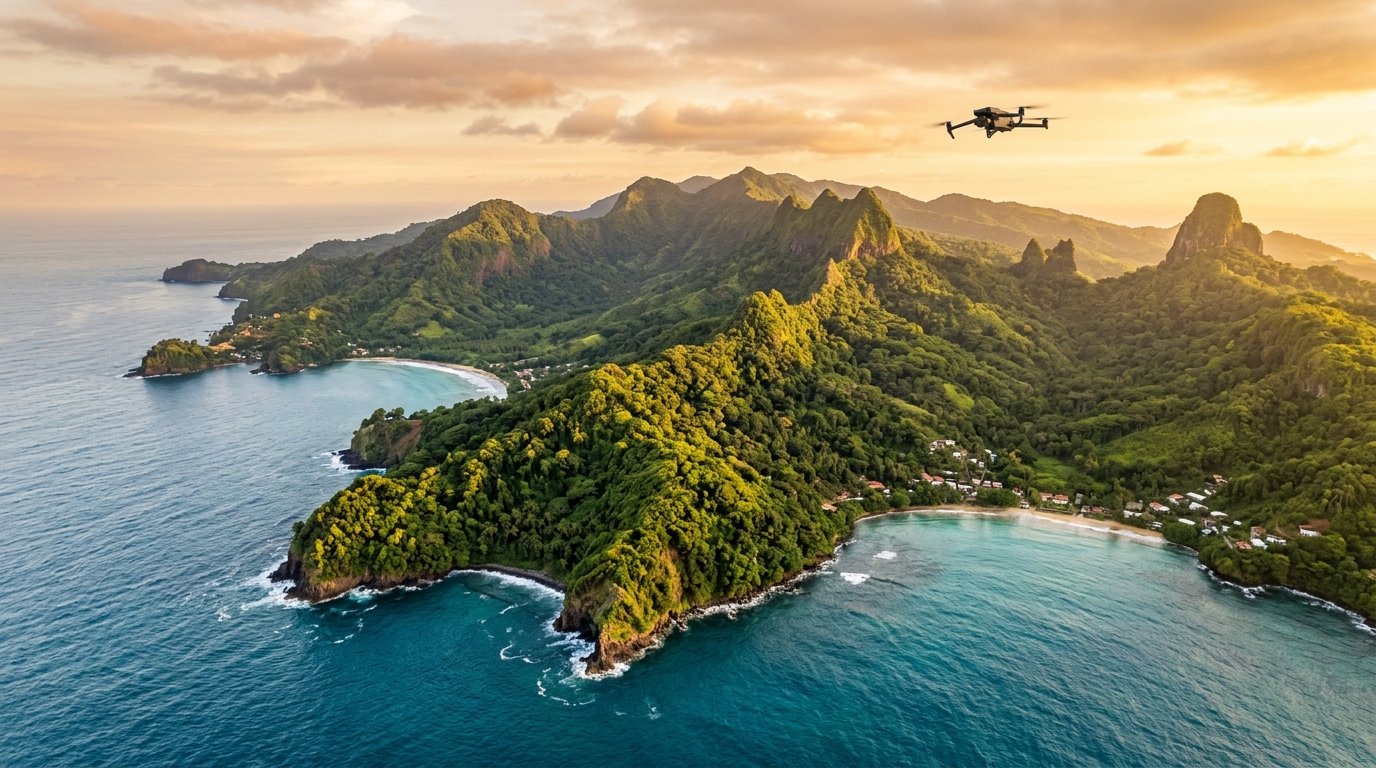
1. 🚦 The Short Answer
Recreational drones are generally allowed in São Tomé and Príncipe without strict registration. The country does not have codified, drone-specific laws, but the local aviation authority expects tourists to follow standard International Civil Aviation Organization (ICAO) safety guidelines.
2. 🛃 Customs & Importation Rules
- Can a tourist legally bring a drone? Yes, tourists can legally bring drones into the country for recreational use. It is strongly advised to pack your drone and lithium batteries in your carry-on luggage to comply with standard airline safety rules.
- Declarations: There are no specific drone declaration forms required upon arrival at the airport.
- Border Confiscation: Because drone laws are not formally written into national law, customs officials exercise broad discretion. While confiscations are rare for standard consumer drones, maintaining a polite demeanor and explaining that the equipment is strictly for personal travel photography can help avoid any border friction.
3. 📝 Registration & Permit Process for Tourists
- Pre-arrival Registration: Foreign tourists do not need to register their drones or secure a permit for basic recreational flying before arriving.
- The Process: Since there is no formal recreational registration framework, there is no step-by-step process to complete, no local aviation portals to navigate, and no waiting period.
- Fees: There are zero fees for recreational drone pilots. (Note: Commercial operations do require explicit prior authorization from the aviation authority).
4. 🚫 Key Flight Rules & Restrictions
- Operational Rules: Fly only during daylight hours in good weather, keep the drone within your Visual Line of Sight (VLOS) at all times, and do not fly higher than 120 meters (400 feet).
- Weight Restrictions: There are currently no distinct weight classes (e.g., sub-250g exemptions) since national laws are completely uncodified. However, flying a smaller, lighter drone like a DJI Mini often draws less unwanted attention.
- No-Fly Zones: You must stay at least 5 miles (8 km) away from São Tomé International Airport, as low-flying aircraft and emergency medical helicopters operate frequently in the area. Additionally, do not fly over military bases, government buildings, police personnel, or large crowds of people. Always ask for permission before photographing locals.
5. 🔗 Official Sources & Links
For the most current guidance, or to request special clearance if you plan to fly near controlled airspace, you can reach out to the Instituto Nacional de Aviação Civil (INAC):
- Email INAC: Inac@cstome.net
- General Safety Guidelines: ICAO UAS Toolkit
Disclaimer: Aviation laws and customs policies change frequently. Travelers should always double-check with official sources, local authorities, or their embassy close to their travel dates to ensure a safe and legal trip.

Adrenaline junkie with a passion for exploring off-the-beaten-path destinations and finding unique ways to stay active. Expect stunning scenery, challenging workouts, awesome travel tips and a whole lot of fun. Let’s get sweaty and explore the world together!