
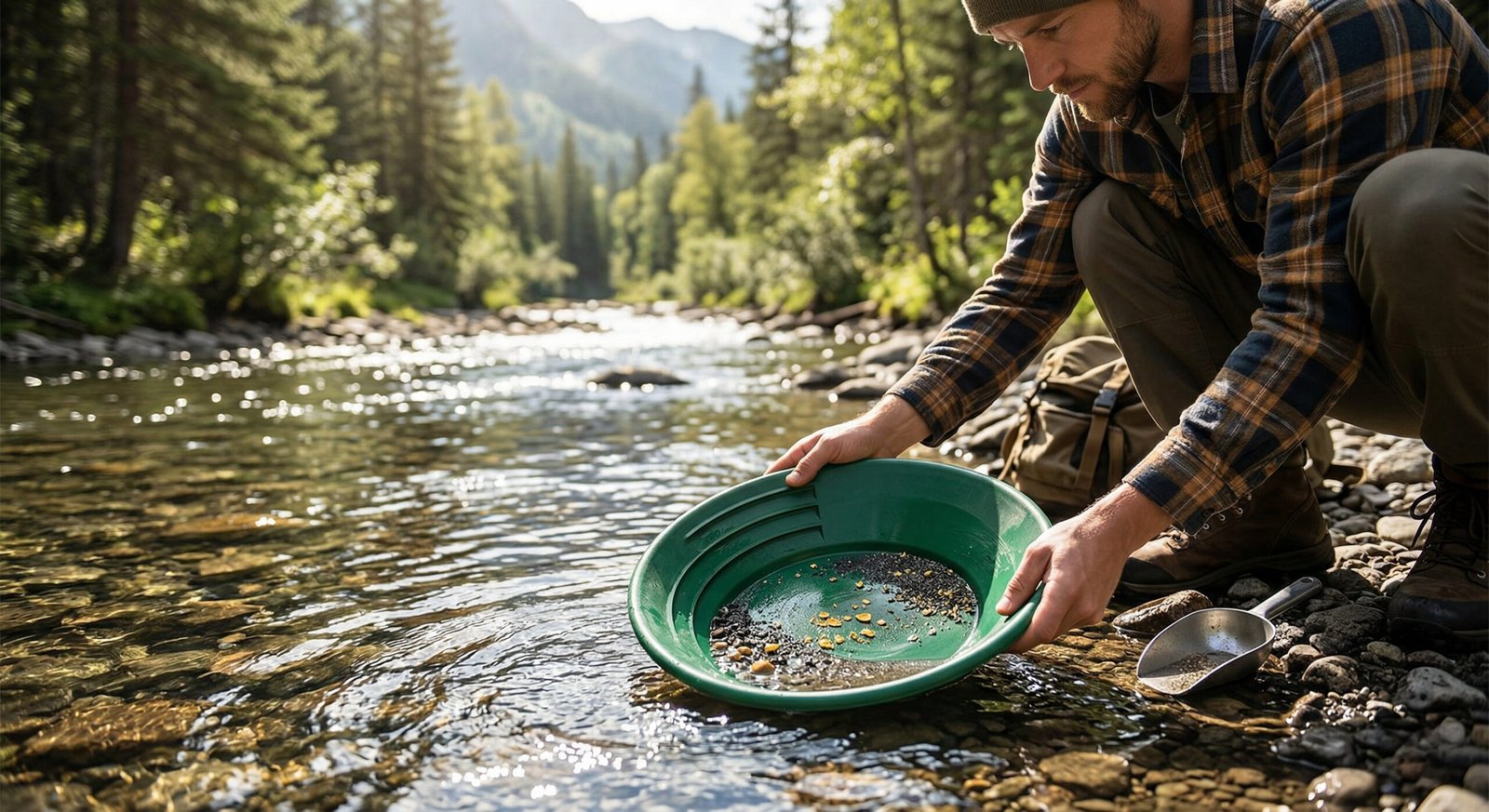
Have you ever dreamed of striking it rich, or at least experiencing the thrill of finding your own shiny flakes of gold at the bottom of a river?
Most people think gold prospecting today requires massive machinery, expensive corporate leases, or complicated government permits. In most of the world, that’s actually true! From Sweden to Australia, trying to pan for gold without a permit can land you in serious legal trouble.
But don’t hang up your gold pan just yet. There are a handful of special, unregulated “safe havens” around the globe where anyone—from eager tourists to weekend hobbyists—can pan for gold completely free of charge.
The Golden Rule: To keep these areas free, governments have one major catch: You can only use simple hand tools. That means traditional gold pans, small shovels, and hand trowels. Motorized equipment, suction dredges, and sometimes even metal detectors are strictly banned. You also have to respect the environment, which usually means no digging into the grassy riverbanks.
Grab your pan! Here are 10 incredible places where you can prospect for free.
1. Auburn State Recreation Area (California, USA)
The Vibe: The heart of the original 1848 California Gold Rush. Snowmelt from the Sierra Nevada mountains constantly washes fresh gold into the American River. California lets you pan here for free under their “rockhounding” rules.
The Rules: Hands and pans only! You can take home up to 15 pounds of total mineral material a day. To protect the fish, you must make sure any muddy water you kick up clears out within 20 feet of where you are standing.
2. Lynx Creek (Arizona, USA)
The Vibe: Desert treasure hunting. Located in the Prescott National Forest, this is a totally different environment. Because it’s a desert, the gold is moved by sudden flash floods and gets trapped in the dry, rocky washes.
The Rules: It’s a day-use area. You can use a pick, shovel, and pan. To protect the fragile desert riverbeds, you are only allowed to dig below the high-water mark, and you must fill in your holes before you leave.
3. Libby Creek (Montana, USA)
The Vibe: A secluded woodland getaway. Tucked away in the Kootenai National Forest, glaciers crushed up gold-bearing rocks thousands of years ago and left behind super-fine “flour gold.”
The Rules: Unlike Arizona’s day-use rules, you can actually camp right next to your panning spot here for up to five days for free! Just stick to pans, buckets, and shovels.
4. Uwharrie National Forest (North Carolina, USA)
The Vibe: The site of America’s first gold rush! Long before the California rush, a 12-year-old boy found a 17-pound gold nugget in North Carolina in 1799. You can still pan in the Uwharrie Mountains today.
The Rules: The environmental rules here are incredibly strict because the rivers are home to endangered freshwater mussels. You are absolutely forbidden from digging into the stream banks. You must stay in the water and only use small garden trowels and pans.
5. Nome Public Beaches (Alaska, USA)
The Vibe: Extreme, freezing, ocean-wave prospecting. Forget quiet forest rivers. In Nome, the gold is churned up by the violent Bering Sea and washed directly onto the beach!
The Rules: The dry beach is privately owned by mining companies, but under Alaskan law, the state owns everything below the “mean high tide line.” To prospect for free without a permit, you literally have to wade into the freezing ocean water and pan in the surf. It’s hardcore, but totally legal.
6. Free Claim No. 6 (Yukon, Canada)
The Vibe: Step straight into Klondike history. Normally, you need a “Free Miner Certificate” in Canada. But the local tourism board in Dawson City deliberately maintains “Claim No. 6” on the famous Bonanza Creek entirely for the public.
The Rules: You don’t need any paperwork or fees. Just stay within the wooden claim posts and use a pan and shovel. You can even borrow a free gold pan from the local visitor center!
7. Wild Horse River (British Columbia, Canada)
The Vibe: A quiet provincial reserve in an old ghost town. During the 1860s, this river was so rich with gold that miners actually picked up and moved a whole town just to dig under its foundations. Today, the government keeps a portion of it open as a “Recreational Panning Reserve.”
The Rules: Hand pans, shovels, and classifying sieves only. Leave the metal detector at home—if you use one, the government considers you a commercial miner, which requires a paid license.
8. Arrow River (Otago, New Zealand)
The Vibe: Stunning, family-friendly mountain streams. New Zealand has some of the strictest gold laws in the world (the Crown owns all the gold!), but they carved out 17 specific “Gold Fossicking Areas” just for the public. Arrow River is the most famous.
The Rules: New Zealand is slightly more generous with equipment. While you can’t use motors, you are legally allowed to use small sluice boxes and metal detectors here! Just make sure you restore the ground exactly as you found it.
9. Slab Hut Creek (West Coast, New Zealand)
The Vibe: Temperate rainforest gold panning. Also in New Zealand, this spot features heavy black sand and fast-flowing water. It’s a gorgeous place to camp and set up a small sluice box to catch the fine gold flakes.
The Rules: Same as the Arrow River, it’s totally free. Just keep a close eye on the weather—the West Coast gets massive amounts of rain, and the creek can flood very quickly.
10. Gold Mines River (County Wicklow, Ireland)
The Vibe: Chasing the “Wicklow Gold Rush.” In 1796, a schoolmaster found a massive nugget here, kicking off a mini gold rush. Technically, the Irish government owns all minerals, but they kindly look the other way for hobbyists on this specific river.
The Rules: This one has quirky rules. You can use standard pans for free, but if you want to use a tiny sluice box, you have to write to the wildlife service for permission first. Also, to prevent over-mining, you are only allowed to pan for a maximum of two days per month!
Before You Go…
If you are planning a trip to any of these amazing locations, remember that their “free” status depends entirely on the honor system. By filling in your holes, packing out your trash, and leaving the riverbanks untouched, you help ensure these historic golden rivers stay open to the public for generations to come. Happy hunting!

Adrenaline junkie with a passion for exploring off-the-beaten-path destinations and finding unique ways to stay active. Expect stunning scenery, challenging workouts, awesome travel tips and a whole lot of fun. Let’s get sweaty and explore the world together!