FitcationHQ
  • Home
  • Travel Planning
  • Destinations
    • Africa
      • Egypt
      • Kenya
      • Morocco
      • Mozambique
      • Namibia
      • Rwanda
      • South Africa
      • Tanzania
    • Asia
      • Bhutan
      • Cambodia
      • China
      • Indonesia
      • Laos
      • Malaysia
      • Maldives
      • Nepal
      • Thailand
      • Turkmenistan
    • Europe
      • Bulgaria
      • Croatia
      • Georgia
      • Greece
      • Iceland
      • Ireland
      • Italy
      • Montenegro
      • Norway
      • Portugal
      • Scotland
      • Turkey
    • Middle East
      • Jordan
      • UAE
    • North America
      • Canada
      • USA
    • Oceania
      • New Zealand
    • South America
      • Argentina
      • Bolivia
      • Chile
      • Costa Rica
      • Ecuador
      • Peru
  • Travel Tips
    • Budget Travel
    • Family Travel
    • Food and Dining
    • Health and Wellness
    • Luxury Travel
    • Packing
    • Safety
    • Solo Travel
    • Transportation
    • Travel Insurance
    • Sustainable Travel
    • Visa and Immigration
  • Travel Gear
    • Luggage
    • Clothing
    • Photography Gear
    • Security Gear
    • Travel Accessories
    • Travel Electronics
FitcationHQ
Asia Fuel Crisis 2026: Should You Cancel Your Travel Plans?
AsiaDestinationsTransportationTravel Tips

Asia Fuel Crisis 2026: Should You Cancel Your Travel Plans?

by Travel Geek March 31, 2026
written by Travel Geek

If you have a trip booked to Southeast Asia right now, you might be feeling nervous. The news is full of stories about gas stations running dry and flight prices shooting up. I have been getting a ton of questions from readers asking if they should go ahead with their holidays or just stay home.

Here is a simple guide to what is happening with the 2026 fuel crisis, how it impacts your travel plans, and what your options are if you already booked your trip.

What is Actually Happening?

Right now, the conflict in the Middle East has blocked a major shipping route for oil. Many Asian countries buy most of their oil from this area. Because the ships cannot get through, these countries are suddenly running very low on fuel.

Because gas is so hard to get, the price has skyrocketed. This is causing big headaches for airlines and local transportation everywhere in the region.

How This Affects Your Flights

Airlines run on jet fuel. When jet fuel gets this expensive, airlines pass that cost right to you.

  • Higher prices: Ticket prices are jumping by 10% to over 30%. Even budget airlines are adding steep fees.

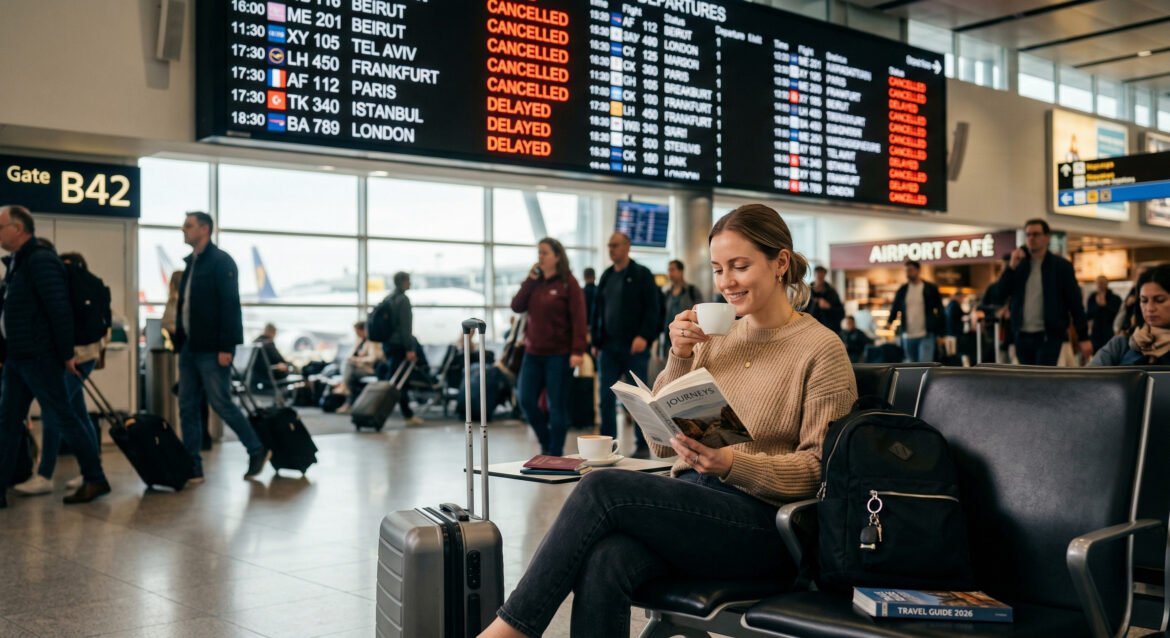
  • Canceled routes: Some airlines are simply canceling flights because they cannot get enough fuel to make the trip.

  • Longer travel times: Flights between Europe and Asia are taking much longer because planes have to fly around the conflict zones.

What to Expect on the Ground in Asia

Not every country is dealing with this the same way. Some planned ahead, while others are really struggling.

The Smooth Spots (Japan, South Korea, China)

These countries have massive storage tanks full of emergency oil. If you are traveling here, your day-to-day trip will look pretty normal. Trains are running, and hotels have power. You will just pay more for your flight to get there.

The Bumpy Spots (Thailand, Philippines, Malaysia)

These places are feeling the pinch. Governments are taking steps to save energy, which will change your vacation experience.

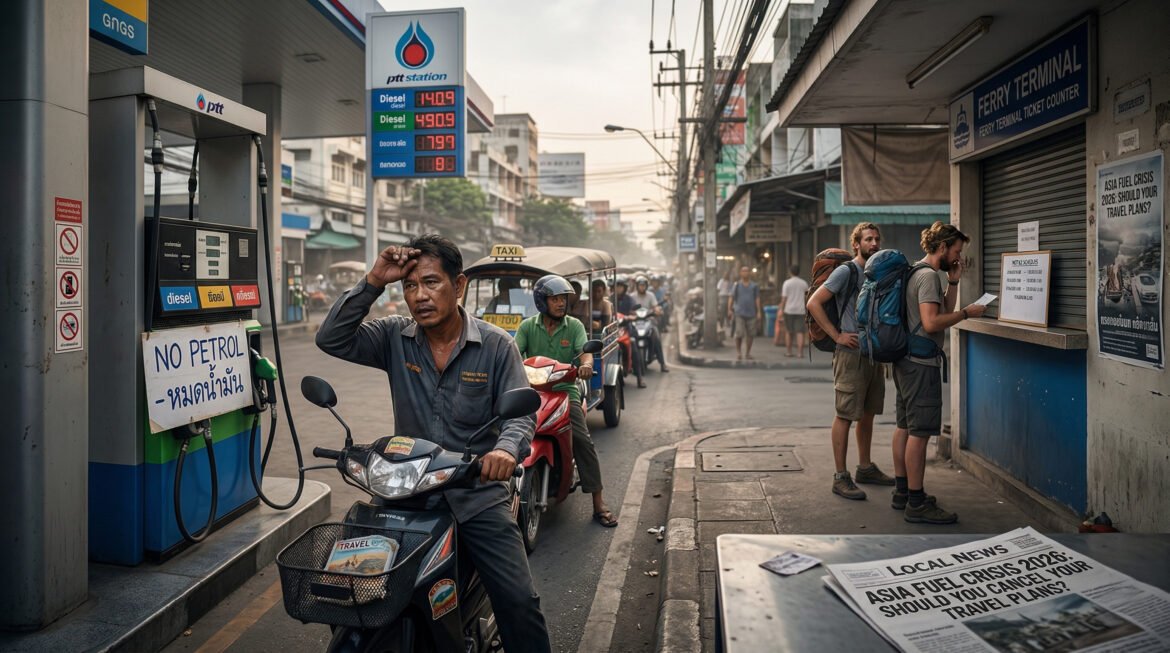
  • Fewer Taxis: In Thailand, the number of taxis at the main Bangkok airport dropped by more than half. Drivers do not want to take long trips because they might run out of gas.

  • Hotter Buildings: To save power, places like Thailand have capped air conditioning in buildings at 26 degrees Celsius (about 79 degrees Fahrenheit).

  • Less Ferry Travel: In the Philippines, ferry schedules are cut back. This makes it much harder to jump from island to island.

The Danger Zones (Vietnam, Laos, Cambodia, Sri Lanka, Pakistan)

These countries are running on empty. Many gas stations have closed entirely. There are huge lines for fuel, and some places are experiencing power cuts. It is highly advised not to travel to these areas for a vacation right now. You could easily get stranded.

A Big Warning About Travel Insurance

You might think your travel insurance has you covered if things go wrong. Think again.

Almost all standard travel insurance policies refuse to pay for problems caused by war or military conflict. Because this fuel shortage is a direct result of the situation in the Middle East, your regular policy will likely cover nothing if your flight is canceled or your trip is ruined.

The only way to get your money back is if you bought a special upgrade called “Cancel For Any Reason” coverage right after you booked your trip. This add-on is expensive, but it is the only safety net right now.

Your Options: What Should You Do?

If you are trying to figure out your next steps, here is a breakdown of your best options.

Option 1: When to Cancel or Postpone

You should probably cancel your trip if you are heading to a highly affected area like Vietnam or Sri Lanka. You should also cancel if your plan involves a lot of moving around, like taking multiple local flights, ferries, or long car rides in places like the Philippines. If you cannot afford to lose your money and you do not have special insurance, it is better to play it safe and stay home.

Option 2: When to Change Your Plans

If you are going to a place like Thailand, you can still go, but you need to change how you travel.

  • Stay in one place: Pick one nice resort and stay there. Avoid planning complicated trips that rely on local buses or boats.

  • Book rides early: Do not rely on finding a taxi on the street. Pay for your airport transfers in advance.

  • Try a walking or biking tour: Group tours focused on hiking or cycling are a great idea right now. Once you arrive, you do not need to worry about gas prices at all.

Option 3: When to Go Ahead

If your trip is to Japan or South Korea, you are good to go. Just be ready for expensive flights. Another great option is a staycation. Many people are choosing to stay closer to home and book a nice local hotel instead of dealing with international airport stress.

Traveling right now requires extra patience and a flexible budget. Look closely at your destination, check your insurance, and make the choice that feels right for you.
March 31, 2026 0 comments
0 FacebookTwitterPinterestEmail
The Ultimate Guide to Crossing the Thailand-Laos Border via Friendship Bridge IV
AsiaDestinationsThailandTransportationTravel Tips

Guide to Crossing the Thailand-Laos Border via Friendship Bridge IV

by Travel Geek March 28, 2026
written by Travel Geek

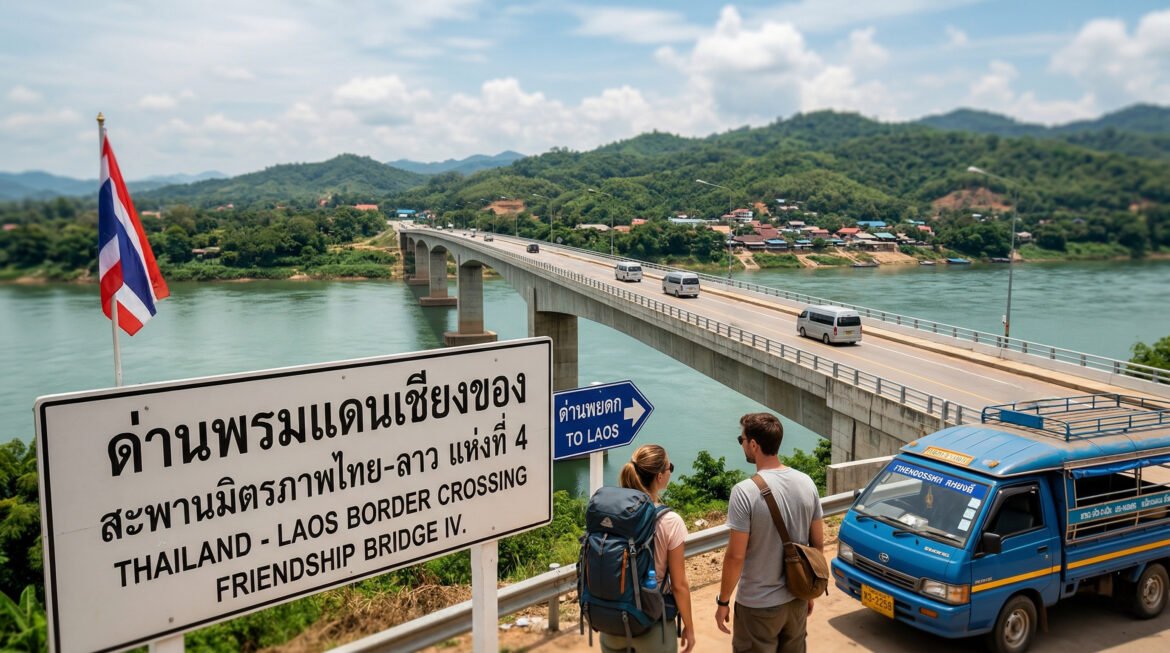
If you are planning to take the famous slow boat to Luang Prabang or go on a Gibbon Experience or just need to do a Thai visa run, you will likely pass through the Fourth Thai-Lao Friendship Bridge. This bridge crosses the Mekong River, connecting Chiang Khong in northern Thailand to Huay Xai in Laos.

Getting across this border involves a few steps, mandatory bus rides, and some very strict rules about the cash you bring. This guide breaks down exactly how to get there, what it costs, and how to avoid common traps.

How to Get to the Border from Chiang Mai

Chiang Mai is about 272 to 280 kilometers from the border. The drive goes through winding mountain roads, and you have a few ways to make the trip depending on your budget.

The GreenBus (Public Transit)

GreenBus is the main company running large buses from Chiang Mai’s Arcade Bus Station (Terminal 3) to the Chiang Khong local station.

  • VIP Class: This is the best choice for the 6-hour ride. The bus only has 33 seats arranged in a 1-2 layout, giving you plenty of legroom. Tickets cost 550 THB. You get air conditioning, snacks, water, USB charging, and a toilet on board. Tip: Try to book seats 2A or 2B for the smoothest ride, and avoid Row 1 because there is no space to stretch your legs. The bus usually leaves at 8:30 AM.

  • Express Class: This is a standard bus with 40 seats in a 2-2 layout. It costs between 380 and 434 THB. It does not always have a toilet, which means extra stops and a longer trip (almost 7 hours). These leave around 8:30 AM and 9:30 AM.

Note: The GreenBus drops you in Chiang Khong town. From there, you need to pay 50 to 100 THB for a tuk-tuk to drive you the last few kilometers to the actual border checkpoint.

Shared Minivans and Private Rides

If you want to skip the bus station, many travel agencies offer minivans that pick you up right at your hotel.

  • Shared Minivans: These cost 899 to 1,050 THB. They pick you up between 6:30 AM and 9:30 AM. They usually include a quick stop at the White Temple in Chiang Rai and drop you directly at the border crossing by 3:00 PM.

  • Private Taxis and Vans: You can hire a standard SUV for 3,100 to 3,800 THB. For a luxury van, expect to pay around 7,500 to 7,800 THB.

Chiang Mai to Border Transport Options

Transport Mode

Operator

Departure Time

Time it Takes

Cost

Drop-off Location

Public Bus – VIP

GreenBus

08:30 AM

5h 40m

550 THB

Chiang Khong Town

Public Bus – Express

GreenBus

08:30, 09:30 AM

~7 hours

380 – 434 THB

Chiang Khong Town

Shared Minivan

Local Agencies

06:30 – 09:30 AM

5 – 6 hours

899 – 1,050 THB

Directly at Border

Private SUV

Independent

On Demand

4.5 – 5 hours

3,100 – 3,800 THB

Directly at Border

Luxury Van

Private Firms

On Demand

5 hours

7,500 – 7,800 THB

Directly at Border

How to Get to the Border from Chiang Rai

Chiang Rai is much closer to the border, sitting just 100 kilometers away. The trip is faster but relies on older transport networks.

The Local Red Bus

The most popular way to get there is the non-air-conditioned “red bus” from Chiang Rai Bus Terminal 1. They leave every 30 to 60 minutes starting at 6:00 AM. The trip takes about 2 to 2.5 hours because the bus stops constantly to pick up people and packages.

The Red Bus Pricing Trick: The standard fare to Chiang Khong town is 65 to 90 THB. But if you tell the ticket collector you want to go to the border, they will drop you at the highway junction before town and charge you 140 THB. This sounds like a rip-off, but it actually saves you time. From that junction, waiting tuk-tuks will take you straight to immigration for 50 THB. If you ride all the way into town for the cheaper fare, you will have to pay a 150 THB tuk-tuk fare to drive all the way back to the border.

Chiang Rai to Border Transport Options

Transport Mode

Departure Frequency

Time it Takes

Cost

Drop-off Location

Local Red Bus (to town)

Every 30-60 mins

2.5 hours

65 – 90 THB

Chiang Khong Town

Local Red Bus (to border)

Every 30-60 mins

2 hours

140 THB

Highway Junction

Shared Minivan

Scheduled AM/PM

2 – 3 hours

500 – 700 THB

Directly at Border

Private Taxi

On Demand

1.5 hours

1,100 – 1,500 THB

Directly at Border

The Step-by-Step Border Crossing Process

Once you arrive at the giant Thai immigration building, the real process begins.

Phase 1: Exiting Thailand

Walk inside and hand the officer your passport. Your passport needs at least six months of validity and two to four blank pages left. If you have a paper departure card (TM6), hand that over too.

Leaving Thailand is free. However, if you have stayed past your visa date, you will have to pay an overstay fine of 500 THB per day in cash before they stamp you out.

Driving across? You need your original vehicle registration (the Green Book), copies of your passport and car pages. Thailand and Laos only allow motorcycles with engines 250cc or larger to cross. Small scooters are not allowed.

Phase 2: The Mandatory Bridge Shuttle

You are not allowed to walk or ride a bicycle across the 2.48-kilometer bridge. Everyone must buy a ticket for the official shuttle bus to cross the “no man’s land” over the Mekong River.

  • Standard Fare: 20 THB.

  • Weekend/Overtime Fare: 25 THB on weekends, holidays, before 8:00 AM, and after 4:00 PM.

  • Night Fare: Sometimes 40 THB after 6:00 PM.

  • Luggage: Drivers sometimes ask for an extra 25 THB if you have a massive backpack.

The bus does not run on a schedule. It only leaves when the driver decides it is full enough, which can take 15 to 30 minutes.

Phase 3: Entering Laos (And the Pristine Cash Rule)

When you get off the bus on the Laos side (Huay Xai), head to the immigration windows.

If you are from an ASEAN country or hold a passport from Japan, South Korea, Russia, Switzerland, and a few others, entry is free. You just fill out an arrival card.

For most Western tourists (US, UK, EU, Canada, Australia), you need a visa.

  • e-Visa: You can apply online three days before for $50 USD. It saves time at the window.

  • Visa on Arrival (VoA): You can buy your visa right there at the window. The standard price is a flat $40 USD.

The Pristine Cash Warning: The Laos border guards are incredibly strict about US dollar bills. Your $40 must be in absolutely perfect condition. If the bills have tears, ink marks, folds, or a crease down the middle, the guards will reject them.

If your dollars are rejected, the guards will force you to pay in Thai Baht at a terrible exchange rate. They will charge you 1,500 to 2,000 THB. Based on normal exchange rates, 2,000 THB is about $55 to $60 USD. You lose a lot of money just because your bill had a fold in it. Bring perfect US dollars from a bank in Chiang Mai or Chiang Rai before you leave.

Other small fees you might face at the Laos window:

  • No Photo Fee: 40 to 80 THB if you forget to bring a physical passport photo.

  • Overtime Fee: $1 USD or 40 THB if you arrive on a weekend, holiday, or outside regular 8:00 AM to 4:00 PM hours.

Bring a pen with you to fill out the forms so you don’t have to wait to borrow one.

The Final Entry Fee: Just before you walk out of the border post on the Laos side, there is one last counter. You must pay a small entry fee here. It usually costs 40 THB or 10,000 LAK. After you pay, they give you a little paper ticket, and you are finally free to leave the building.

Getting into Huay Xai Town

The Laos border complex is a few kilometers outside of town. You will find a group of tuk-tuks waiting. They charge exactly 100 THB per person to go to the slow boat pier or town center. They strongly prefer Thai Baht over their own currency (Lao Kip). Like the bridge shuttle, they wait until the truck is totally full before leaving. If you are rushing to catch the morning slow boat (which costs about 400,000 LAK), you can pay 100,000 LAK to charter the whole truck to leave immediately.

Doing a Visa Run? Read This First

For years, people living in Thailand used this bridge for “border runs.” They would cross into Laos, turn right around, and come back to Thailand the same day to get a fresh visa stamp.

This is no longer allowed. As of late 2024, if you cross this border, you must stay at least two nights in Laos before returning to Thailand.

If you book a border run van from Chiang Mai, it now takes three days. You leave Monday morning, find your own hotel in Huay Xai for Monday and Tuesday night, and the van picks you up on Wednesday afternoon to take you back to Chiang Mai. The van transport costs about 2,200 THB. You need to bring another 2,000 to 2,400 THB to cover the Laos visa, shuttle buses, food, and your hotel.

When you return, Thai immigration might ask to see an outward flight ticket, your Thai address registration (TM30), and physical proof that you have 10,000 THB in cash on you. You can generally only do this overland border run twice a year.

Where to Park Your Car or Motorbike in Chiang Khong

Since taking a Thai vehicle into Laos requires a lot of paperwork, almost everyone leaves their car or bike on the Thai side.

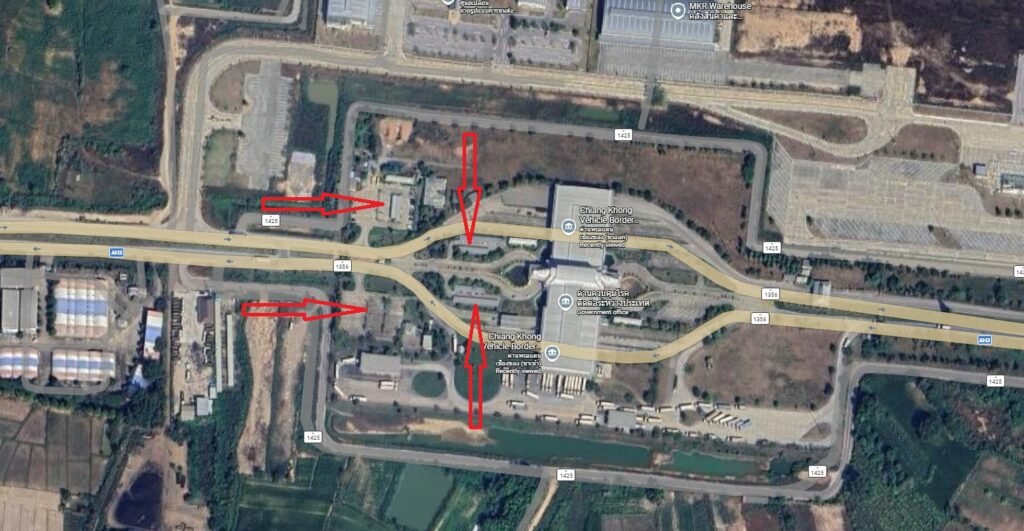
  • Public Border Lot: There is free parking right in front of the Thai immigration building. It is open to the sky, and leaving your car here for a few days is absolutely fine. Many travelers leave vehicles here for up to five days with no issues. It is very convenient because you park right next to the crossing. Just drive Past the first Border gate and there will be a smaller car park on the left and larger one with some covered parking on the right.

Thailand-Laos Border Friendship Bridge IV Parking Location
  • Nearby Hotels: A great second choice is to contact hotels around the border. Many will let you park your car on their property while you visit Laos. They might charge you a small fee, but it gives you a safe spot to leave your vehicle.

  • Other Companies (Check First): You might read online about companies like AA Inter Tour and Expat Auto CM offering parking. Based on recent trips, it is highly likely they do not have facilities at this border anymore. Treat them as backup ideas only, and always call them before you go.

Parking Options Summary

Parking Location

Time Frame

Cost

Perks

Public Border Lot

Short to Medium (Few Days)

Free

Very close to the entrance, fine for leaving your car for a few days.

Nearby Hotels

Flexible

Small Fee

Secure parking on hotel grounds.

AA Inter Tour / Expat Auto CM

Variable

Varies

Backup choices, but highly likely unavailable at this border.

Crossing at Friendship Bridge IV takes some patience, but if you have pristine US dollars, small Thai Baht bills for the shuttles, and a solid plan for your transport, it is a very straightforward trip.

March 28, 2026 0 comments
0 FacebookTwitterPinterestEmail
DestinationsOman

How to See the Best of Nizwa, Oman in One Day

by Travel Geek March 27, 2026
written by Travel Geek

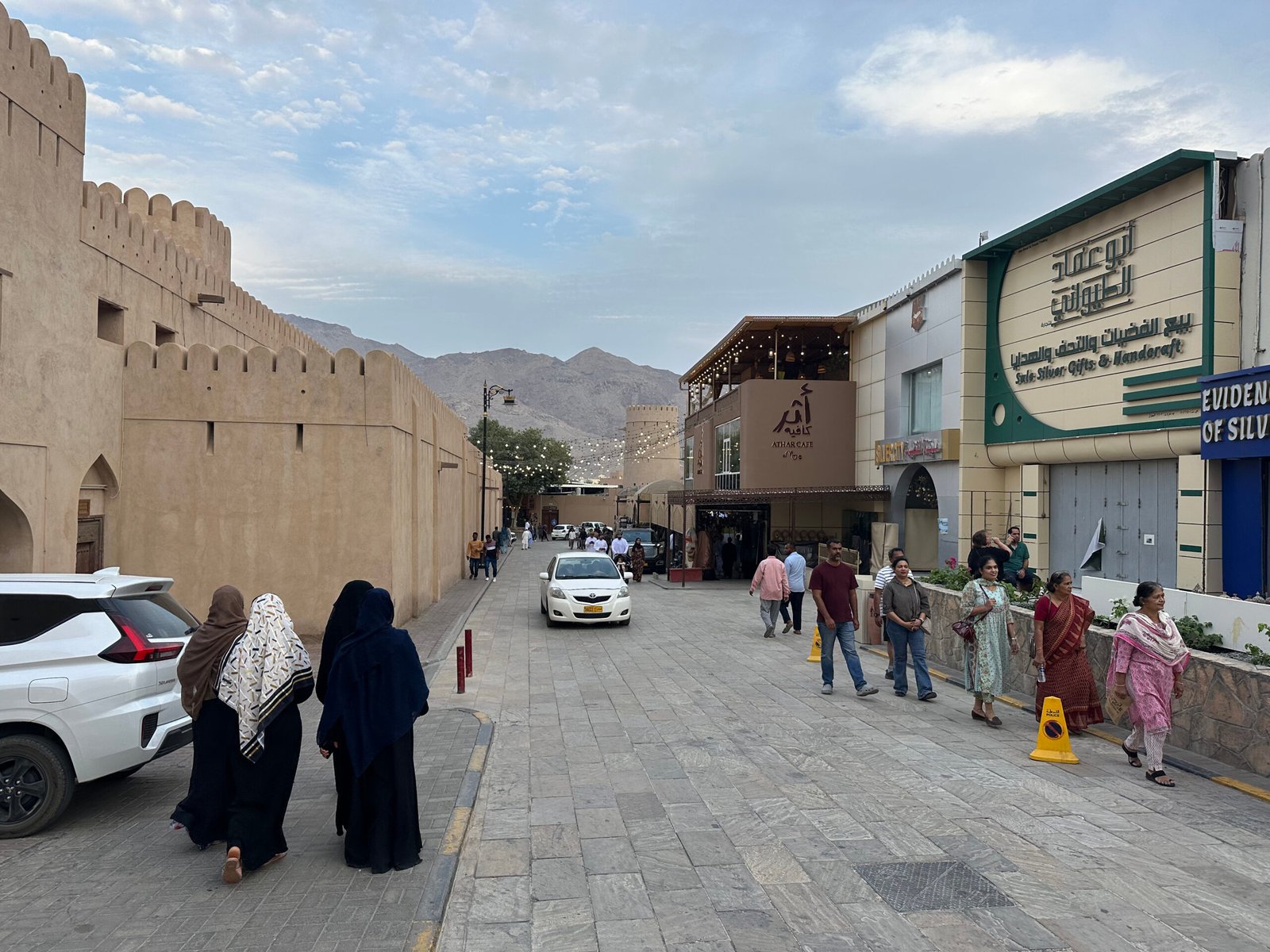
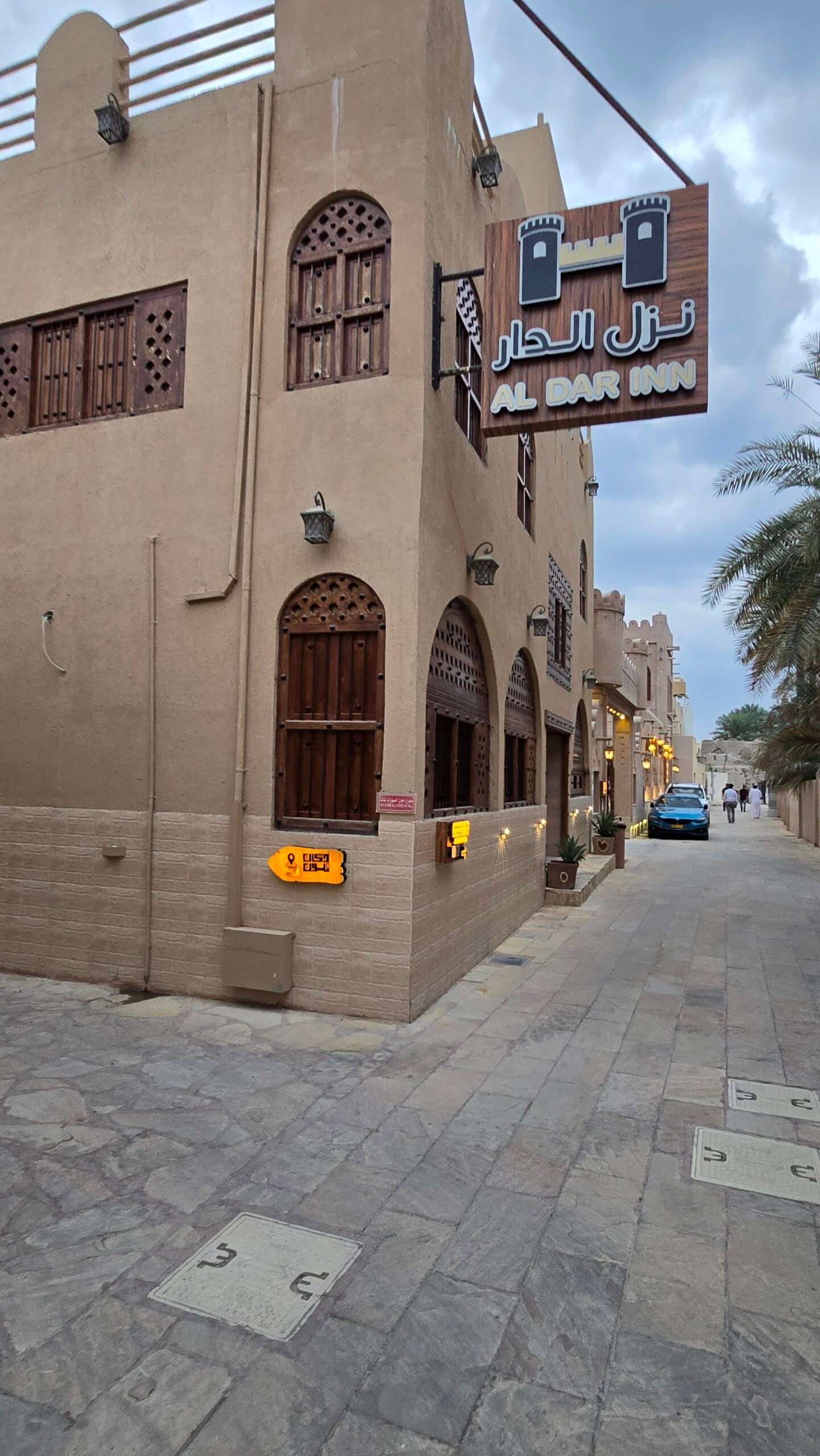
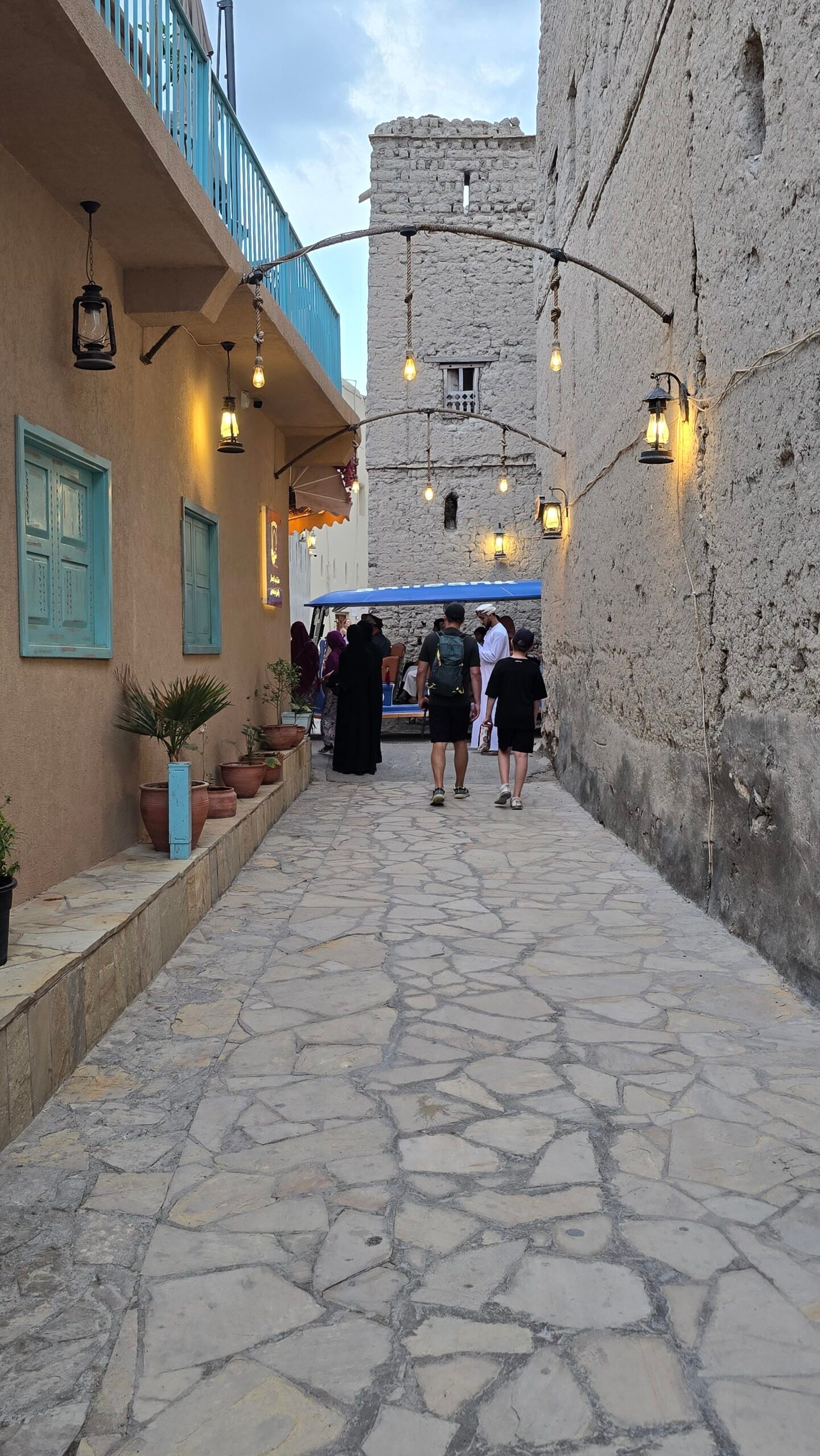
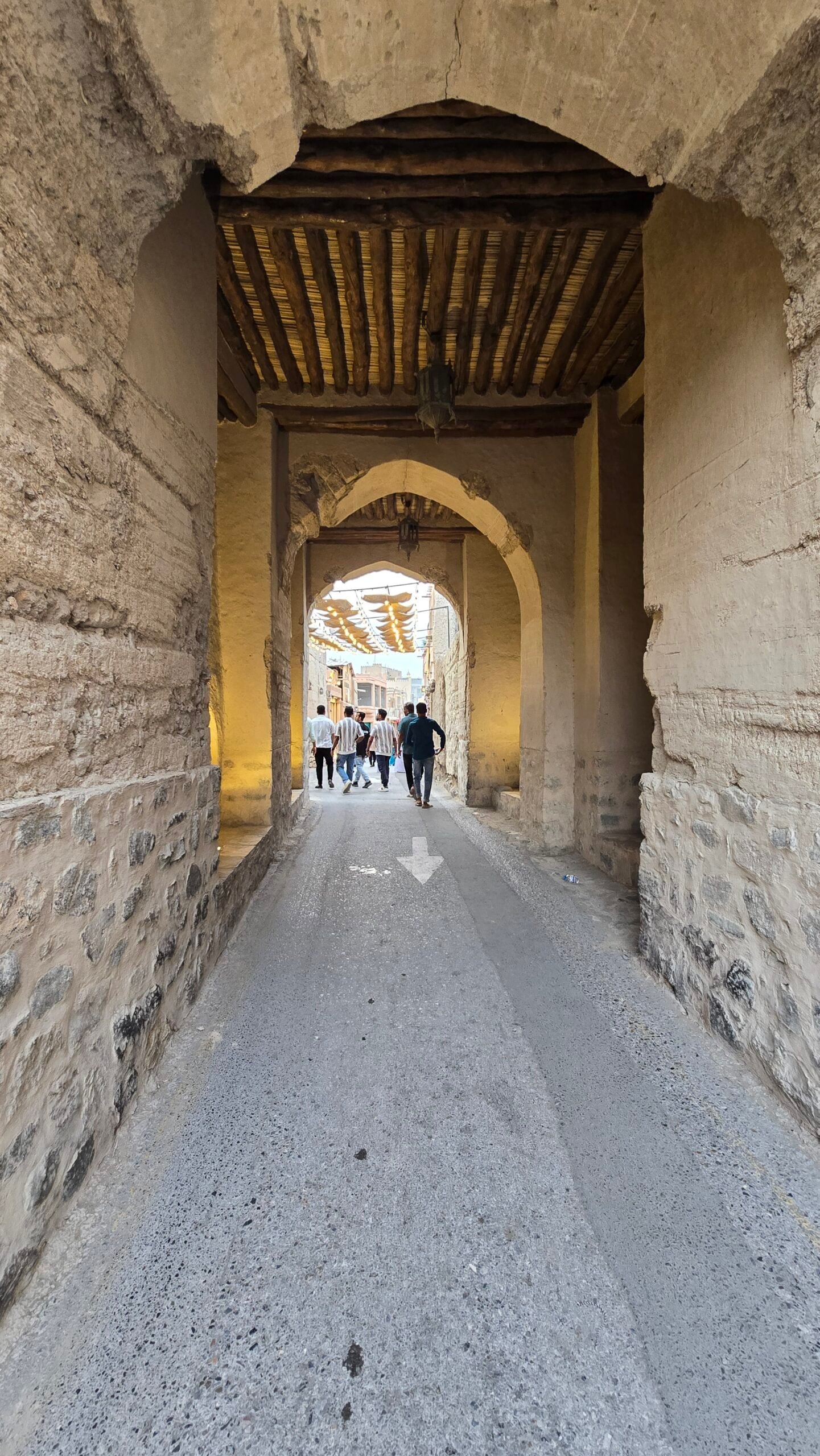
Have you ever wanted to step into a real-life Arabian legend? Recently, I took an incredible day trip in Oman that felt like a journey back in time, all within easy reach of the historic city of Nizwa.

Nizwa itself, the ancient capital, is the perfect home base. But the real adventure lies just beyond its city walls. Today, I’m sharing the exact itinerary and route for a stunning loop that packs natural wonders, ancient forts, and cultural delights into one unforgettable day.

Here is the perfect one-day driving route, meticulously planned to maximize your time. (Refer to the attached map for the visual guide!)

The Grand Loop Itinerary: From Mountains to Forts

Our day trip follows a smooth, counter-clockwise loop, approximately 132 kilometers of stunning Omani landscape. 

📍 Start: Nizwa (Ancient Capital)

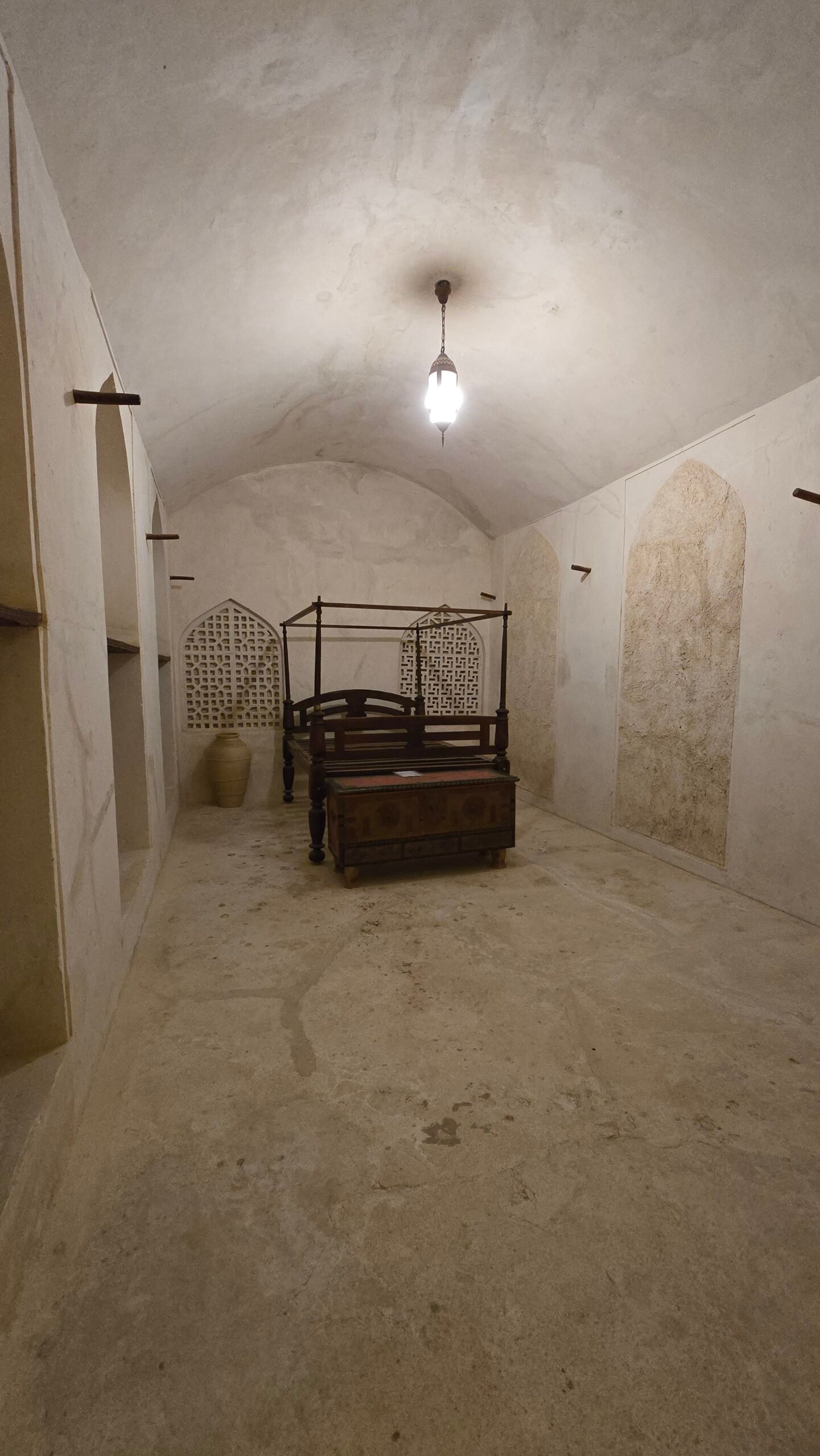
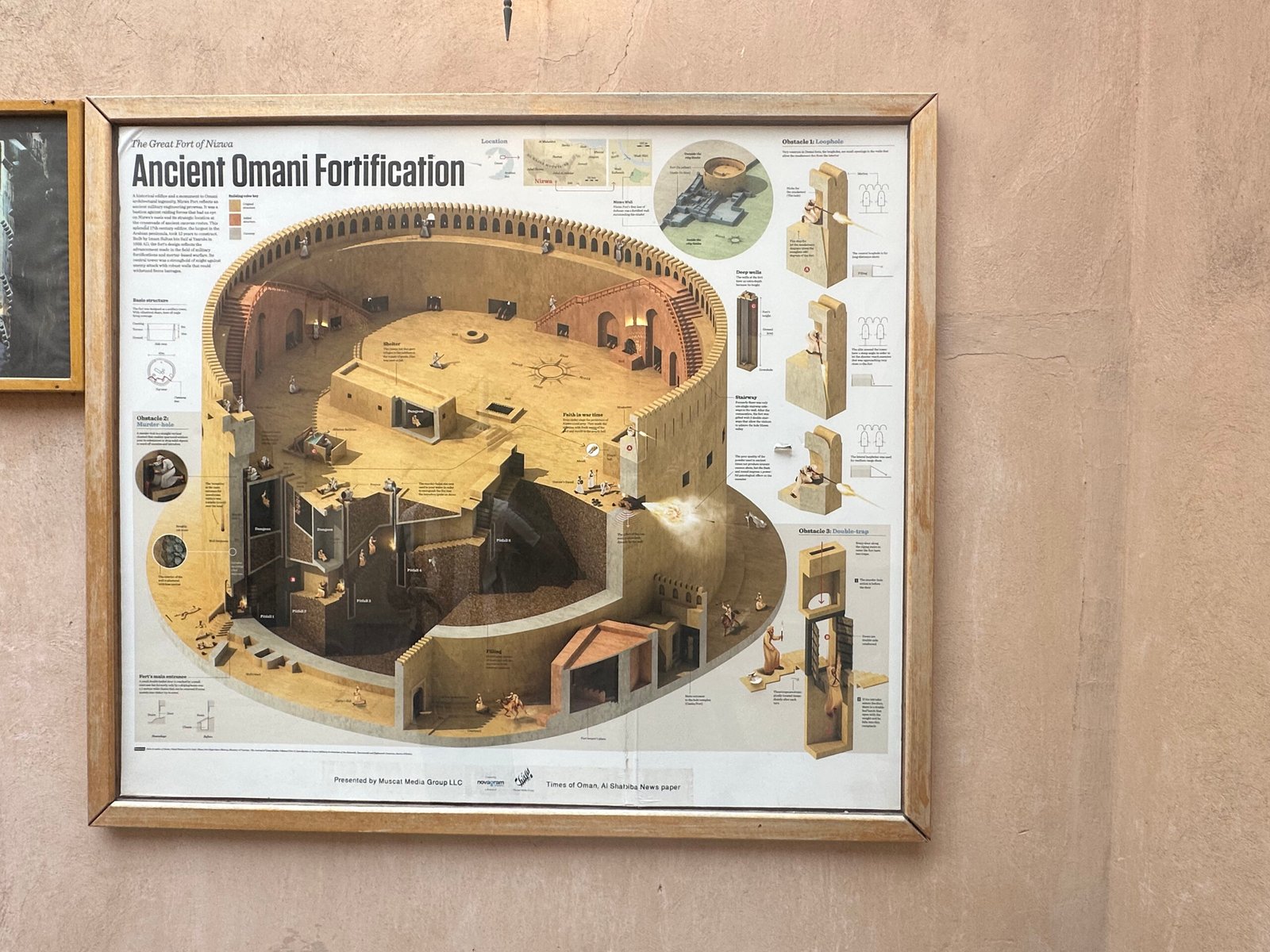
We began our day where history breathes. Before hitting the road, we got a glimpse of the powerful Nizwa Fort, which would be our final destination. A quick coffee to gear up, and we were off, heading North.

📍 Stop 1: Hoota Cave Adventure

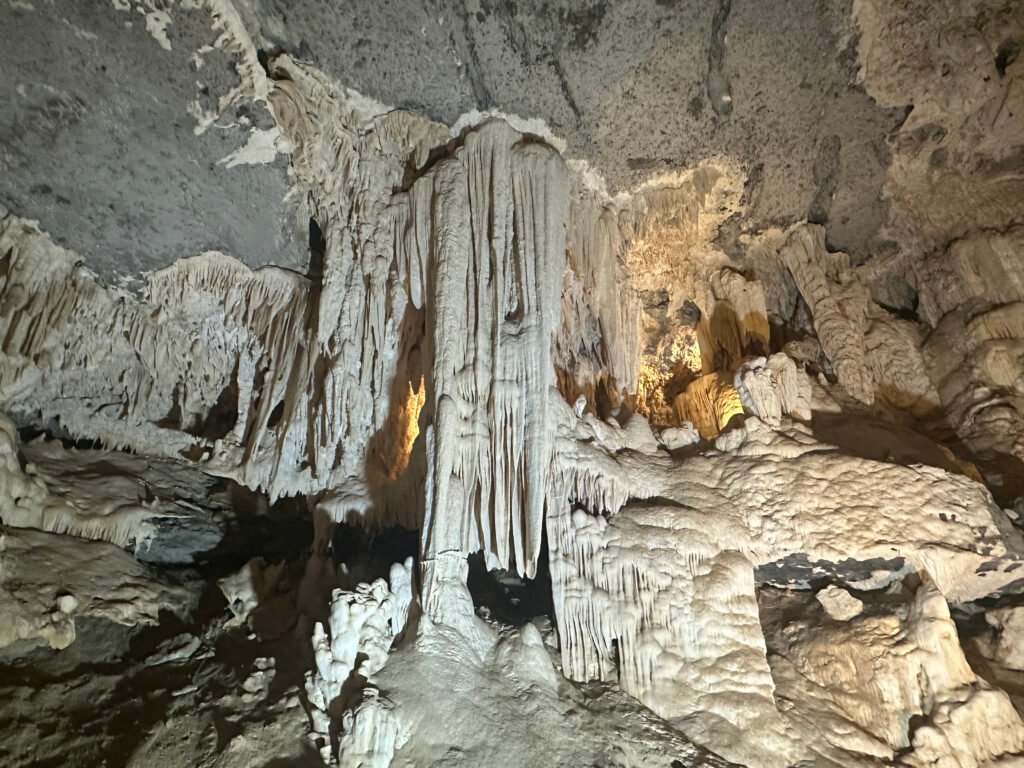
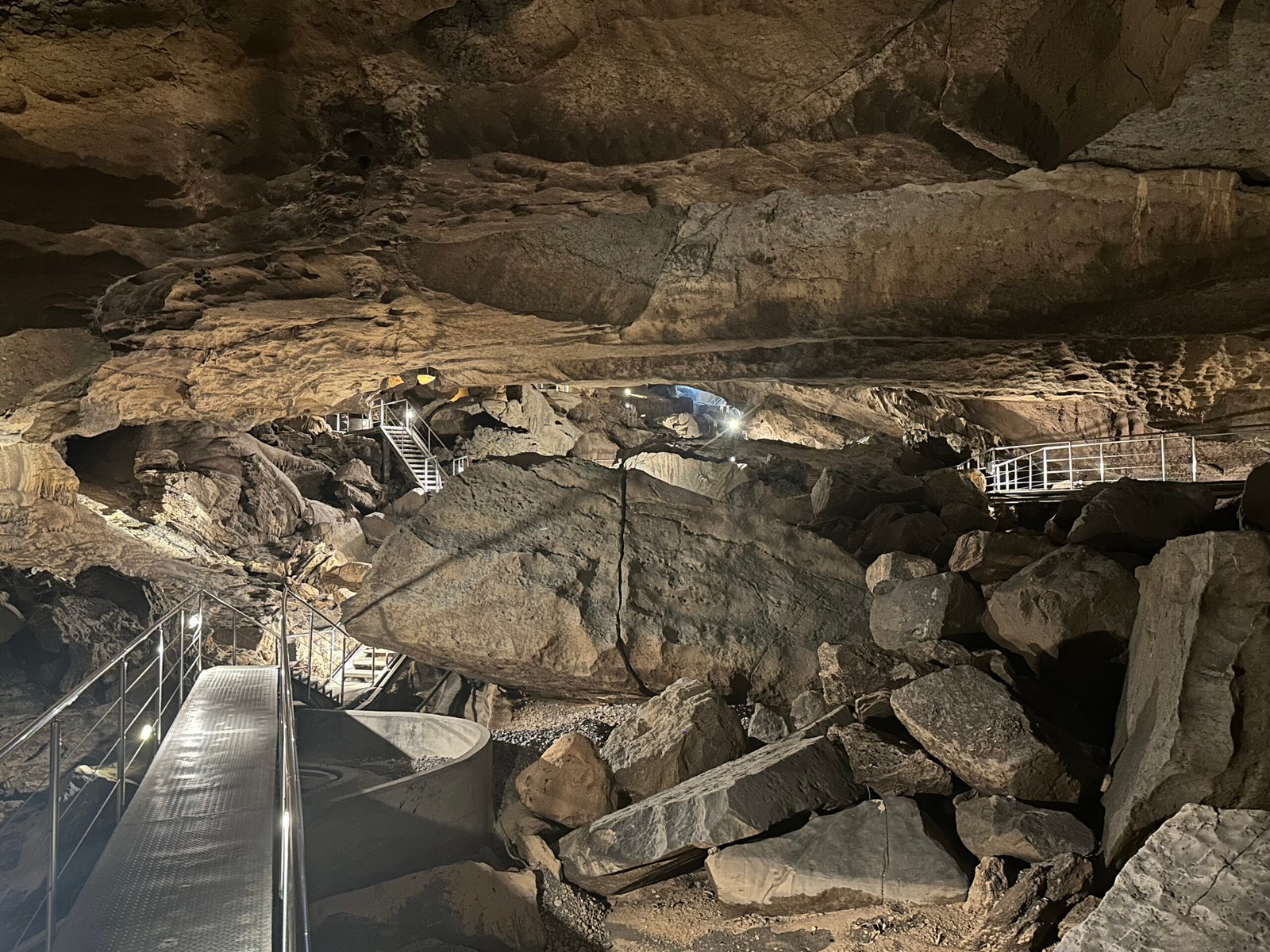
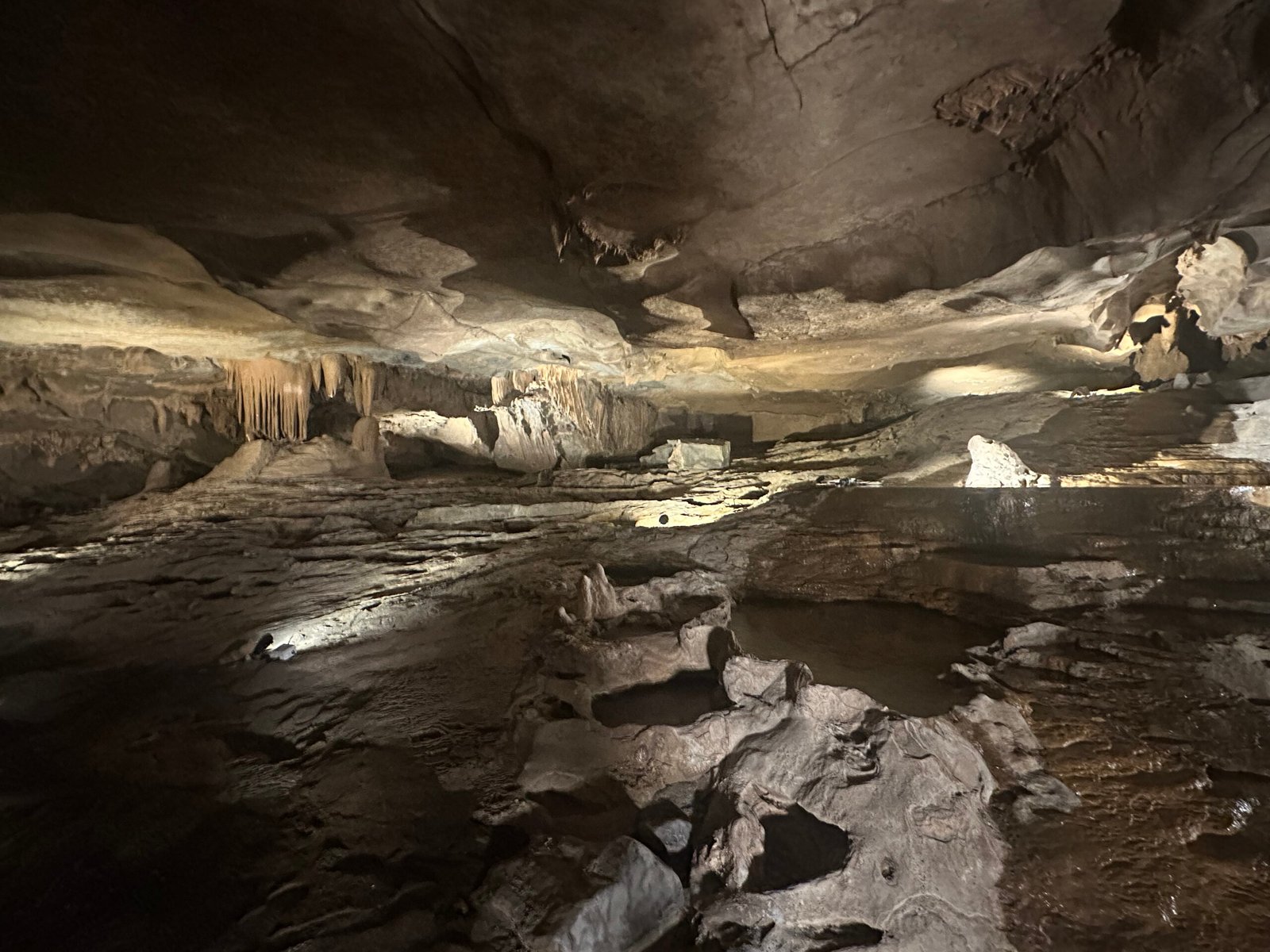
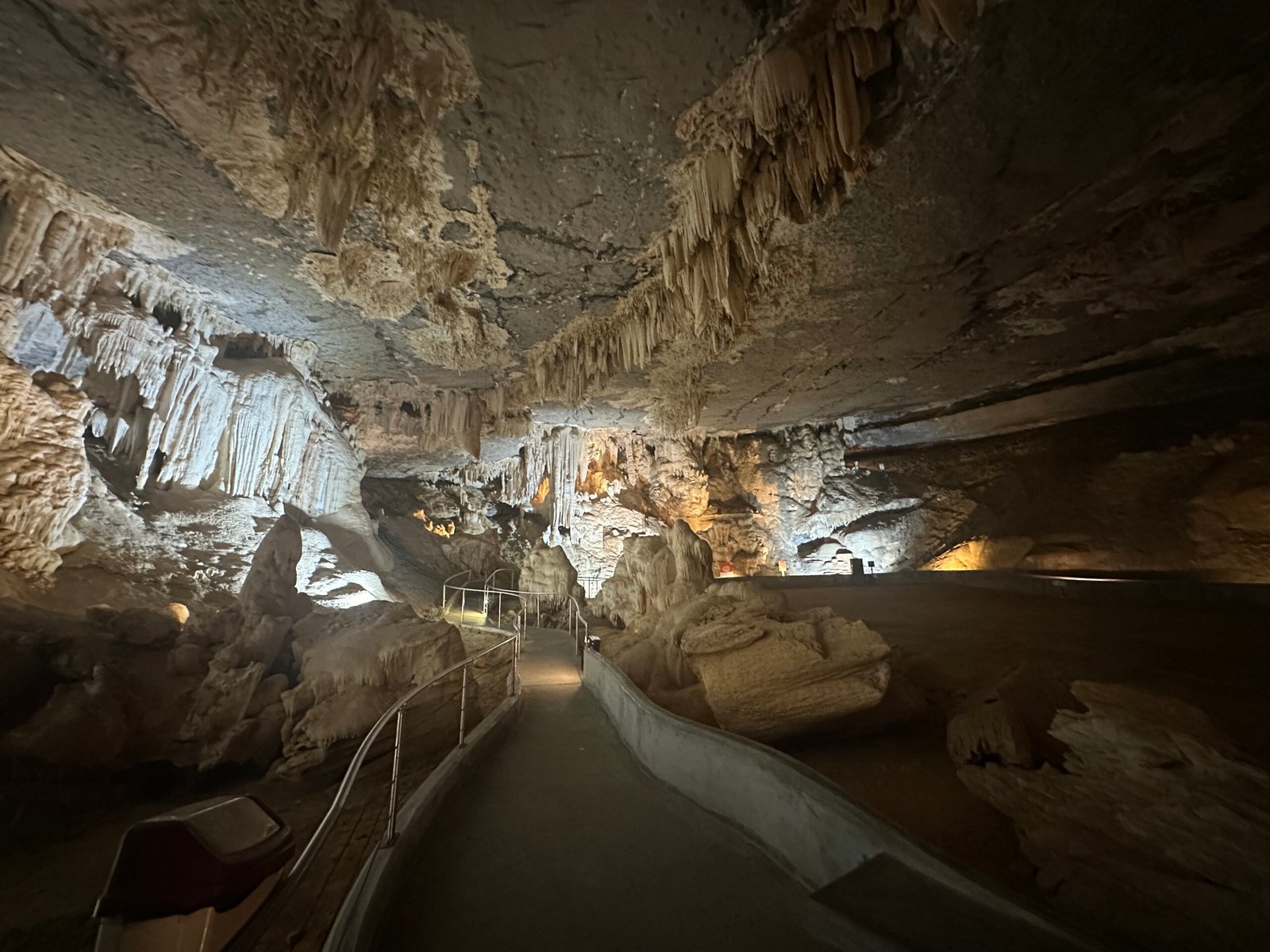
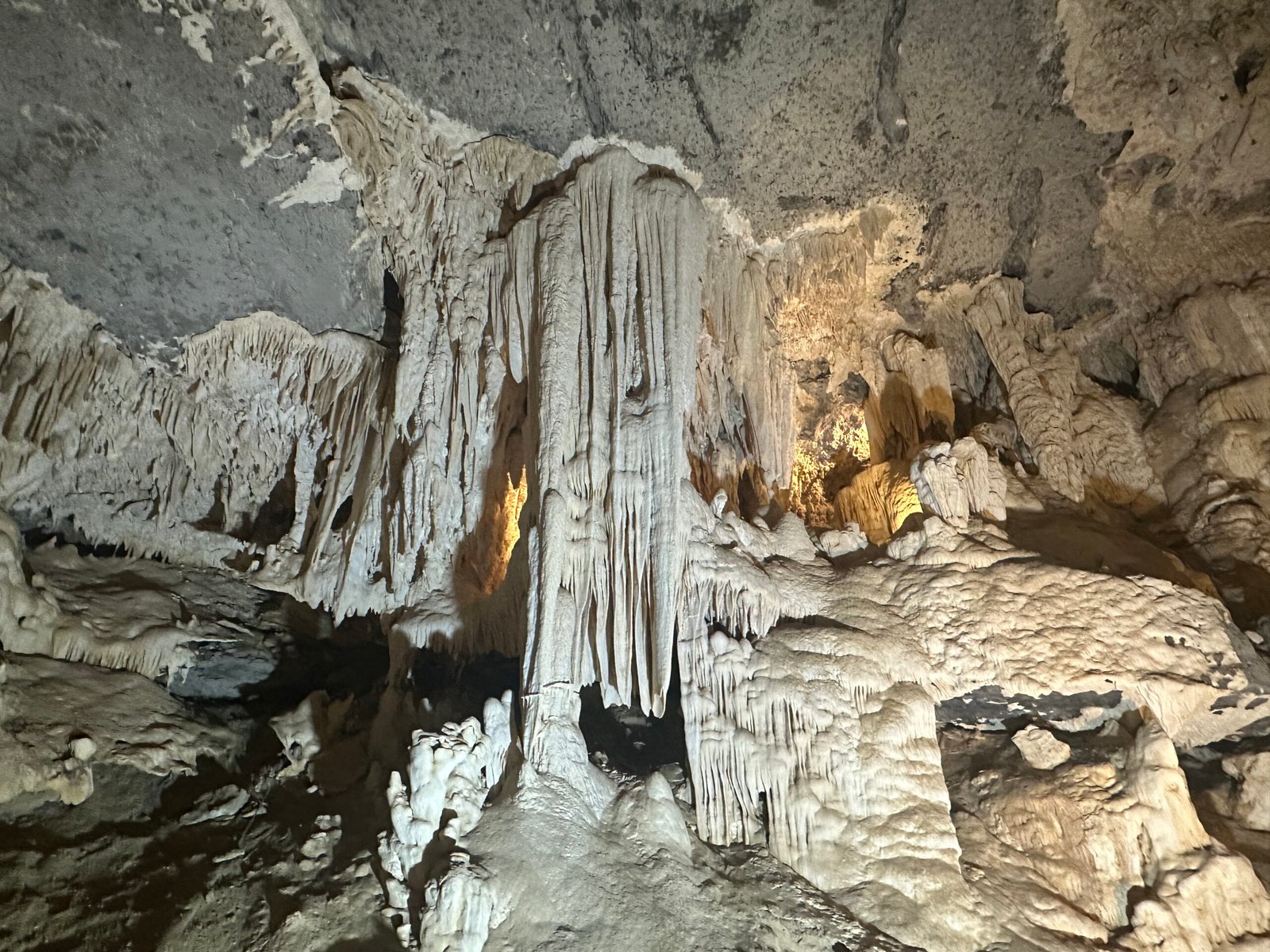
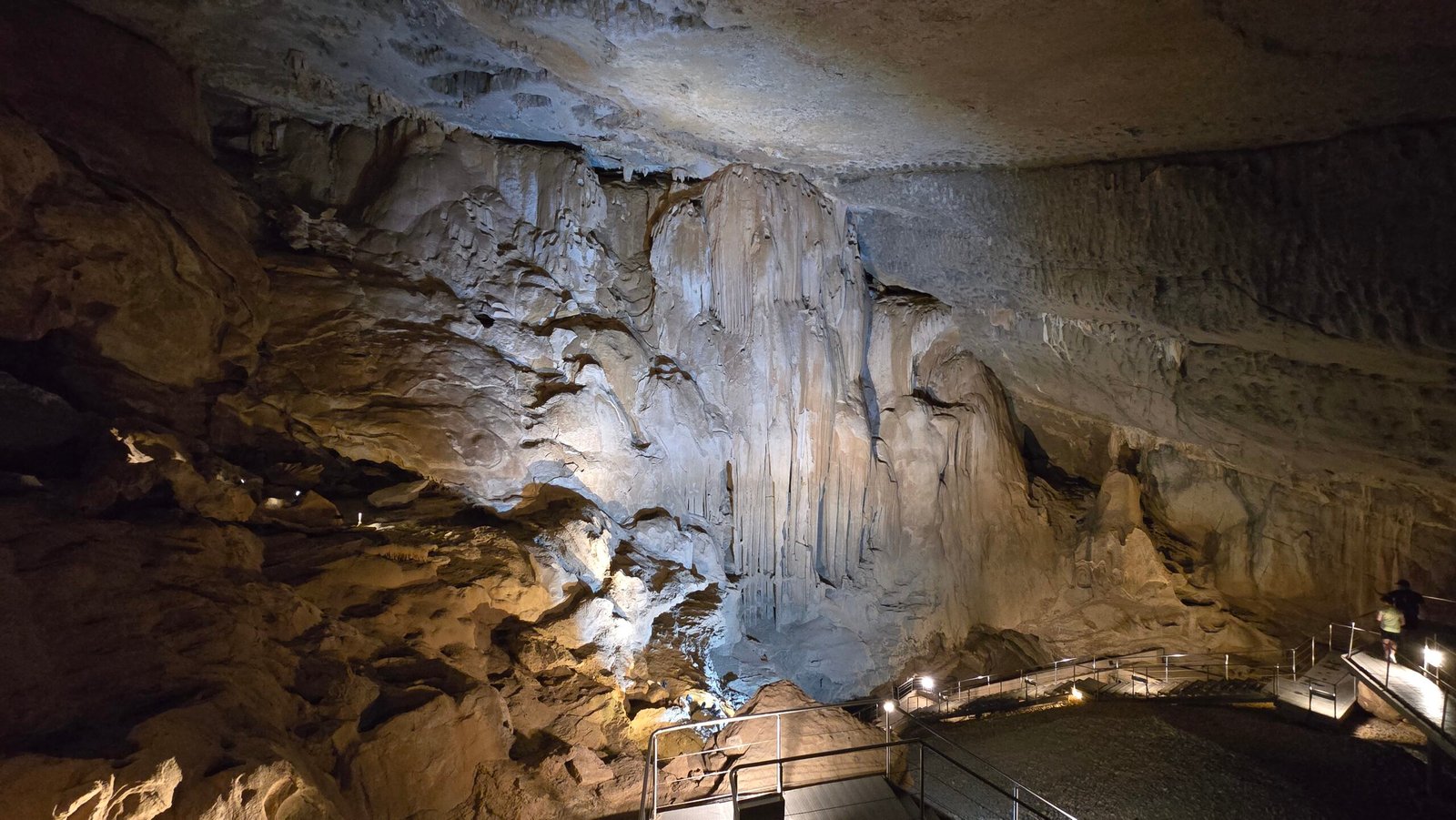
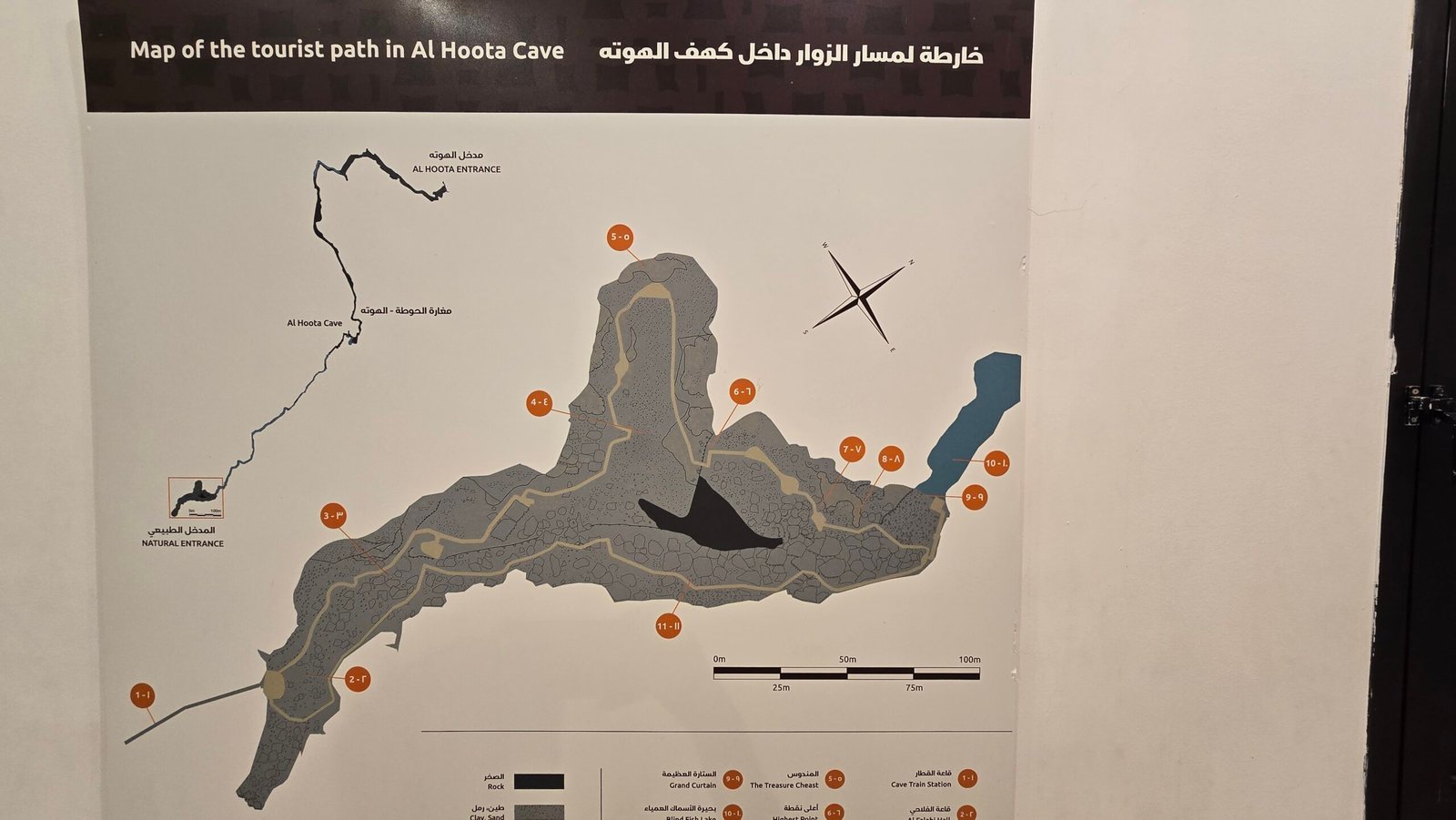
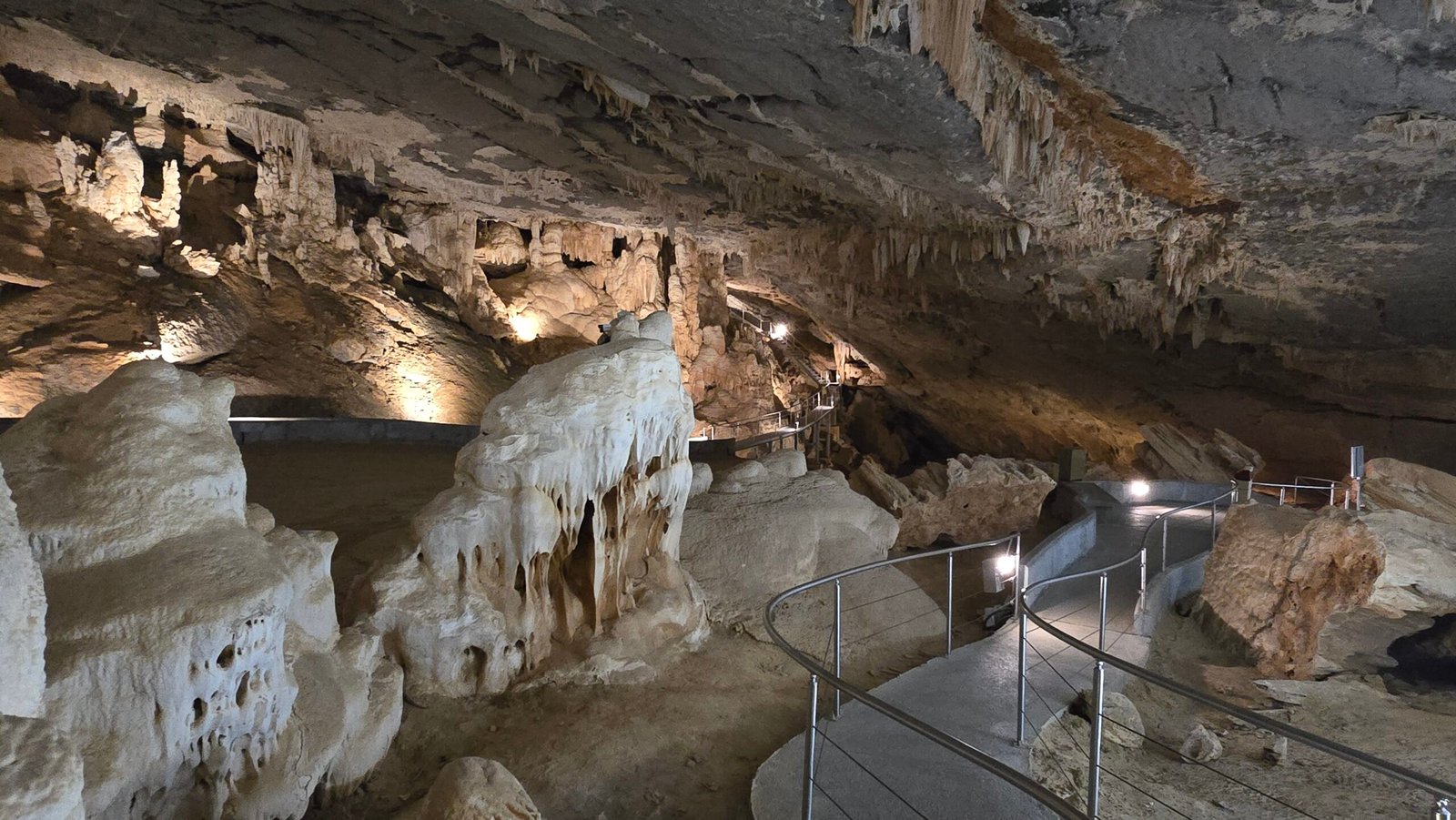
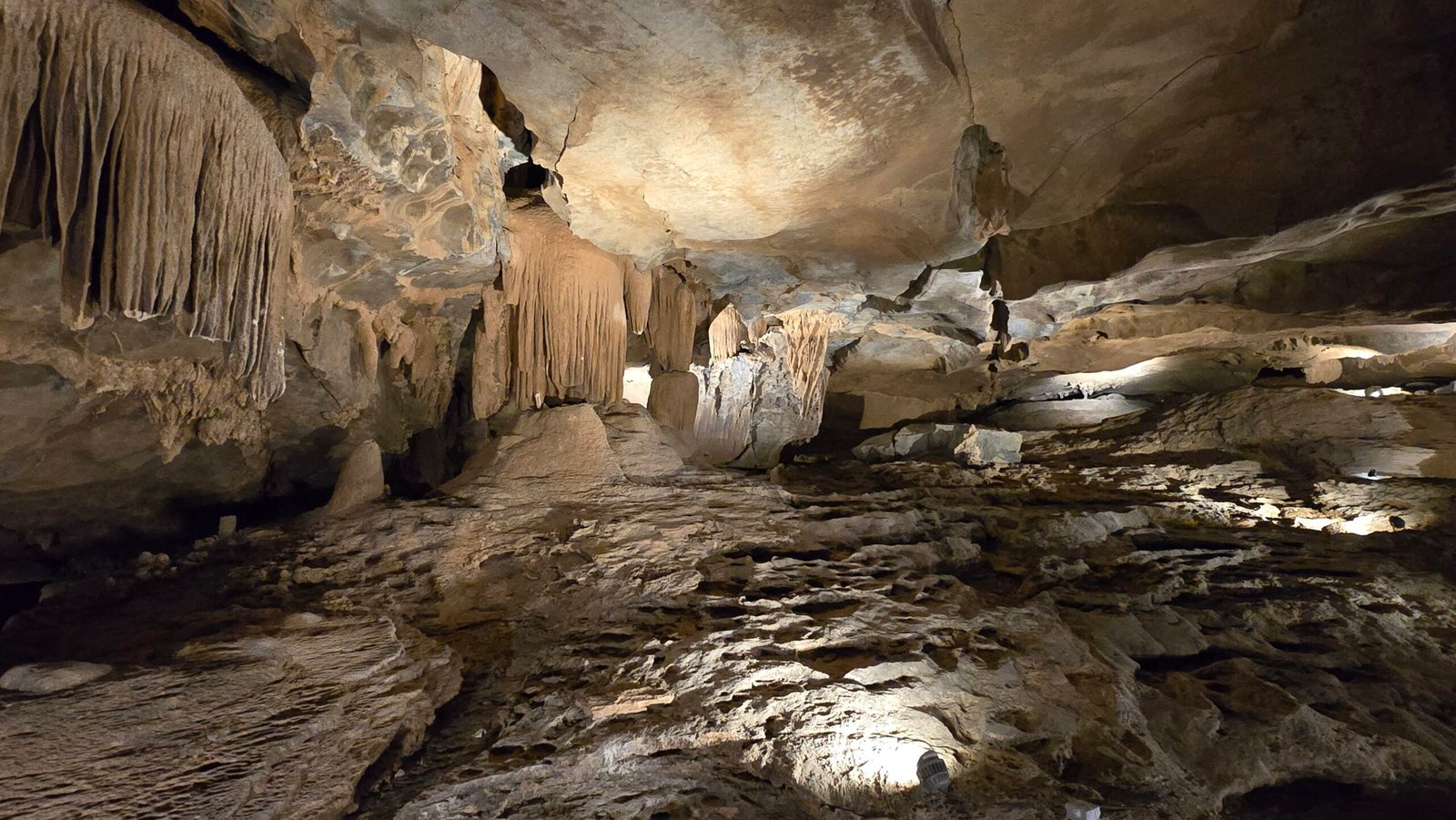
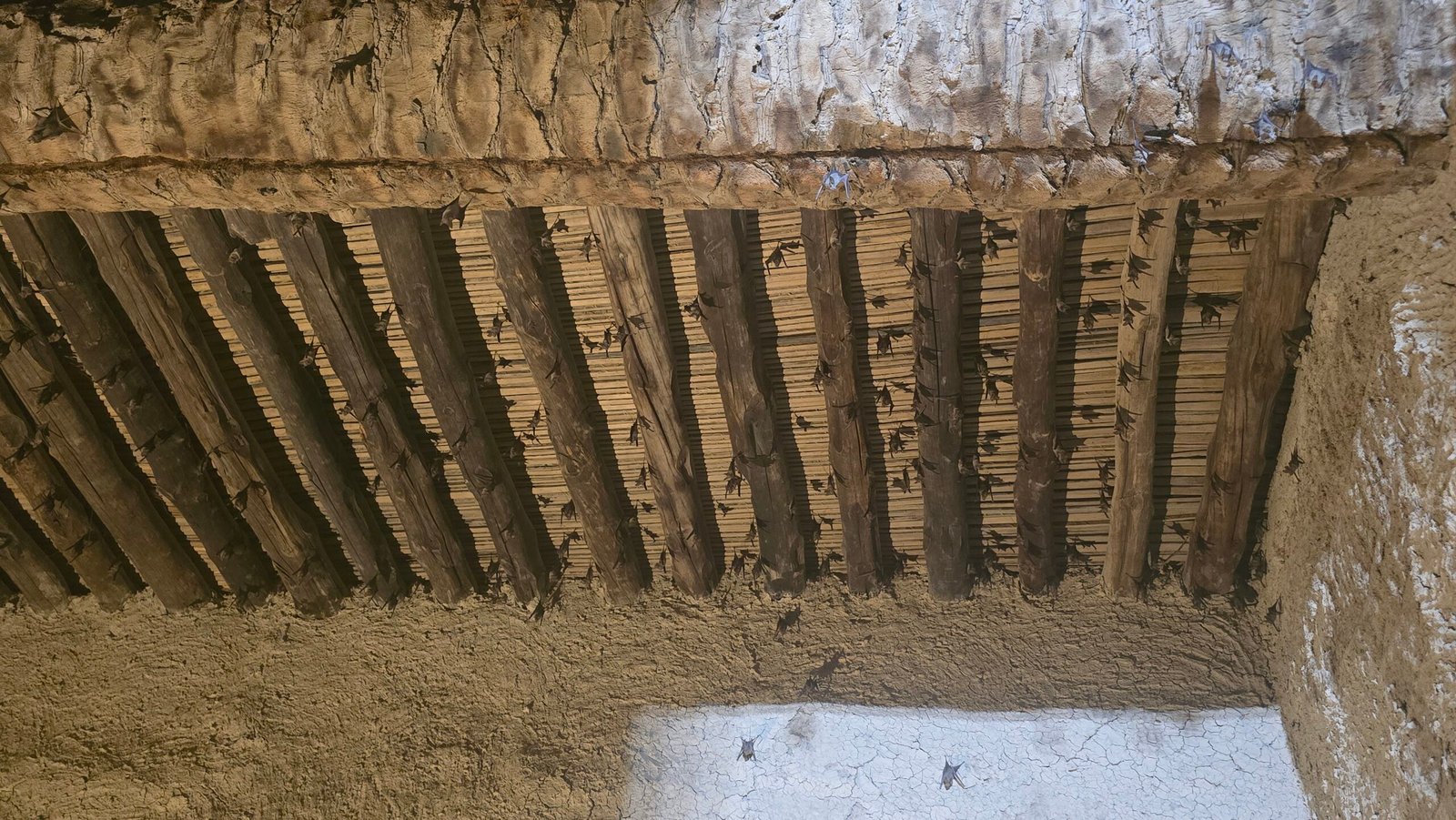
Our first destination was a true natural spectacle: Hoota Cave Adventure, located just an easy 40-minute drive from our starting point in Nizwa. It’s a subterranean wonder and the first and only show cave in the Arabian Peninsula. The journey there took us towards the majestic backdrop of Jebel Shams, Oman’s highest peak.

This place is dripping with natural history—literally! The massive limestone cave system is estimated to be over 2 million years old. While local legends say it was used as a secret shelter for centuries, it was famously rediscovered in the 1960s by a shepherd looking for a lost goat before officially opening to the public in 2006. Descending into this vast, ancient ecosystem was the perfect way to start the day with a dose of adventure.

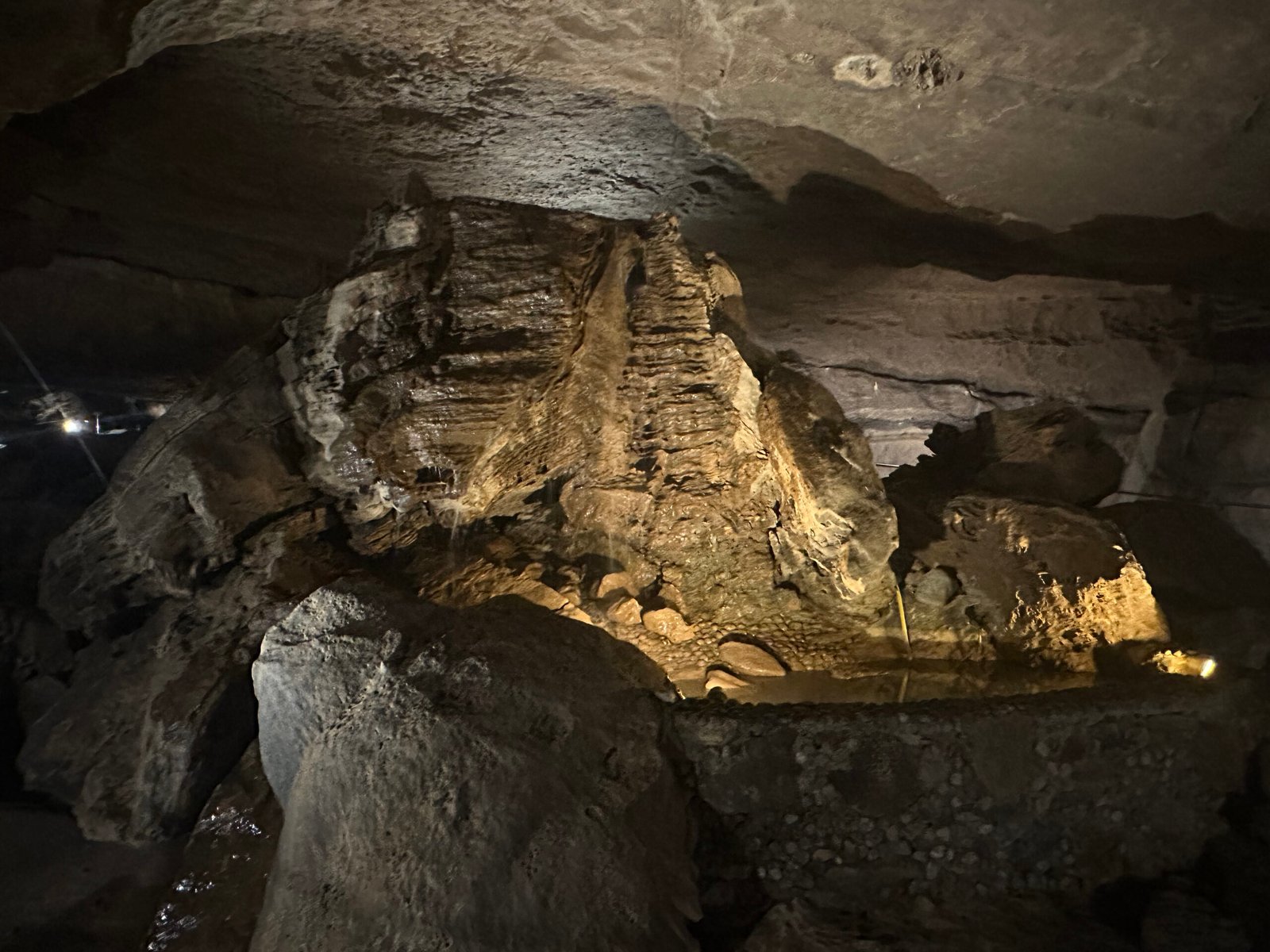
The guided walking loop inside covers about 500 meters of the cavern and takes roughly 45 minutes to an hour to complete. You’ll navigate well-maintained pathways past towering stalactites, glistening stalagmites, and an underground lake that is famously home to rare, blind cave fish that exist nowhere else in the world.


Bloggers Tip: Make sure to book your tickets online in advance, even though you can buy themonsite! For international visitors, tickets are 7.350 OMR for adults and 3.675 OMR for children (ages 6-16). For Omani nationals, tickets are 3.675 OMR for adults and 1.050 OMR for kids. Also, keep in mind that photography isn’t allowed inside to protect the delicate cave ecosystem, so you’ll just have to soak in the incredible views with your own eyes!

📍 Stop 2: Misfat al Abriyyin, the Living Village

Leaving the caves behind, a scenic, winding 30-minute drive took us further up into the Hajar Mountains to our next stop: the high-altitude village of Misfat al Abriyyin.

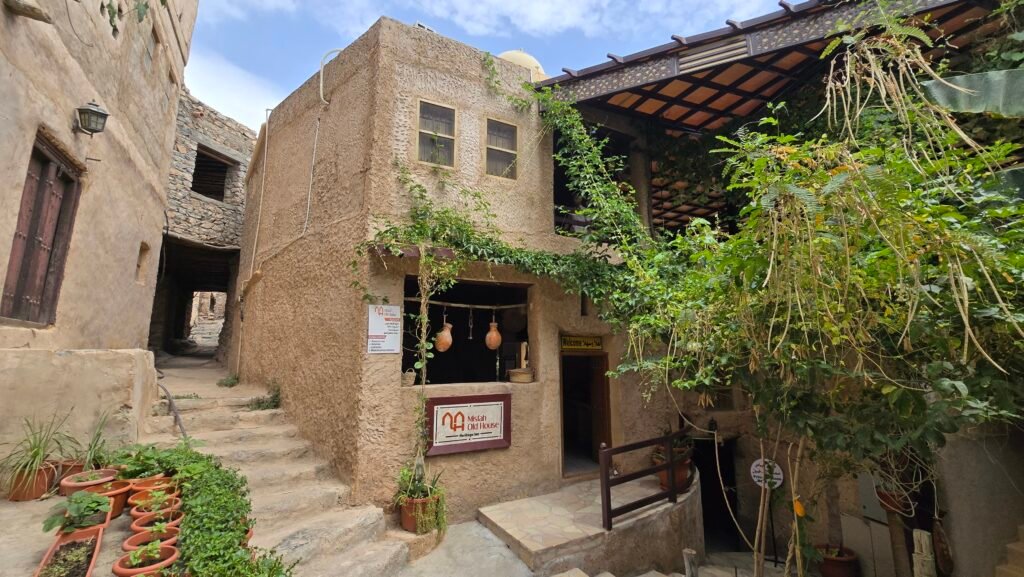
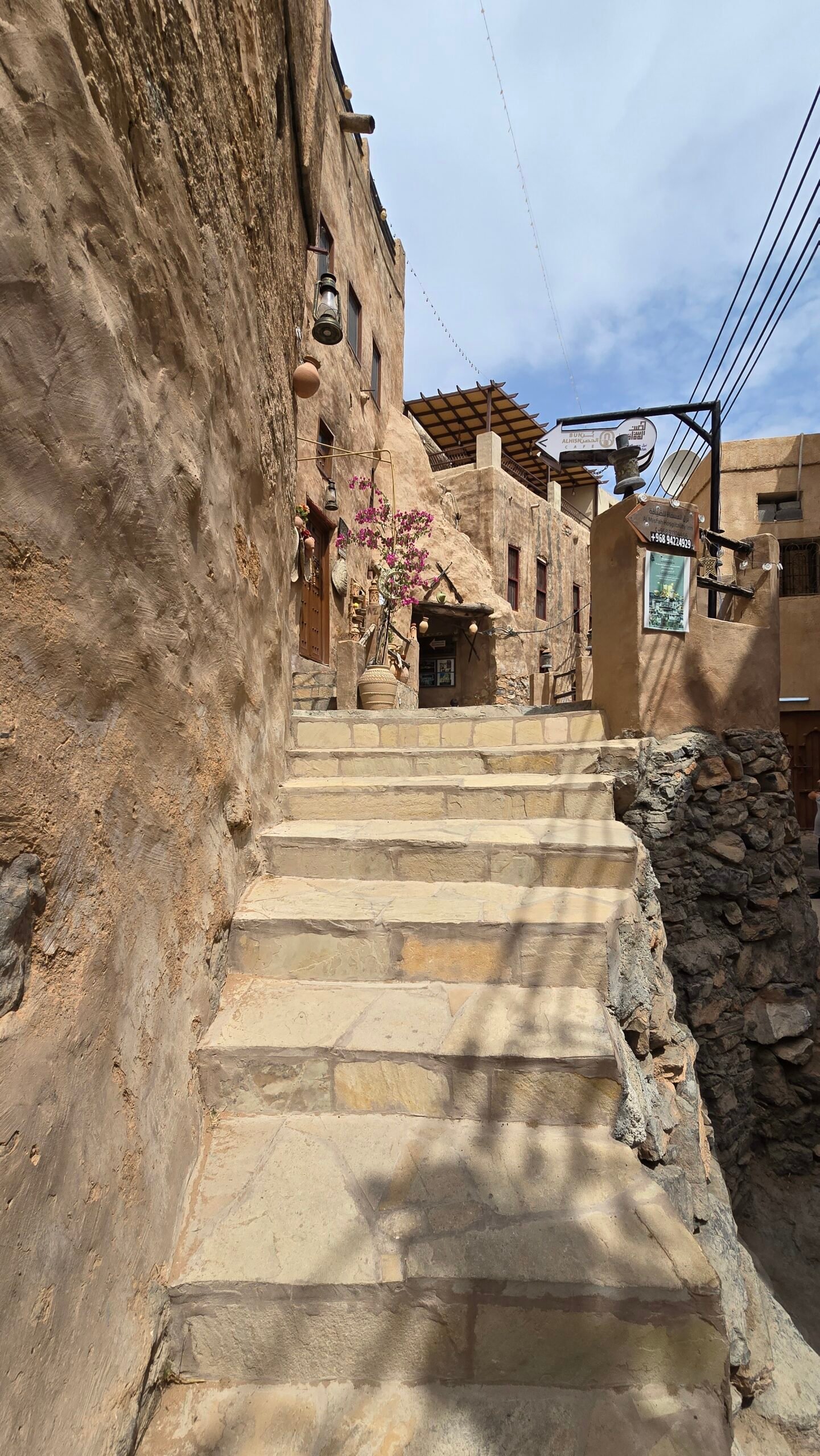
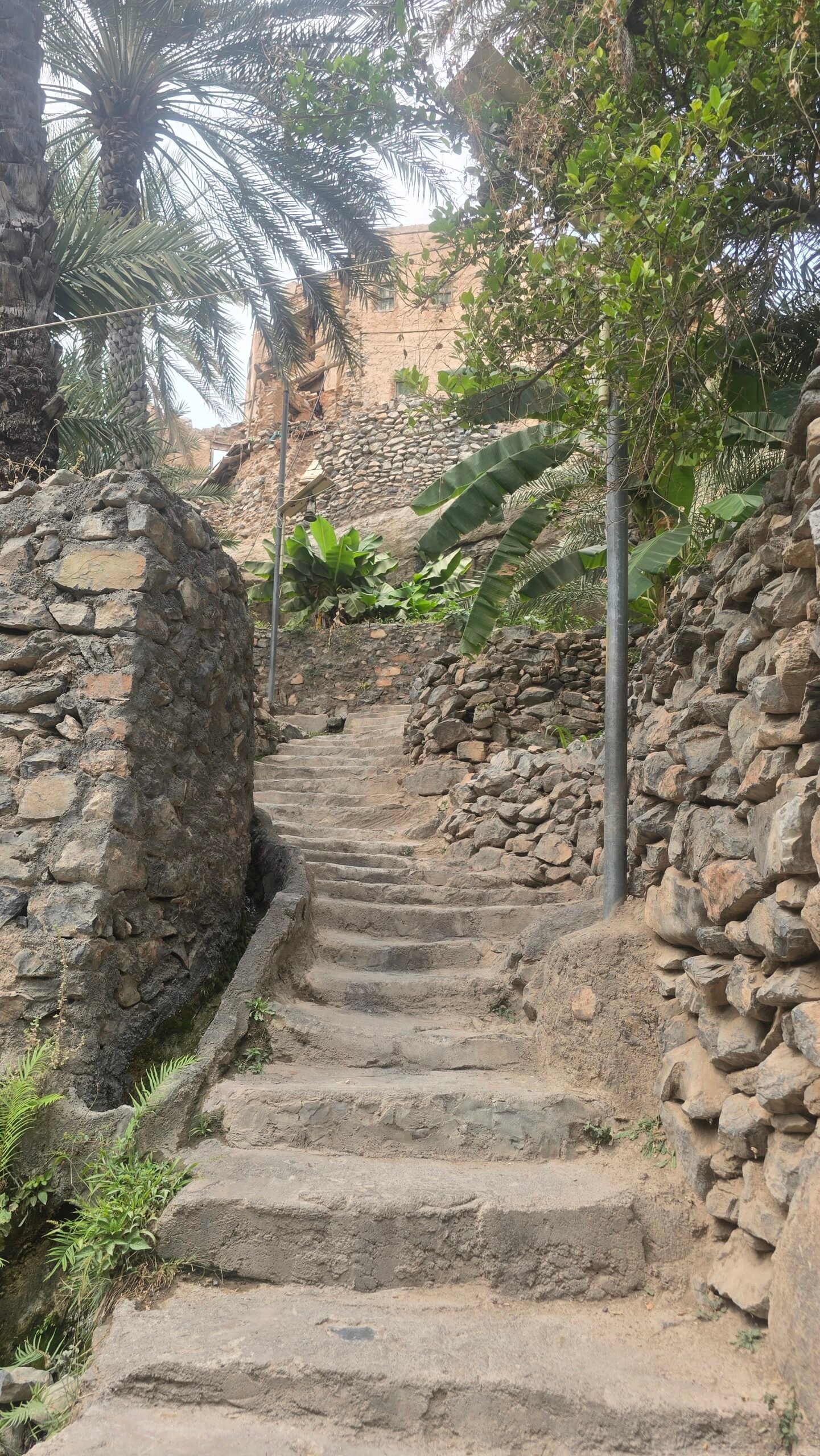
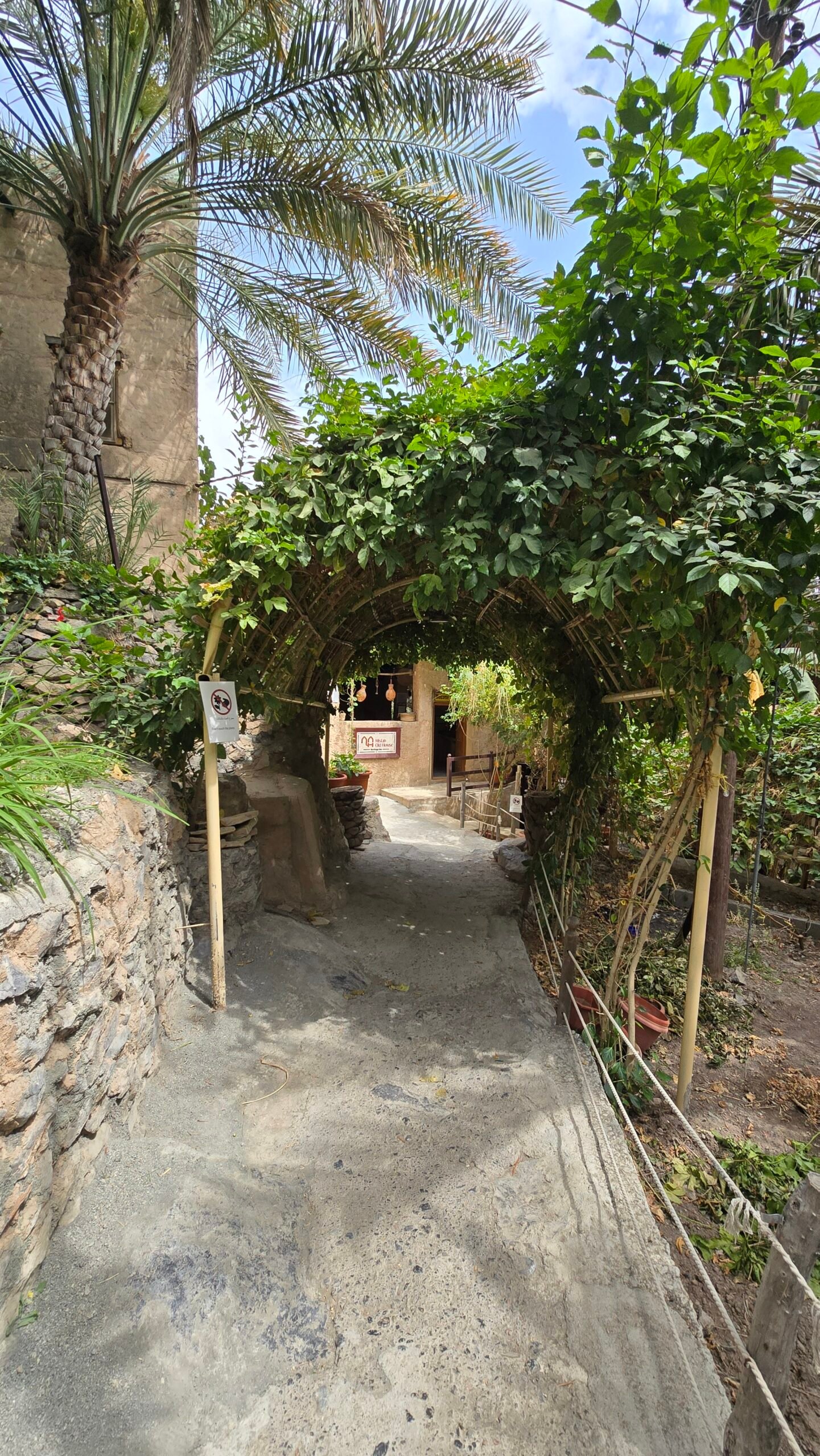
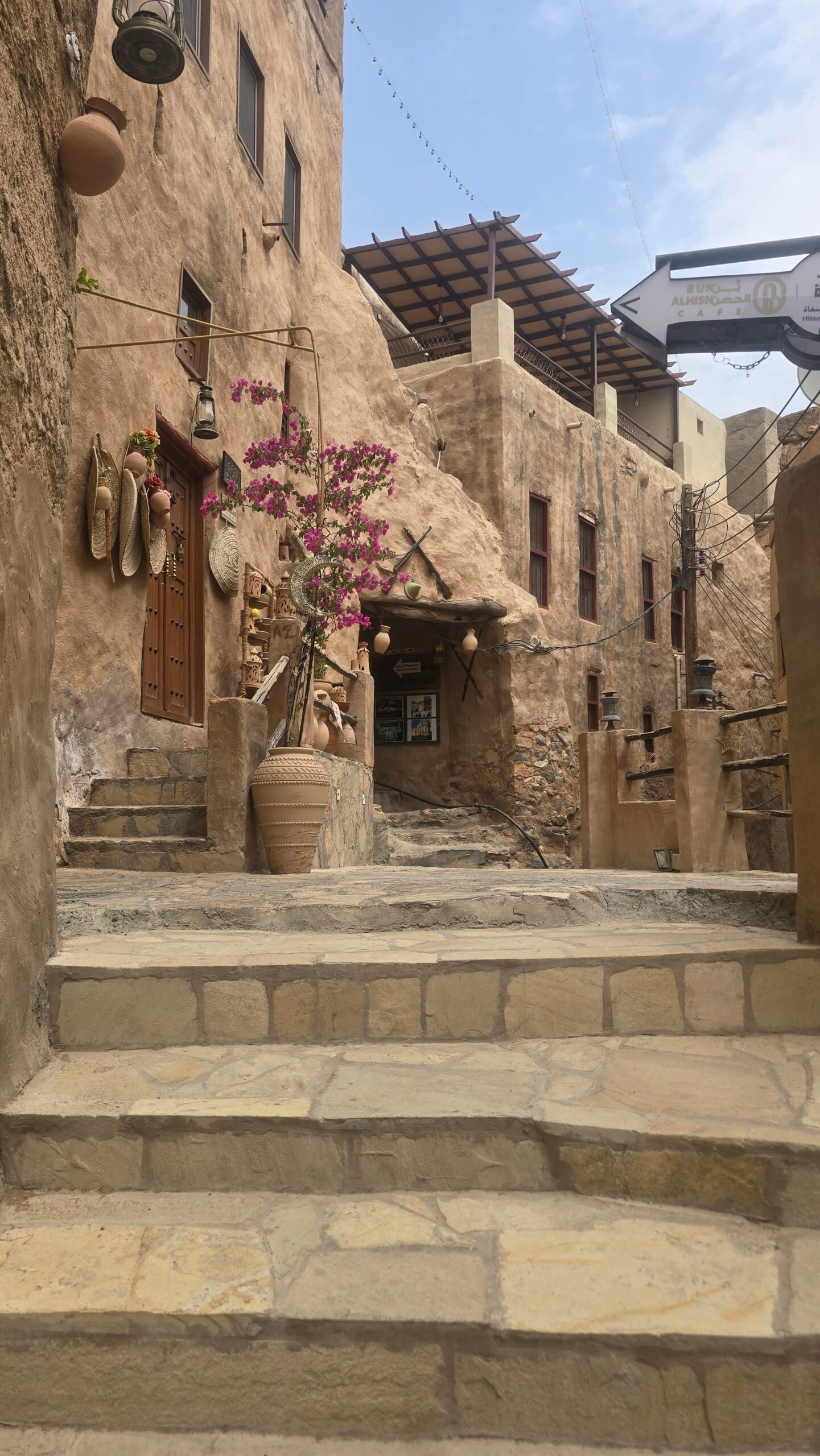
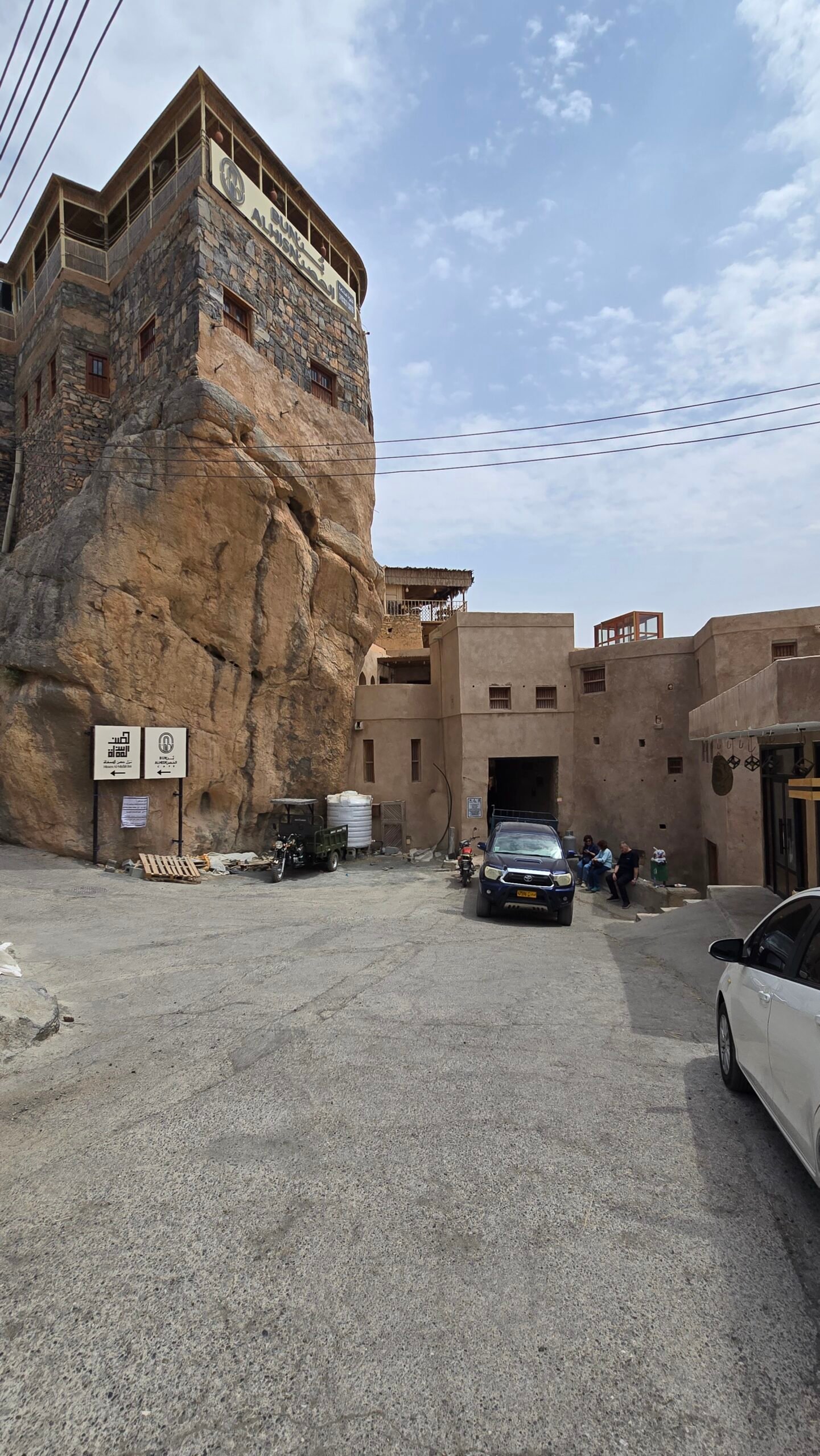
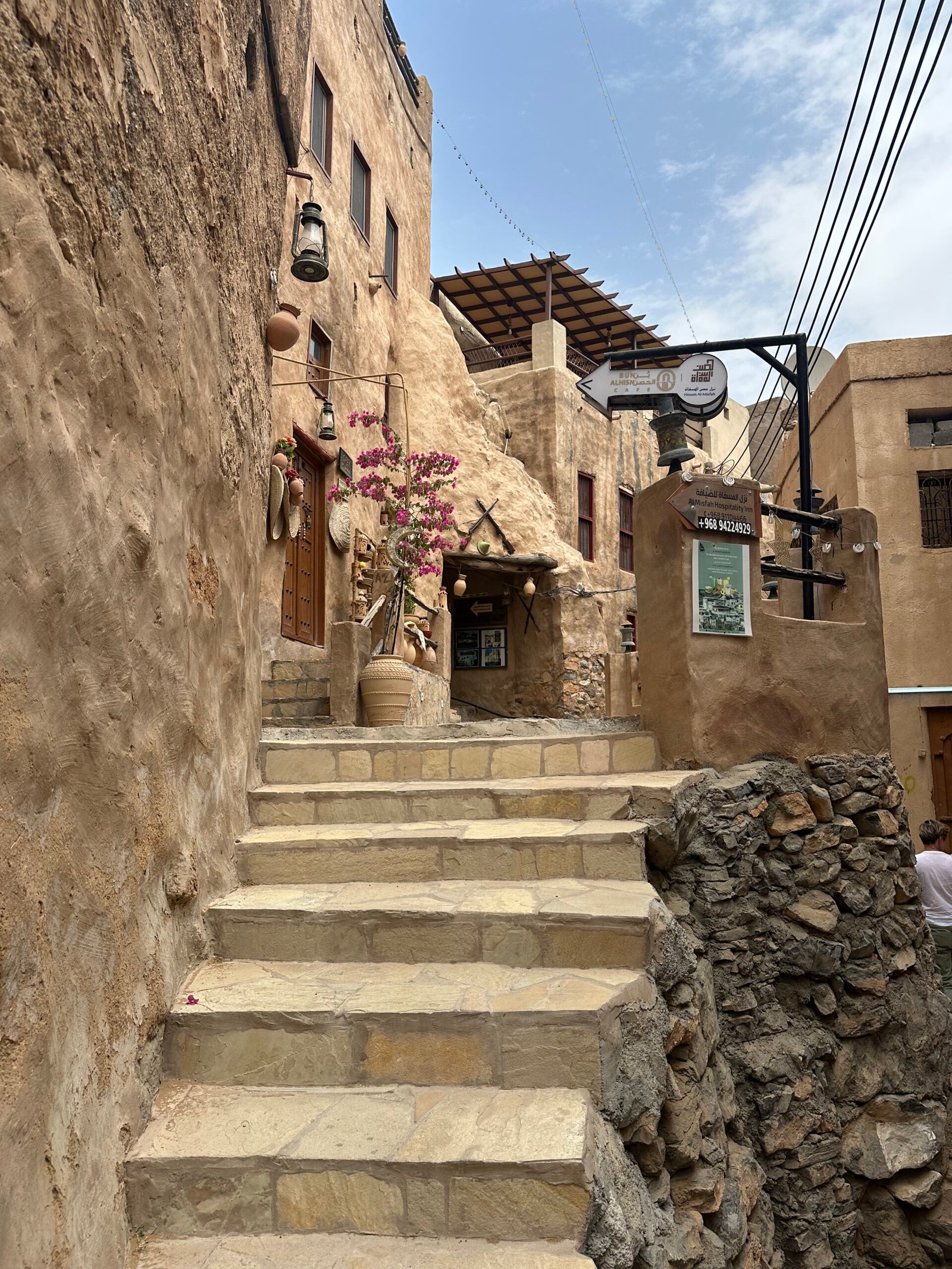
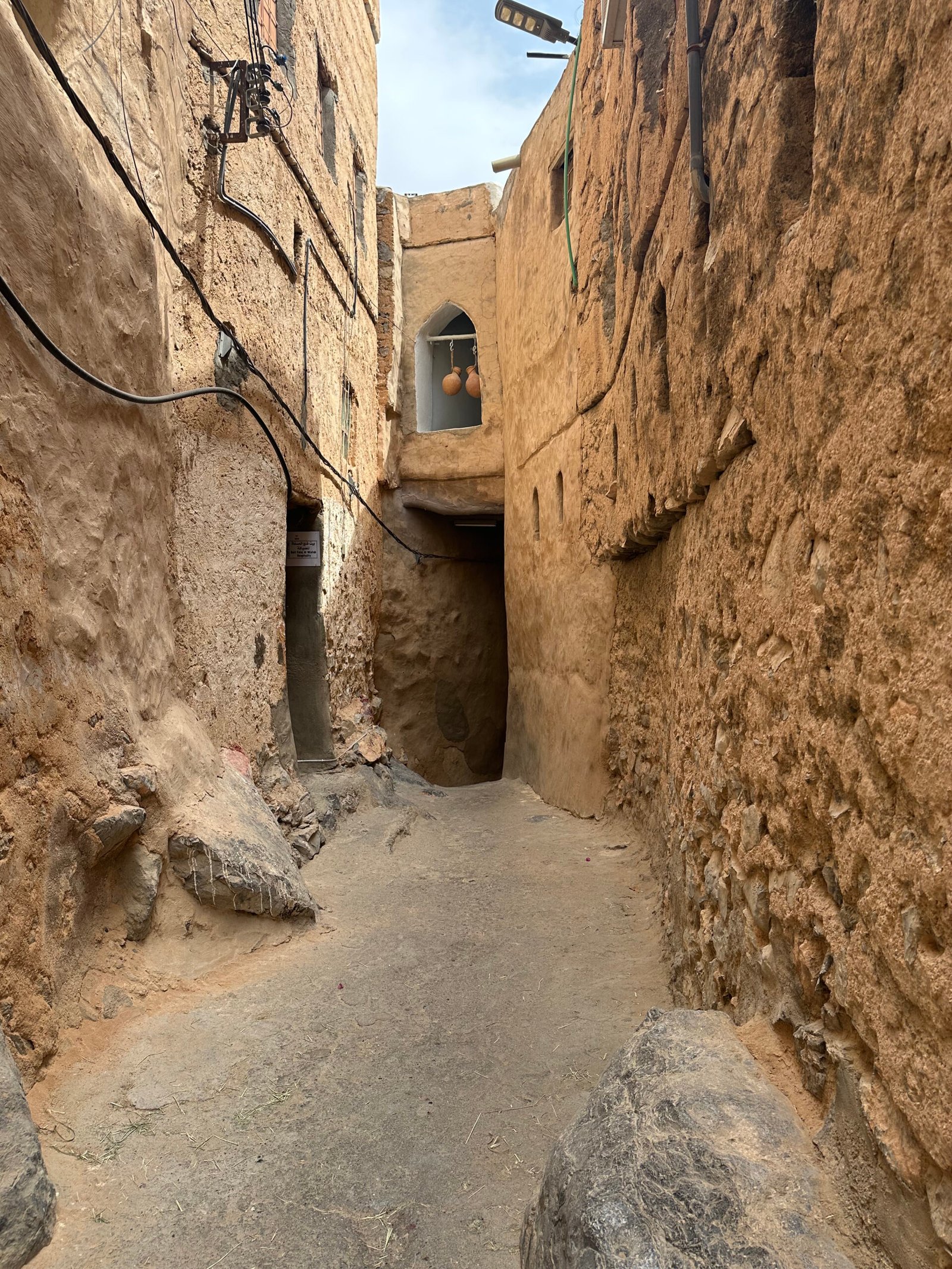
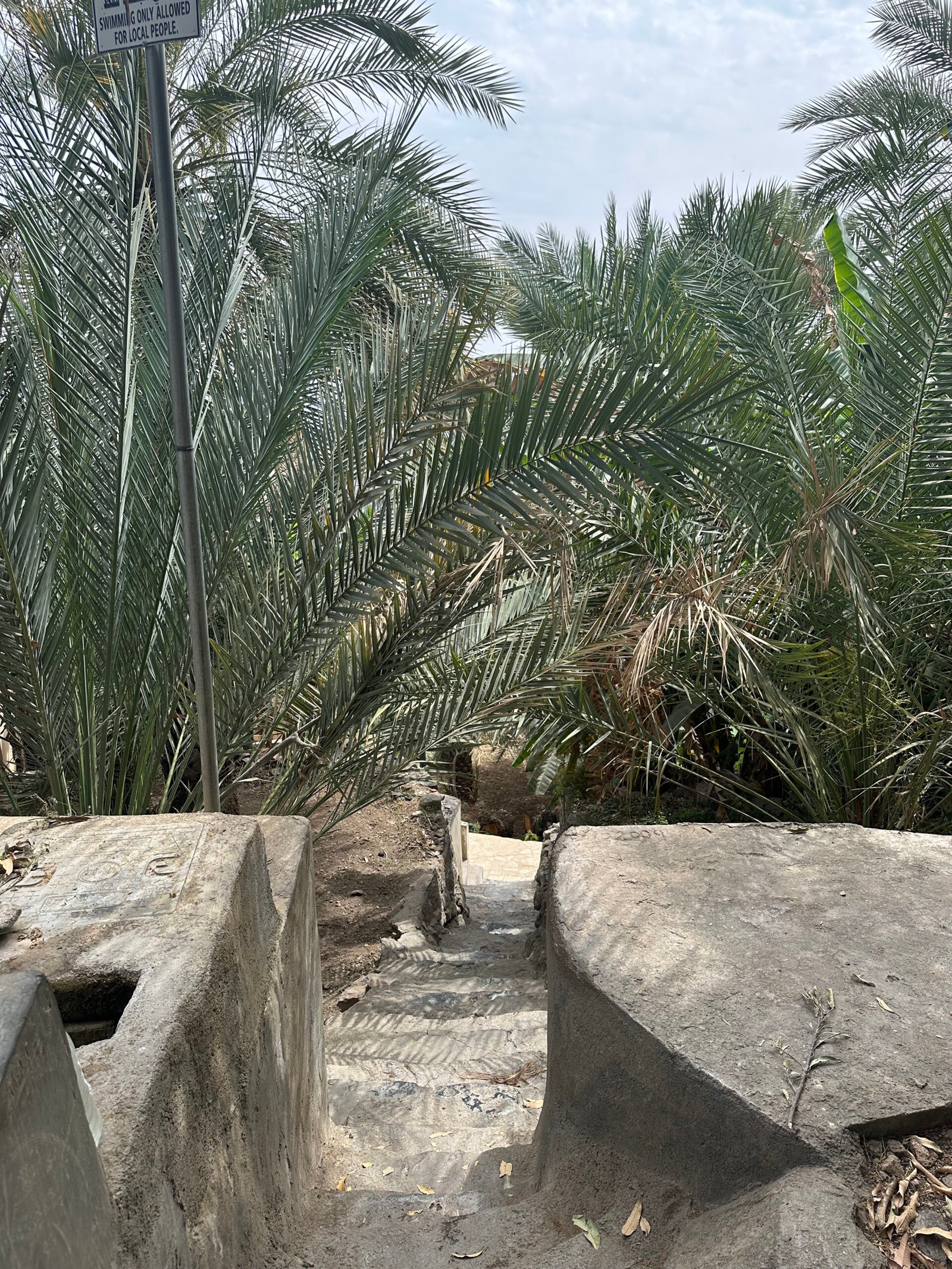
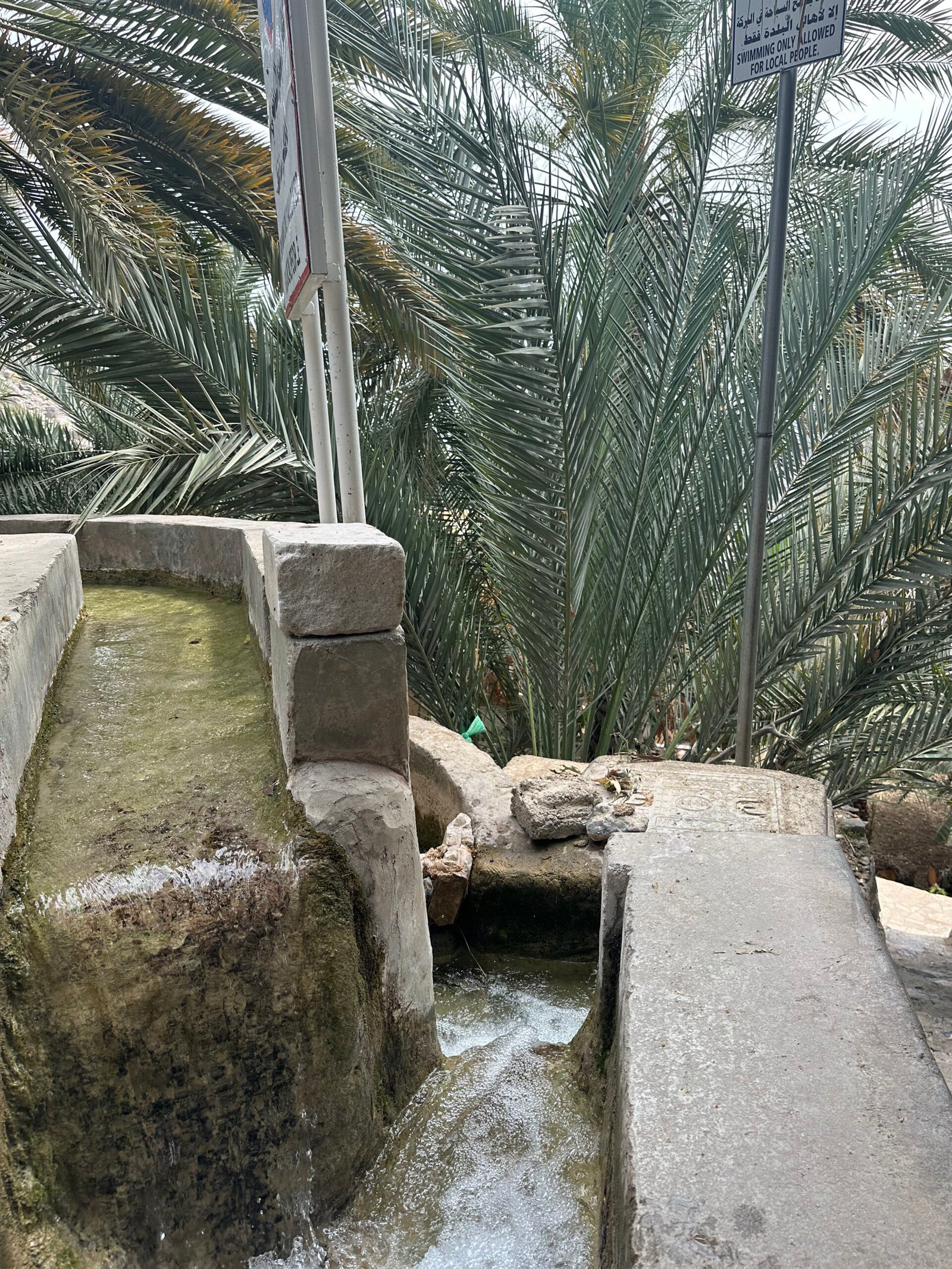
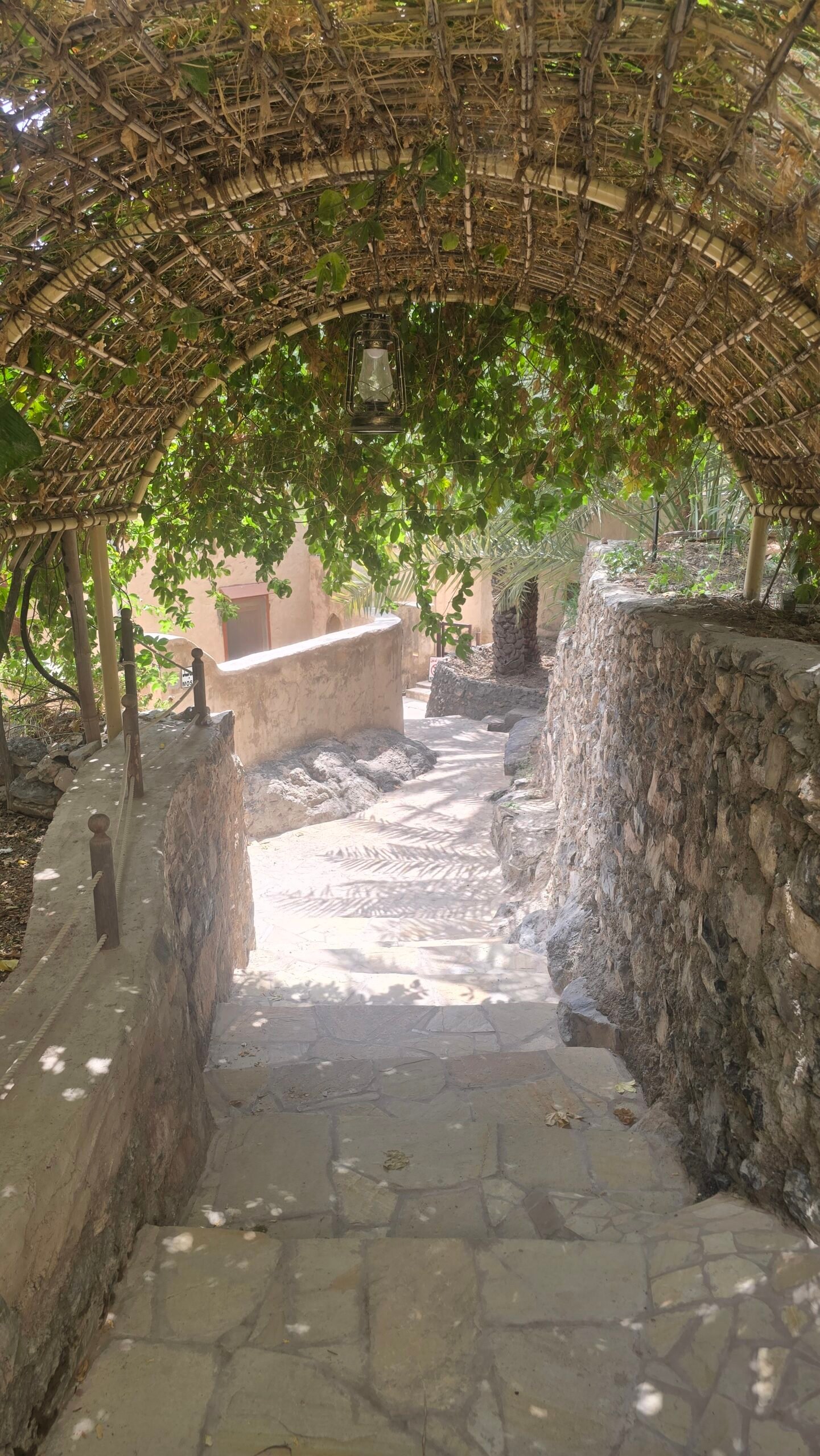
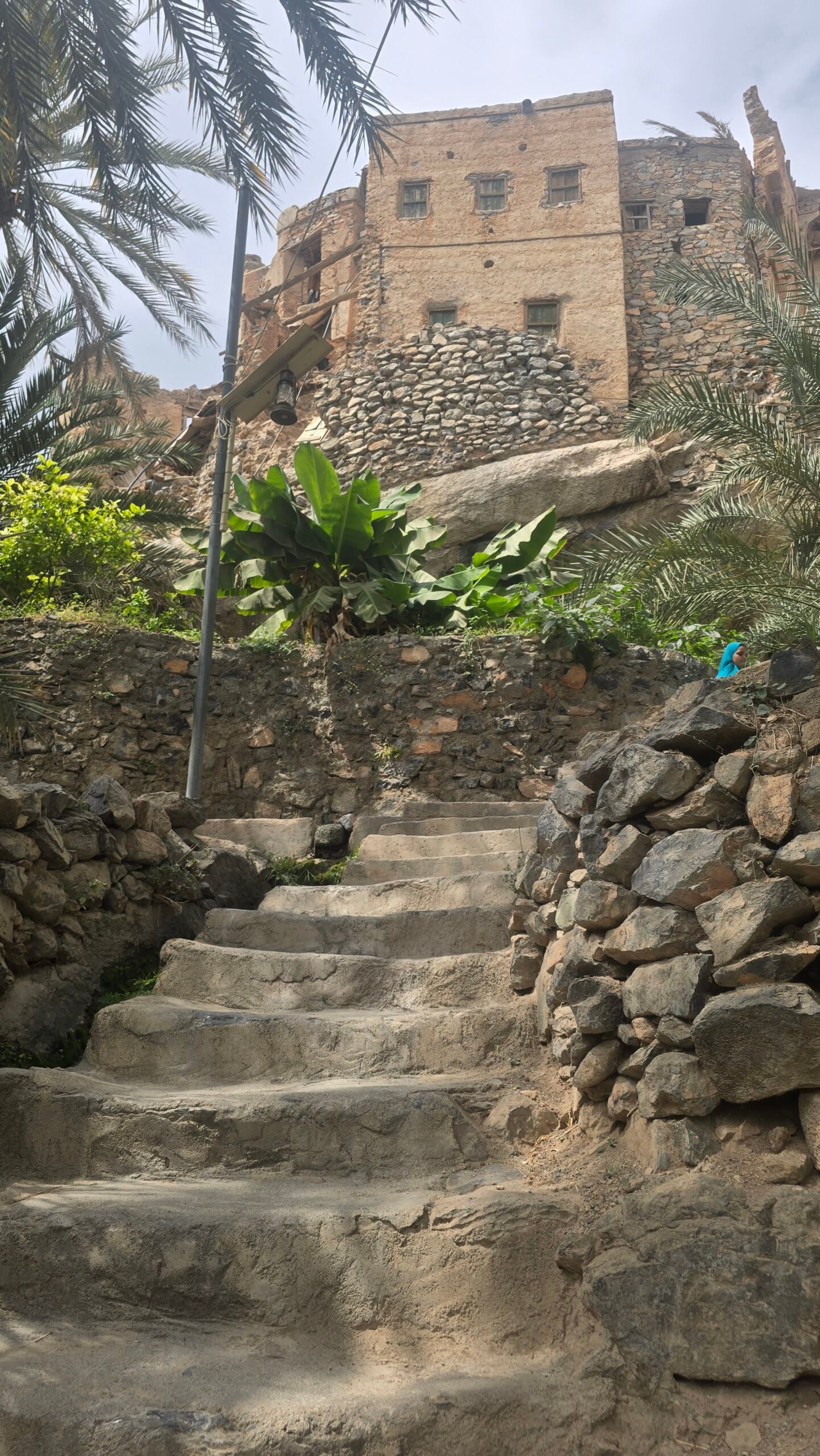
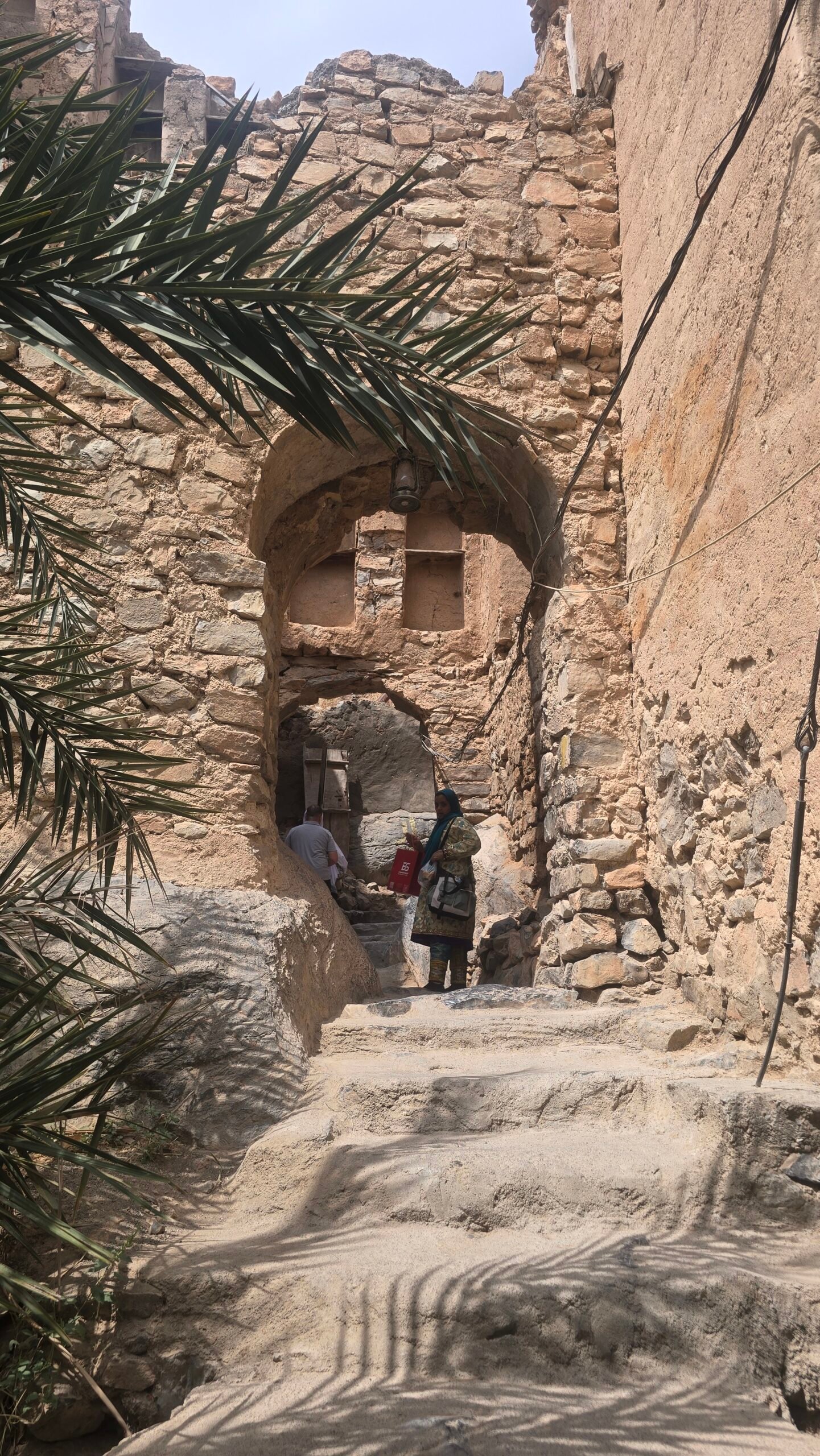
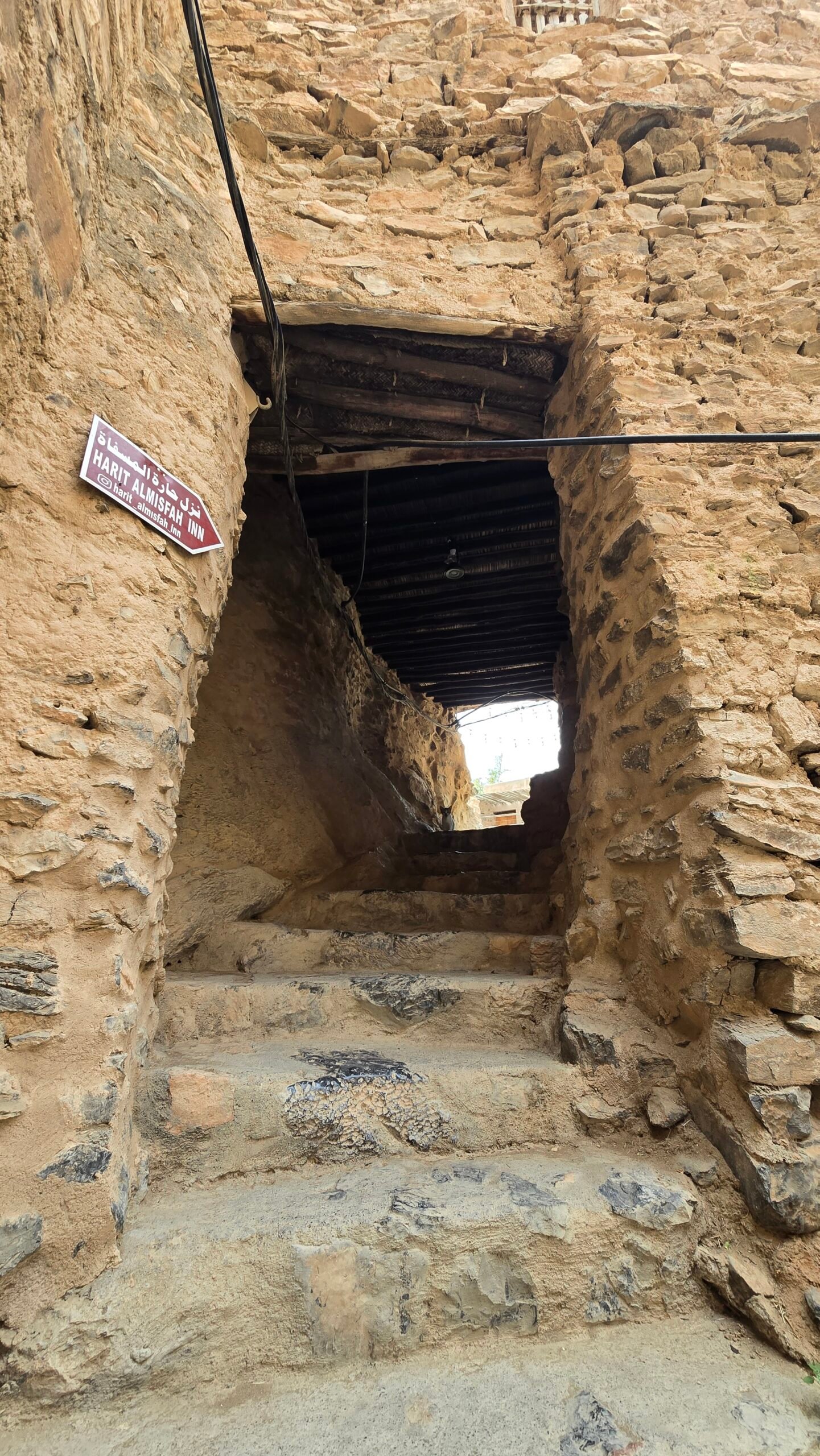
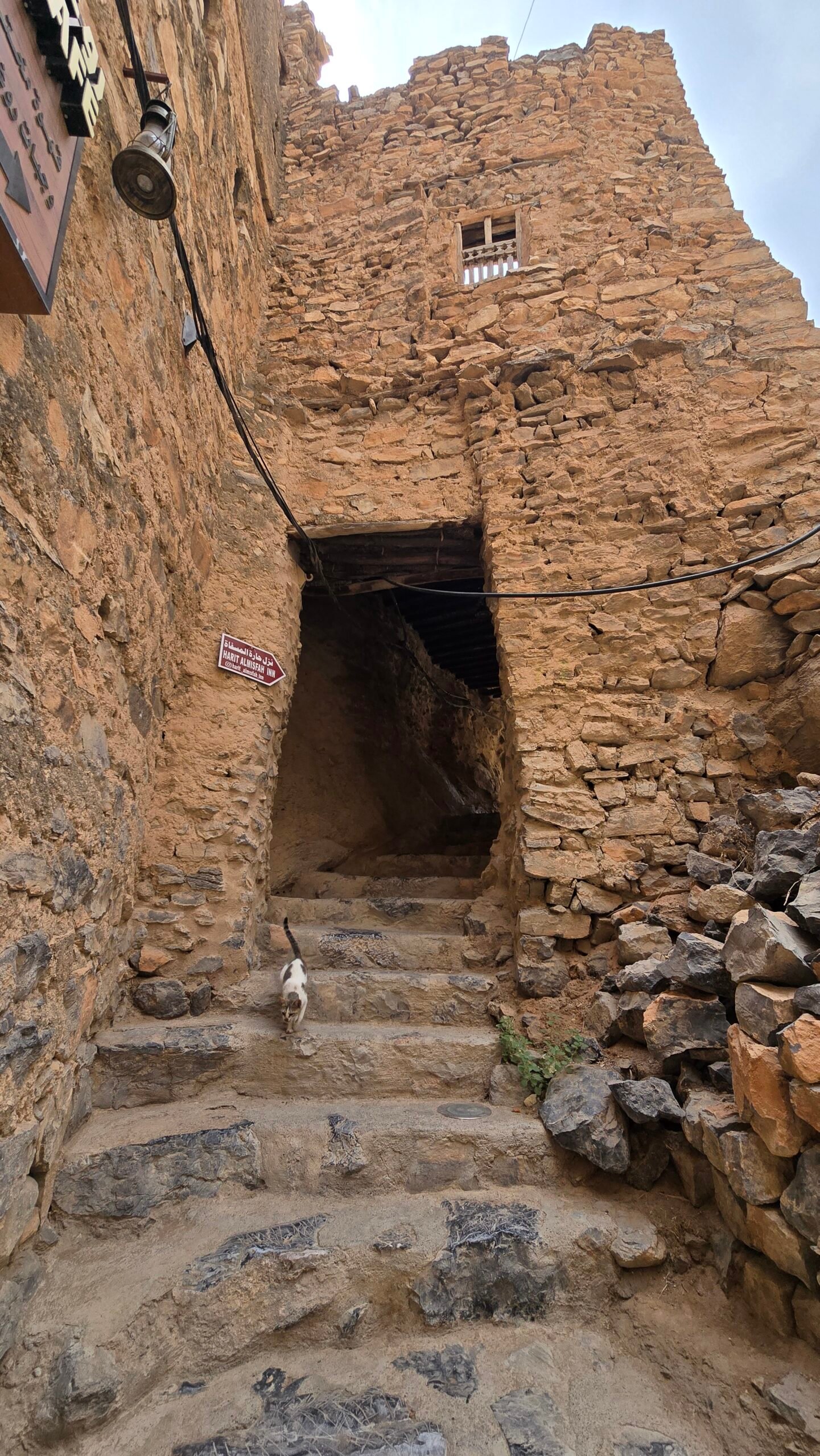
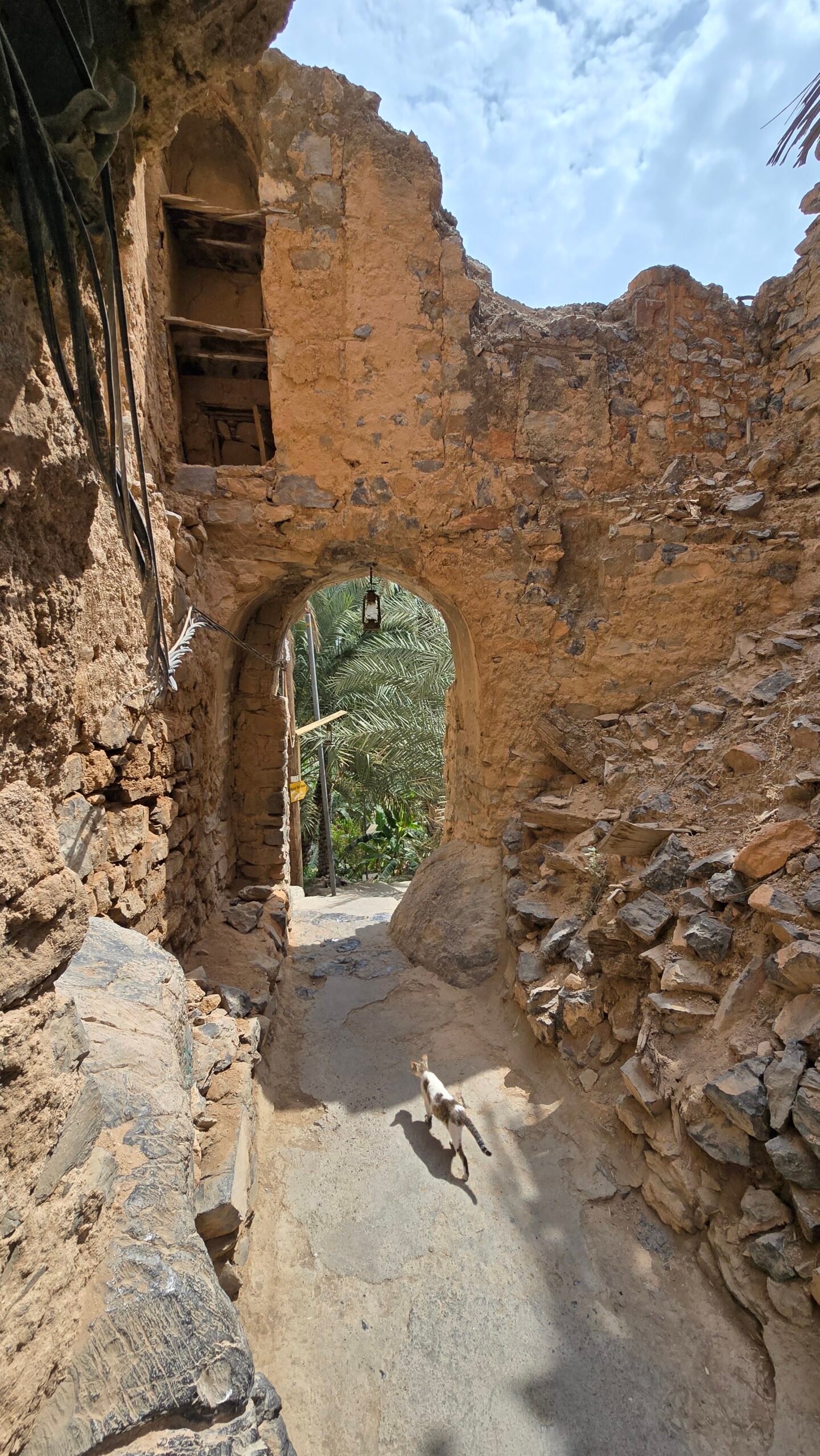
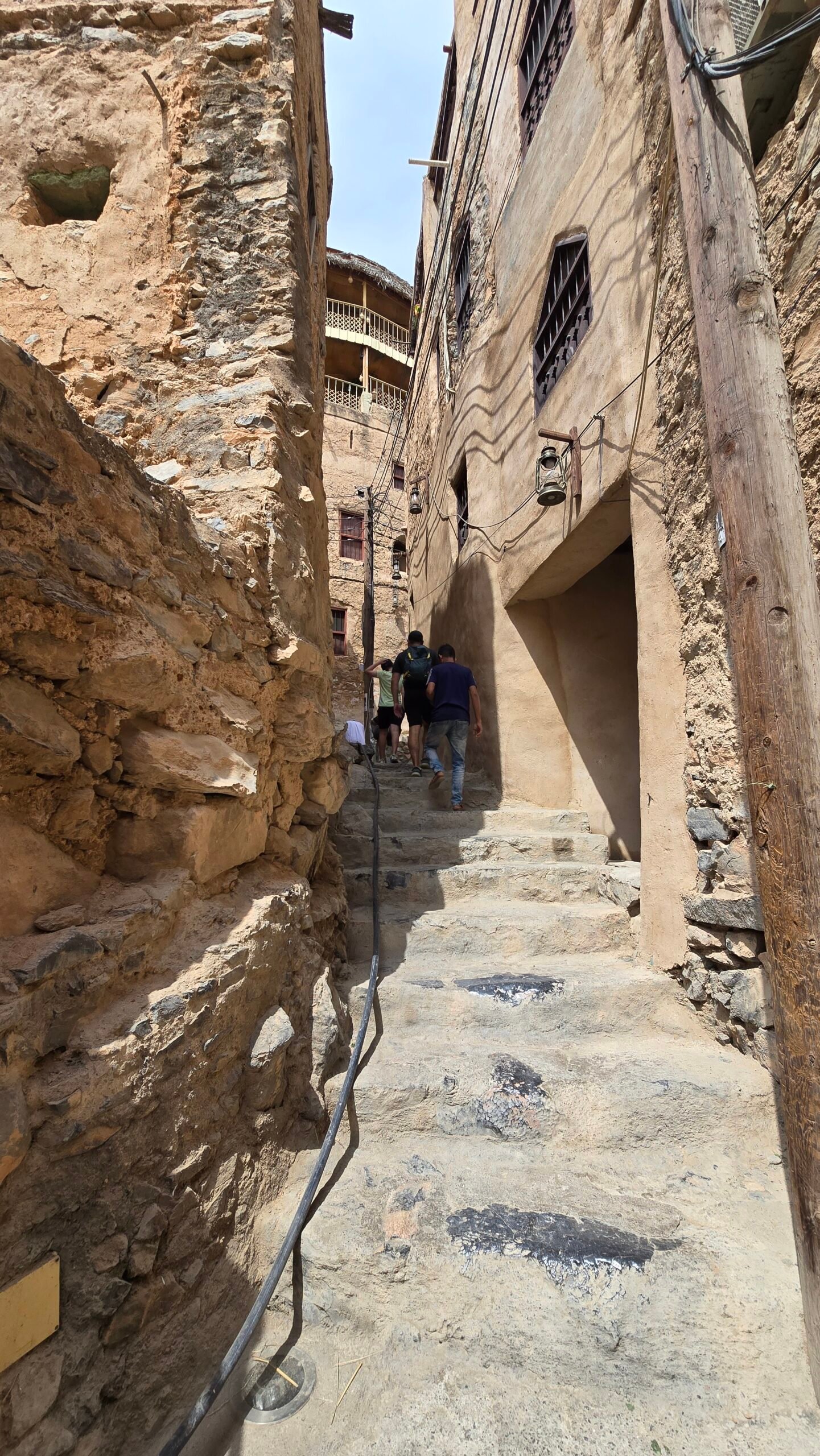
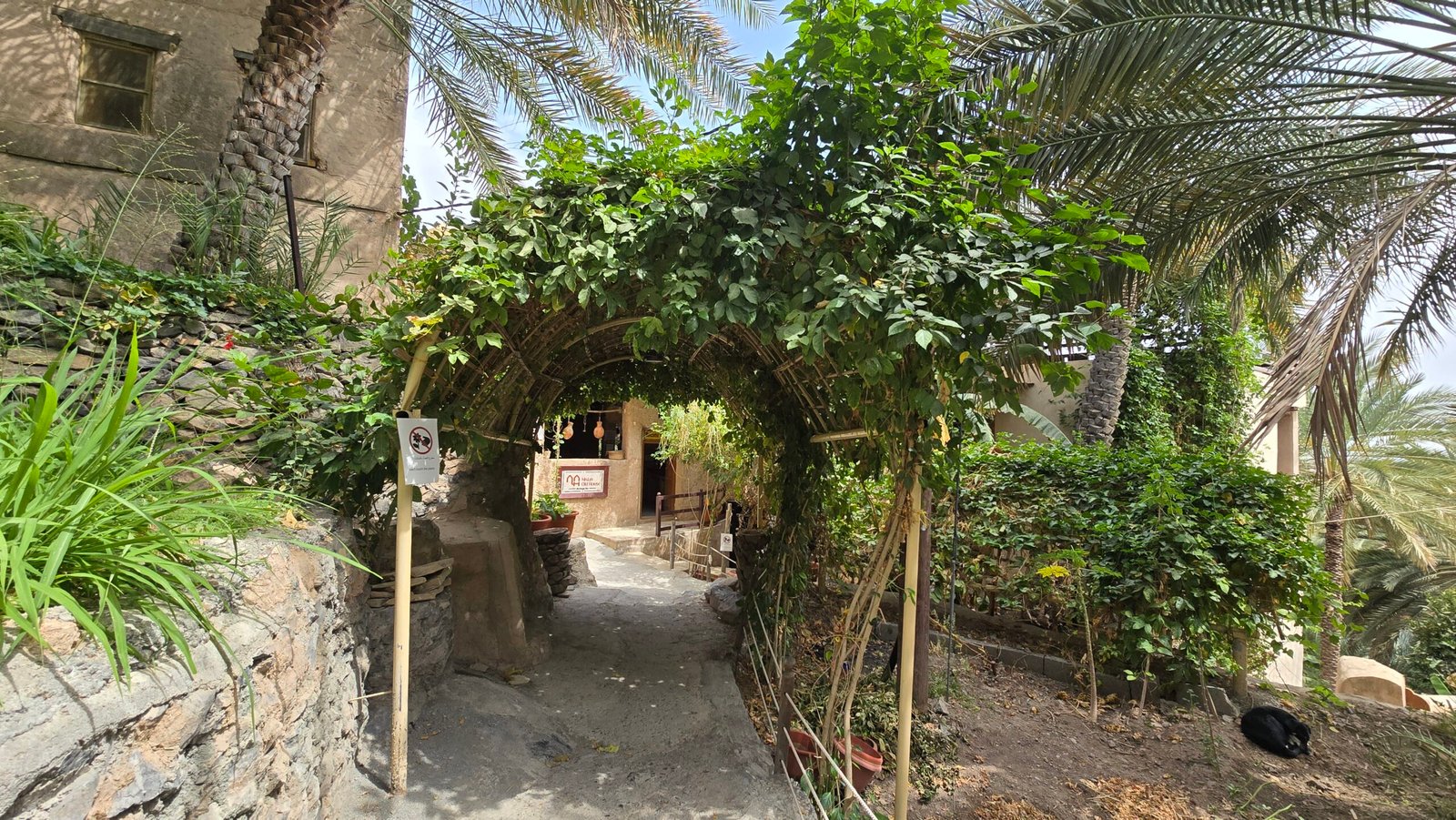
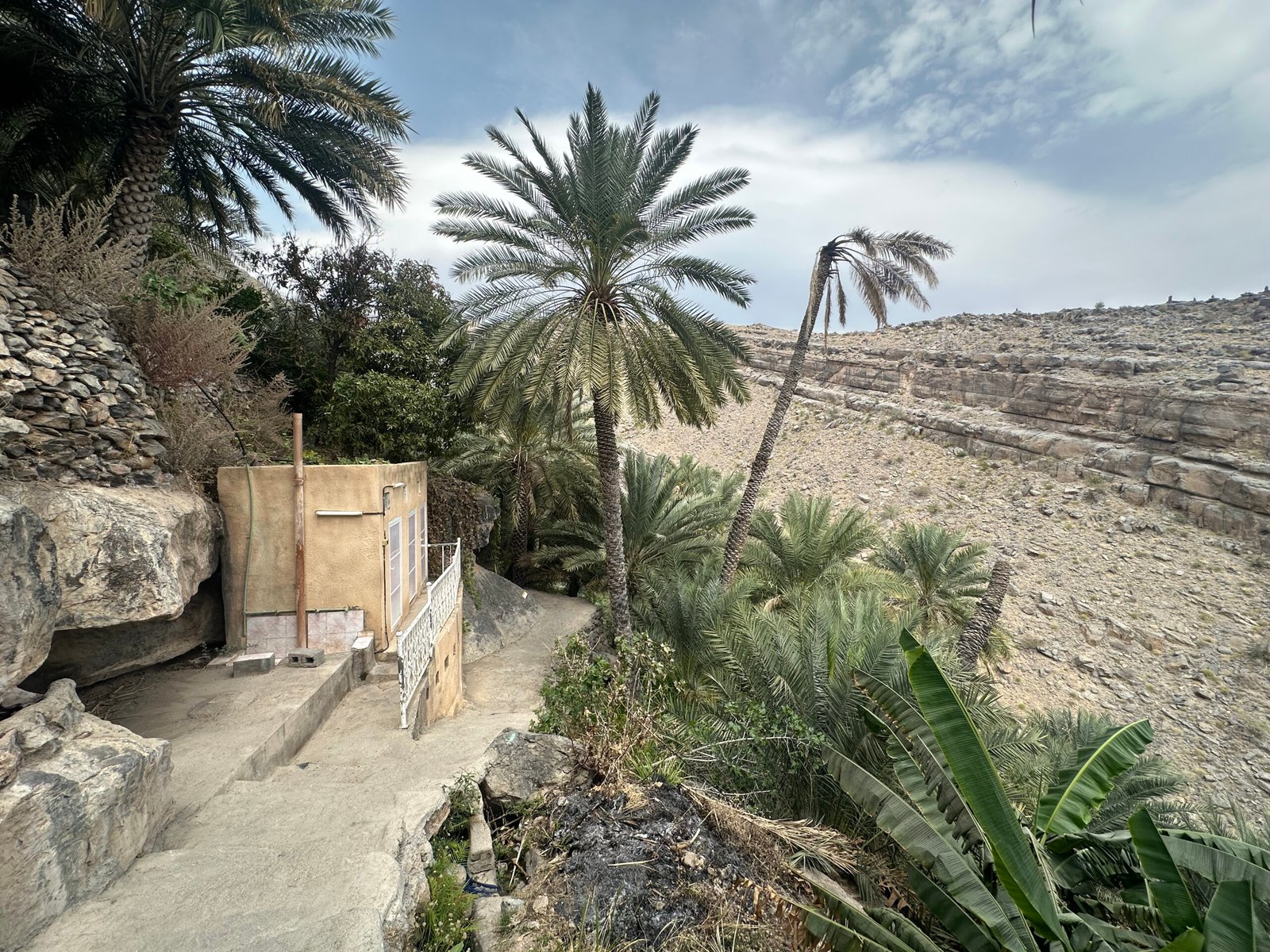
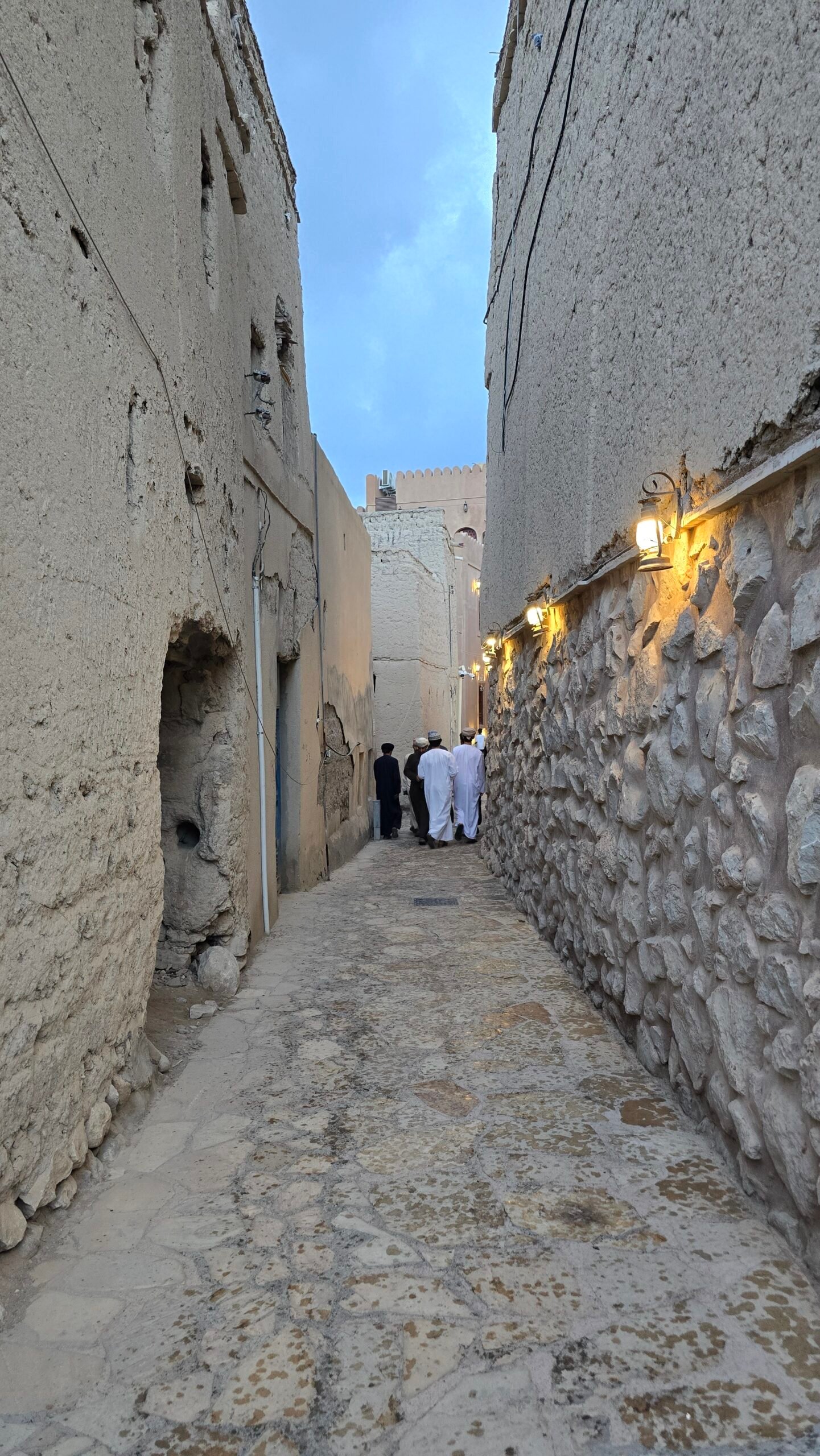
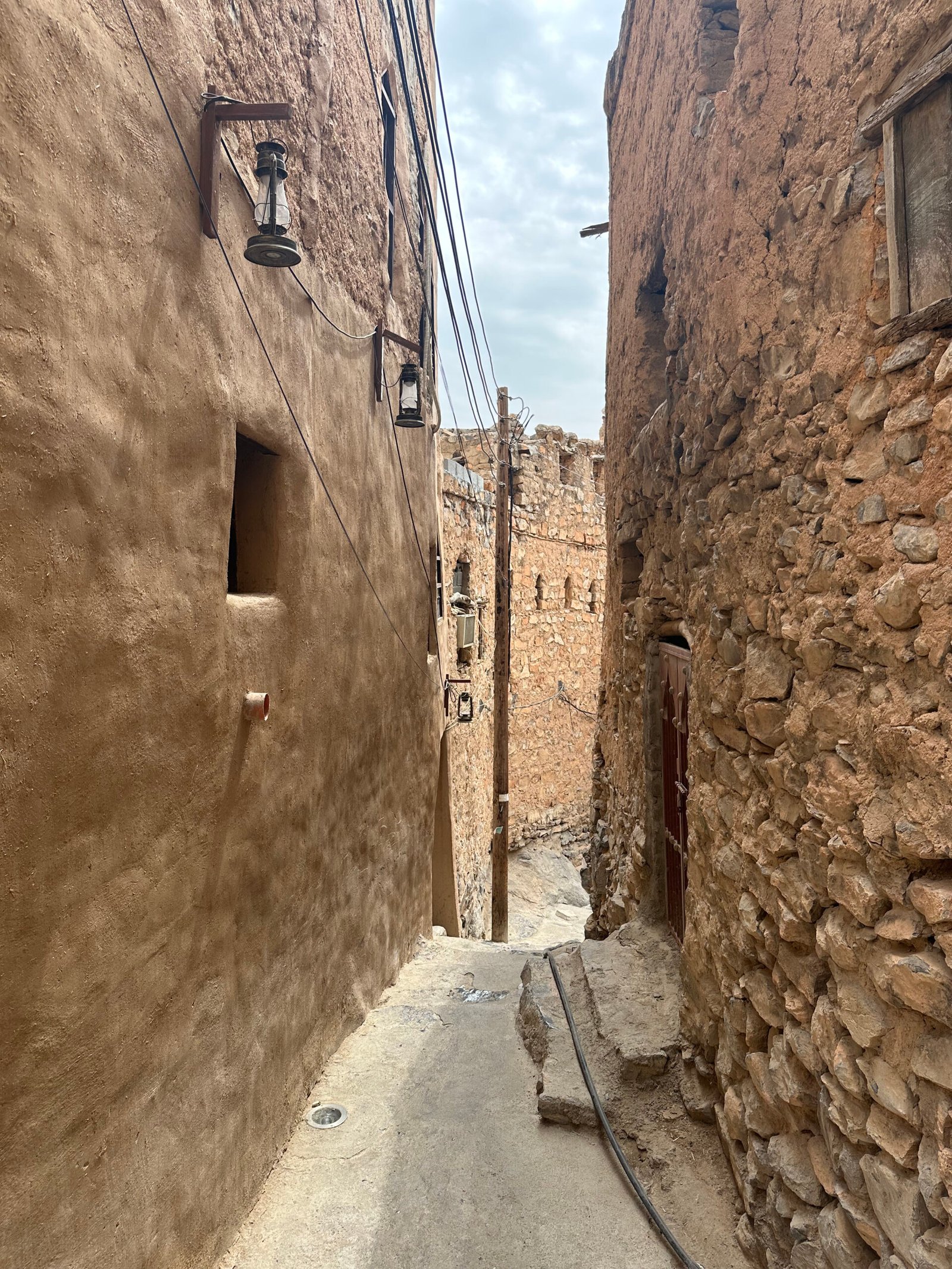
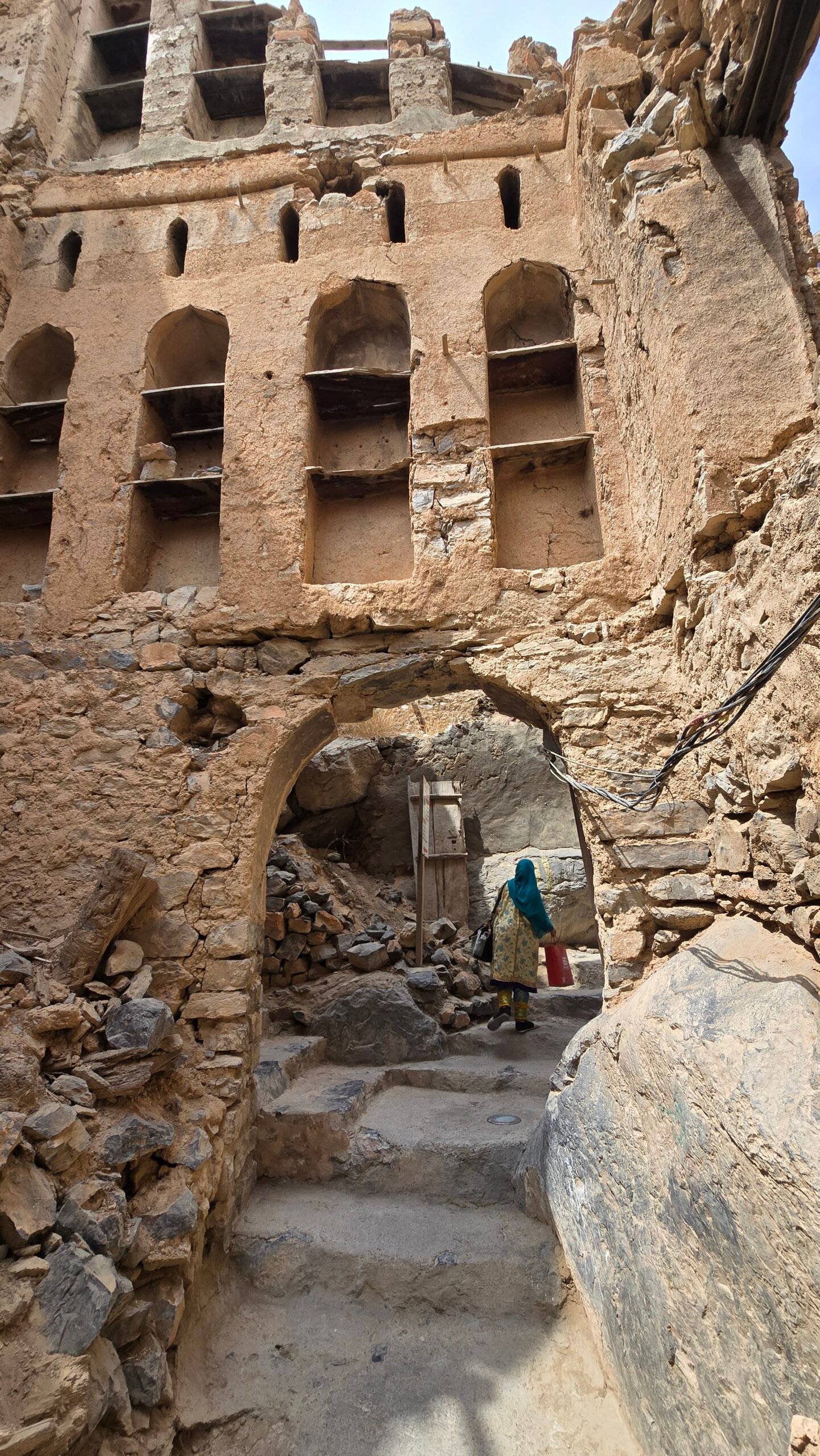
Visiting Misfat feels like stepping onto a movie set, but it’s a very real, living museum. This 300-year-old traditional mud-brick village is built directly into the solid rock of the mountainside. The real highlight is wandering the narrow, shaded pathways, listening to the soothing sound of the ancient falaj water channels. These miniature canals still actively irrigate the lush, terraced plantations of date palms, bananas, and papayas that tumble down the valley.

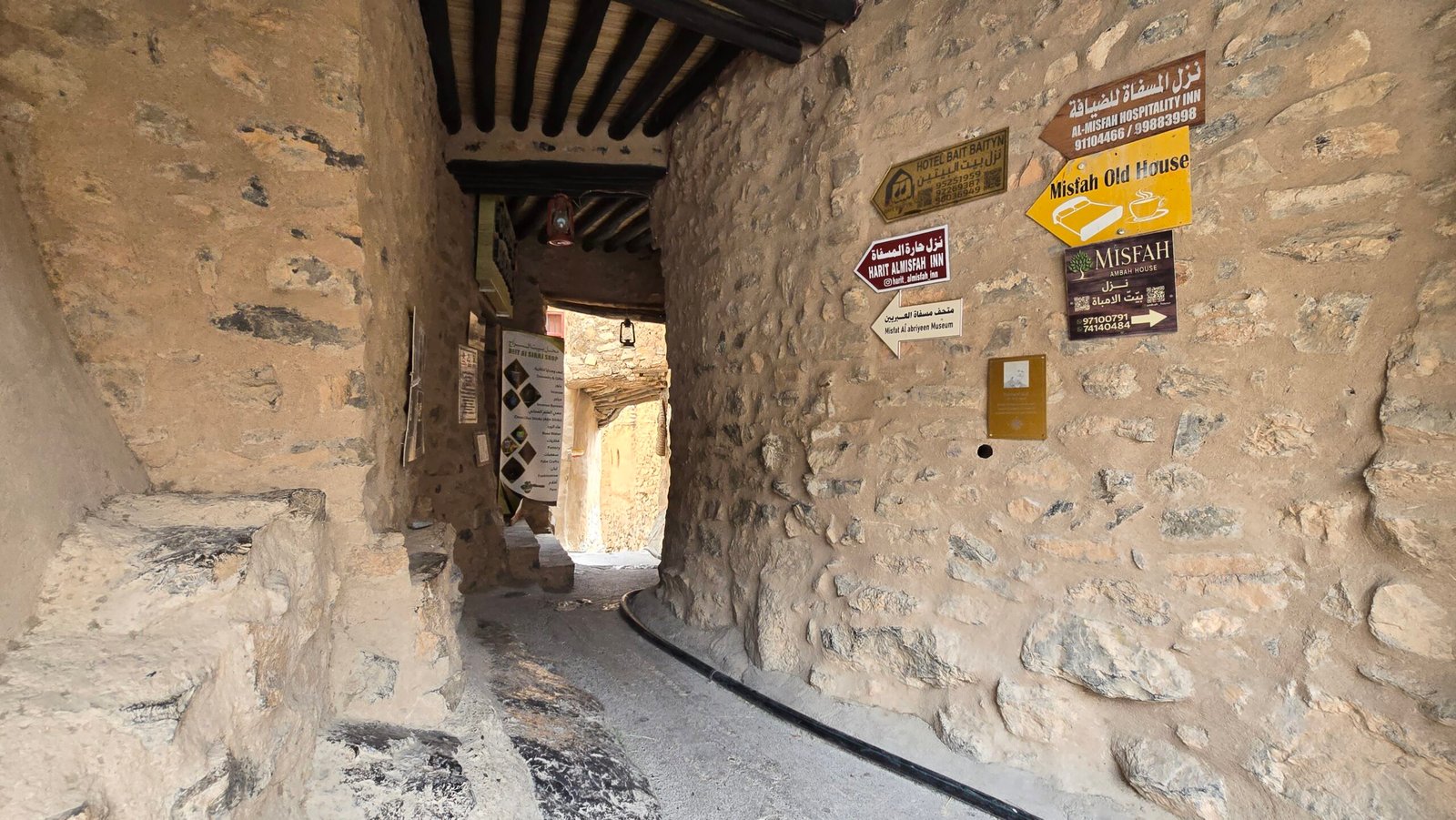
You’ll want to carve out about 1.5 to 2 hours here just to explore and soak it all in. As you wander through the labyrinth of alleys, you absolutely have to stop for a breather at one of the local cafes that have breathed new life into the village.

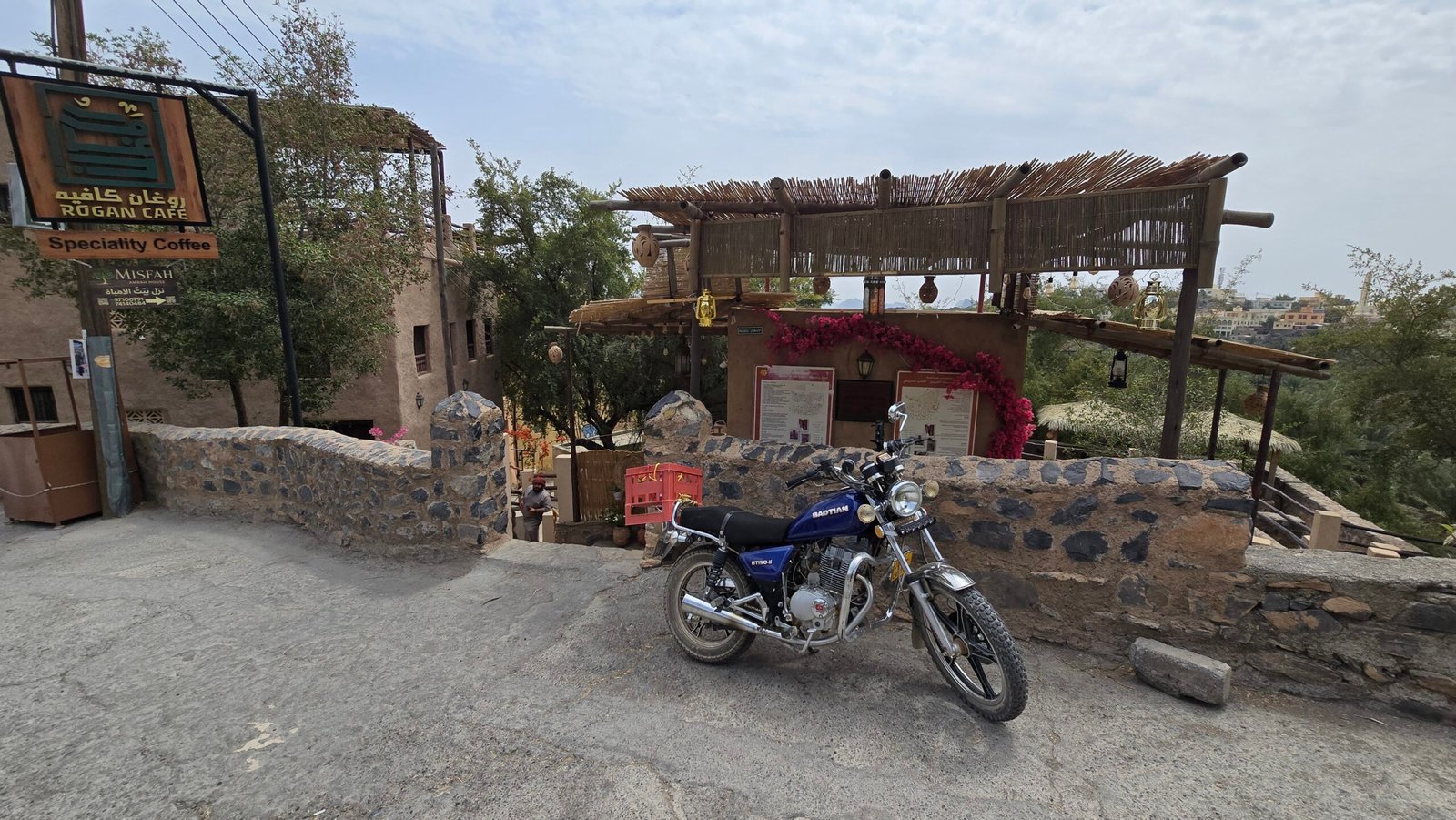
Bloggers Tip: Make your way up to Halwa Coffee (sometimes called Bun Alhisn). It’s perched at the very top of the village on a rooftop, offering unbelievable panoramic views of the mud-brick houses and the green valley below—the perfect spot for a traditional Omani coffee and some local dates. If you venture a bit deeper into the plantation trails, look for Rogan Cafe, named after the ancient castle ruins nearby; it’s a fantastic little oasis tucked away in the village.

(Note: Because this is a traditional, living village, remember to dress modestly—covering shoulders and knees—as a sign of respect for the local residents who call this beautiful place home!)

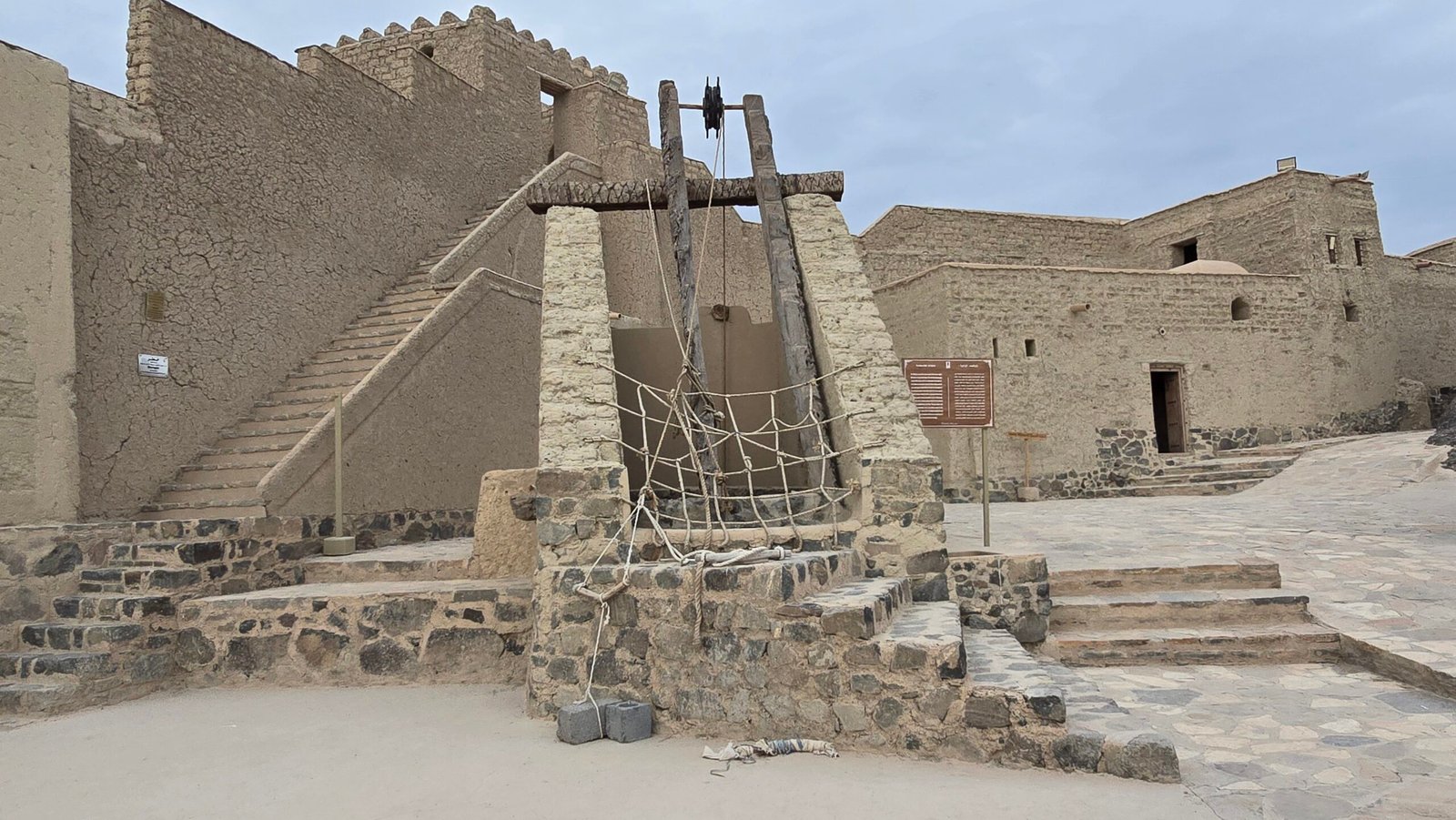
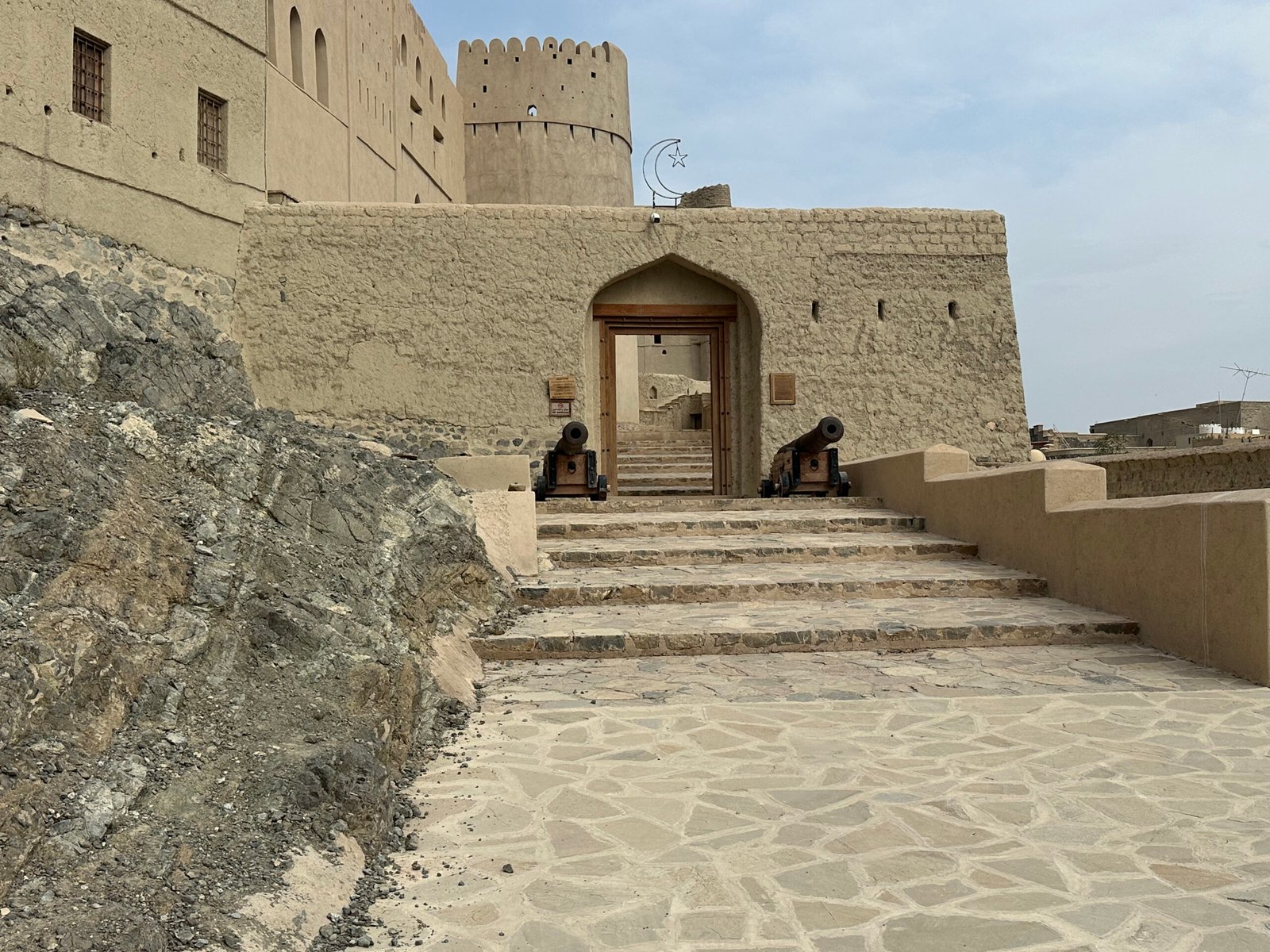
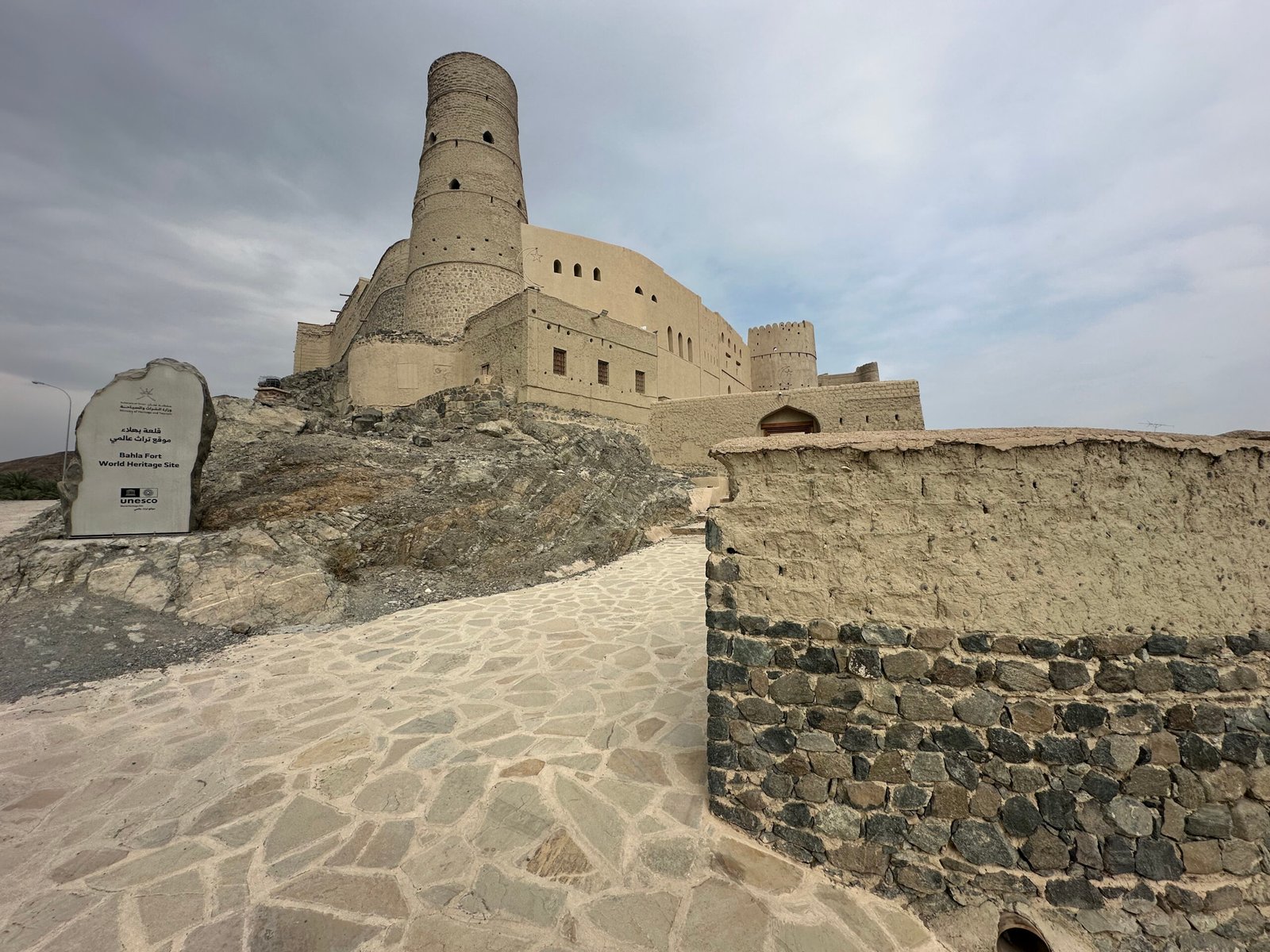
📍 Stop 3: The Monumental Bahla Fort

From the high-altitude tranquility of Misfat, we began the southern leg of our loop. A scenic, easy 30 to 40-minute drive brought us to our next destination: the colossal Bahla Fort.

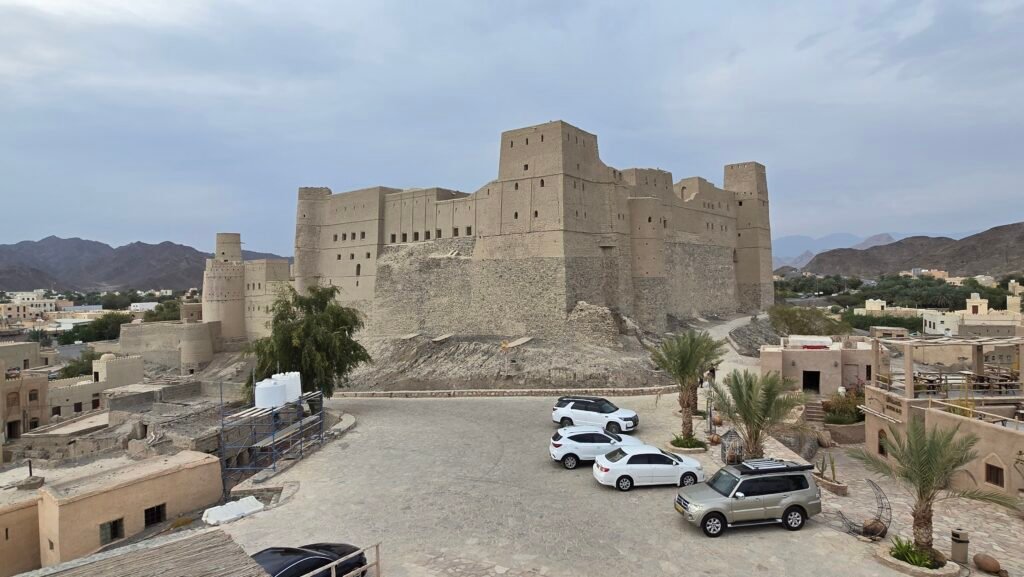
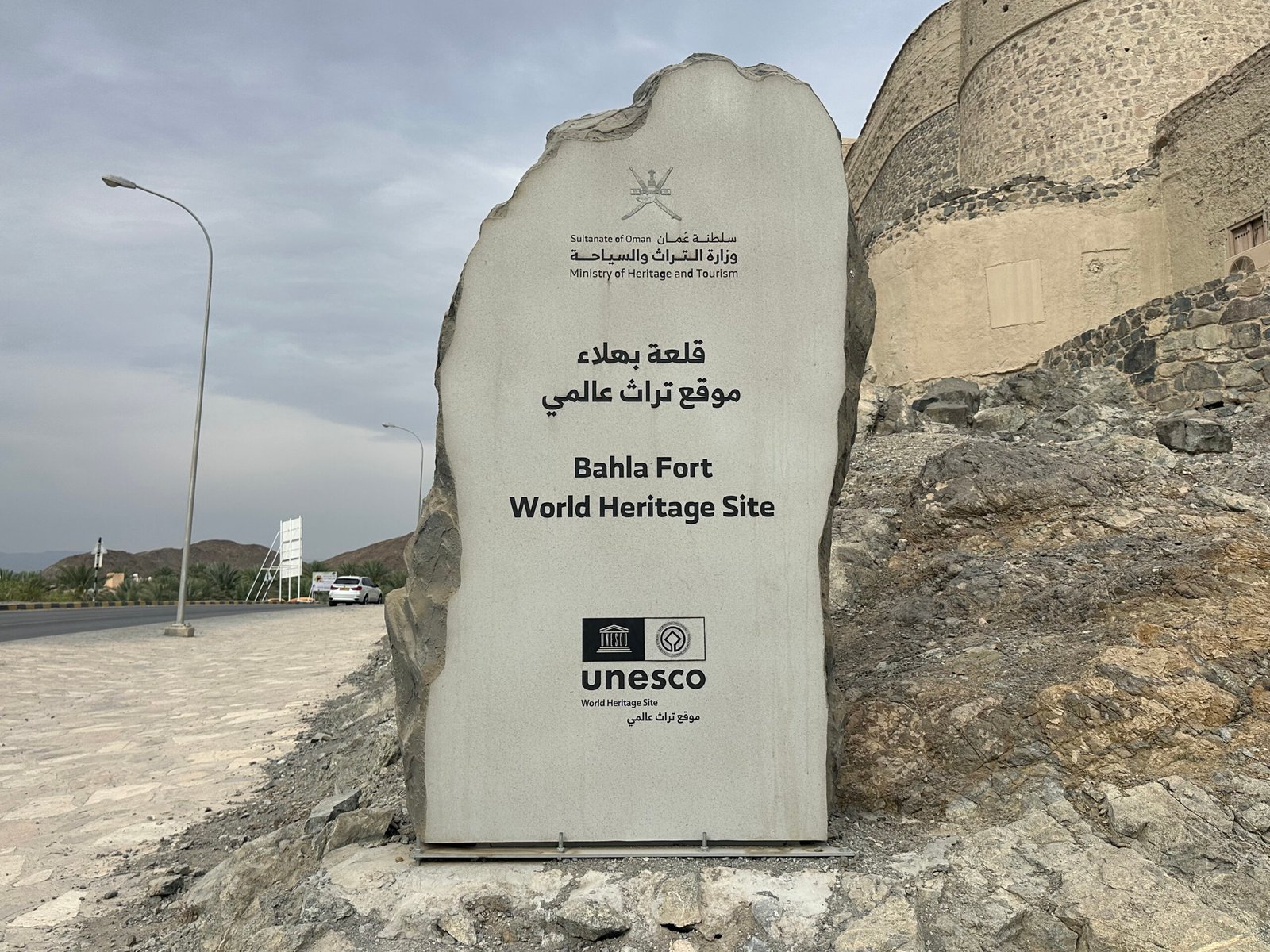
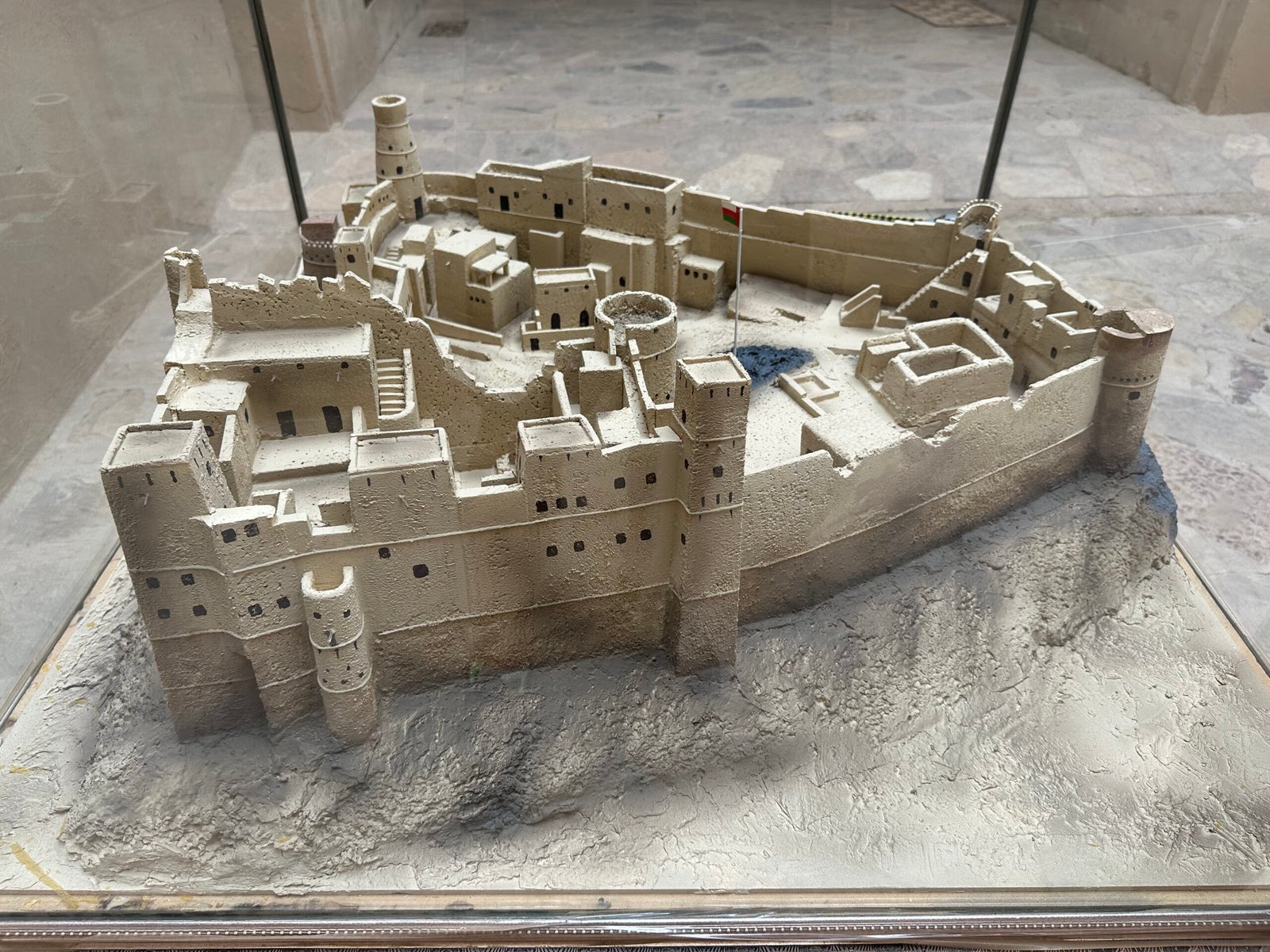
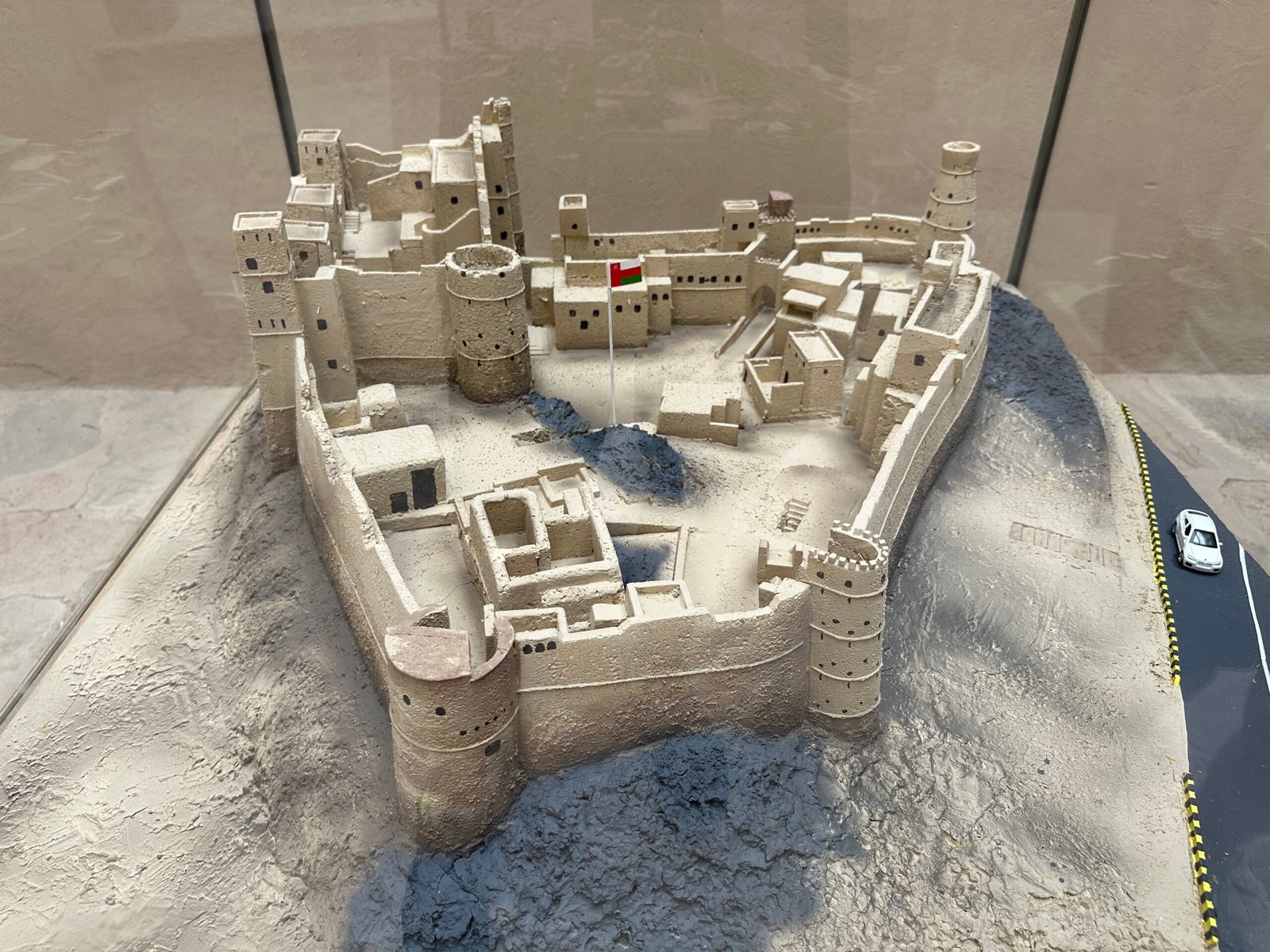
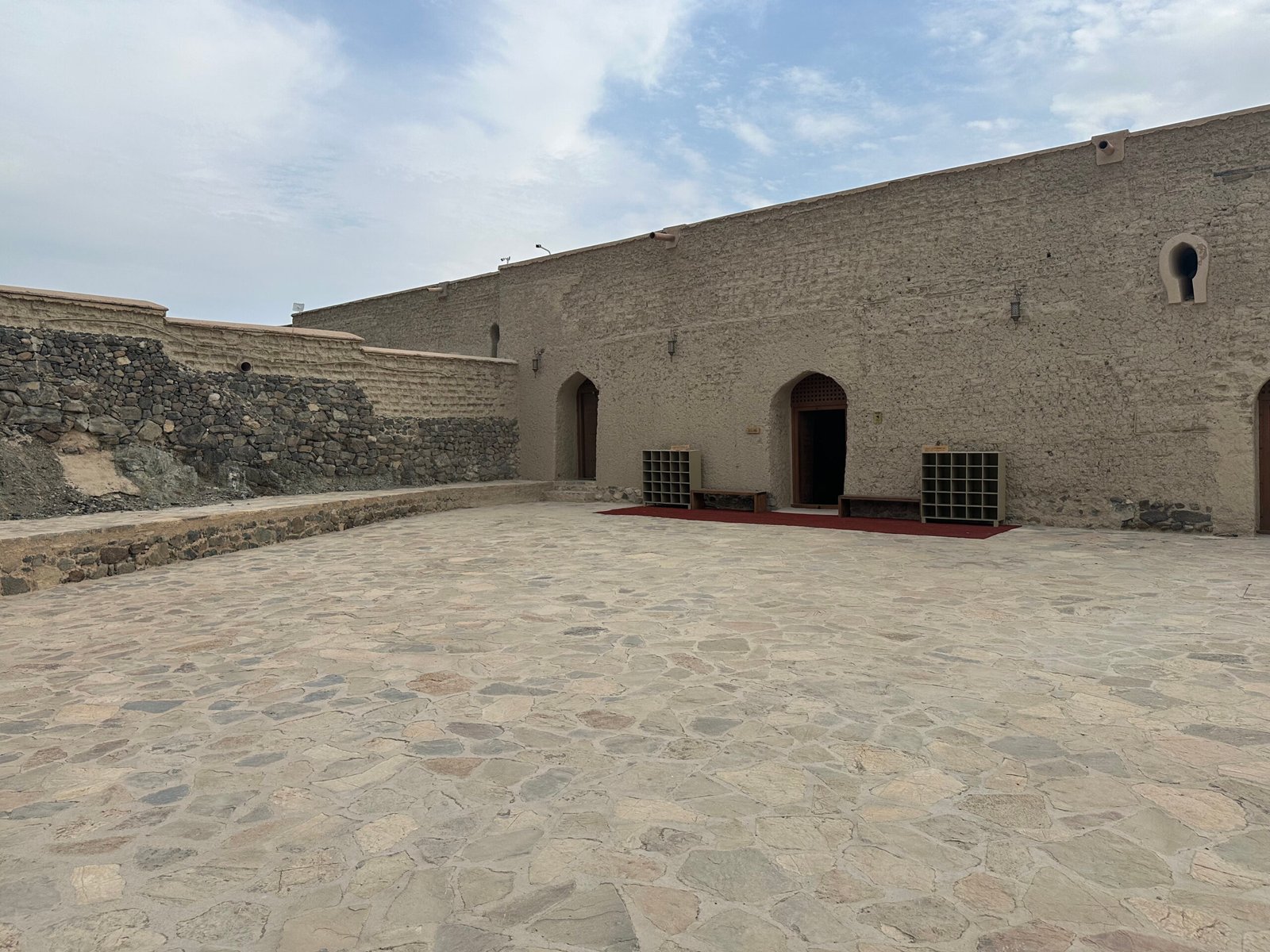
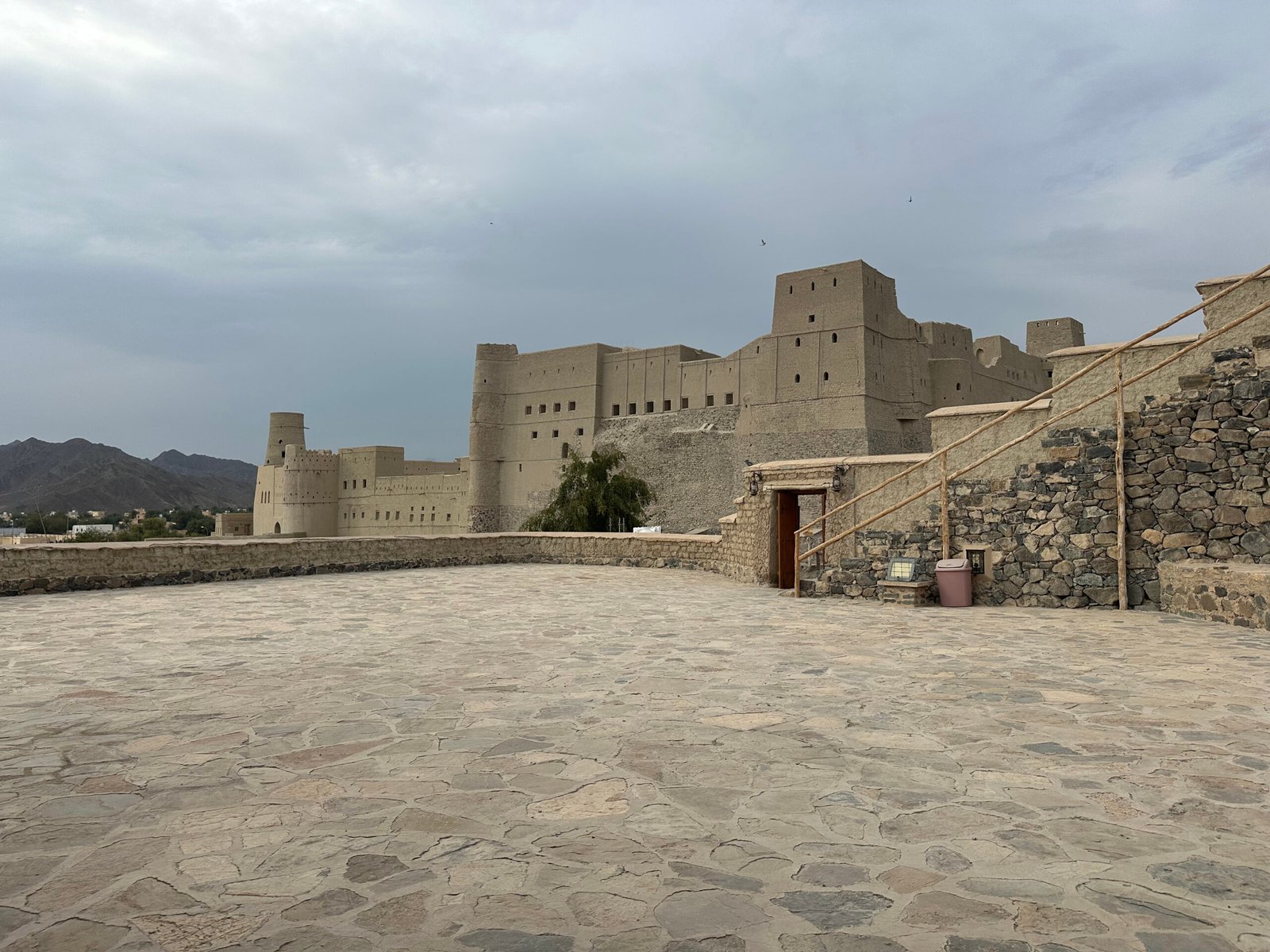
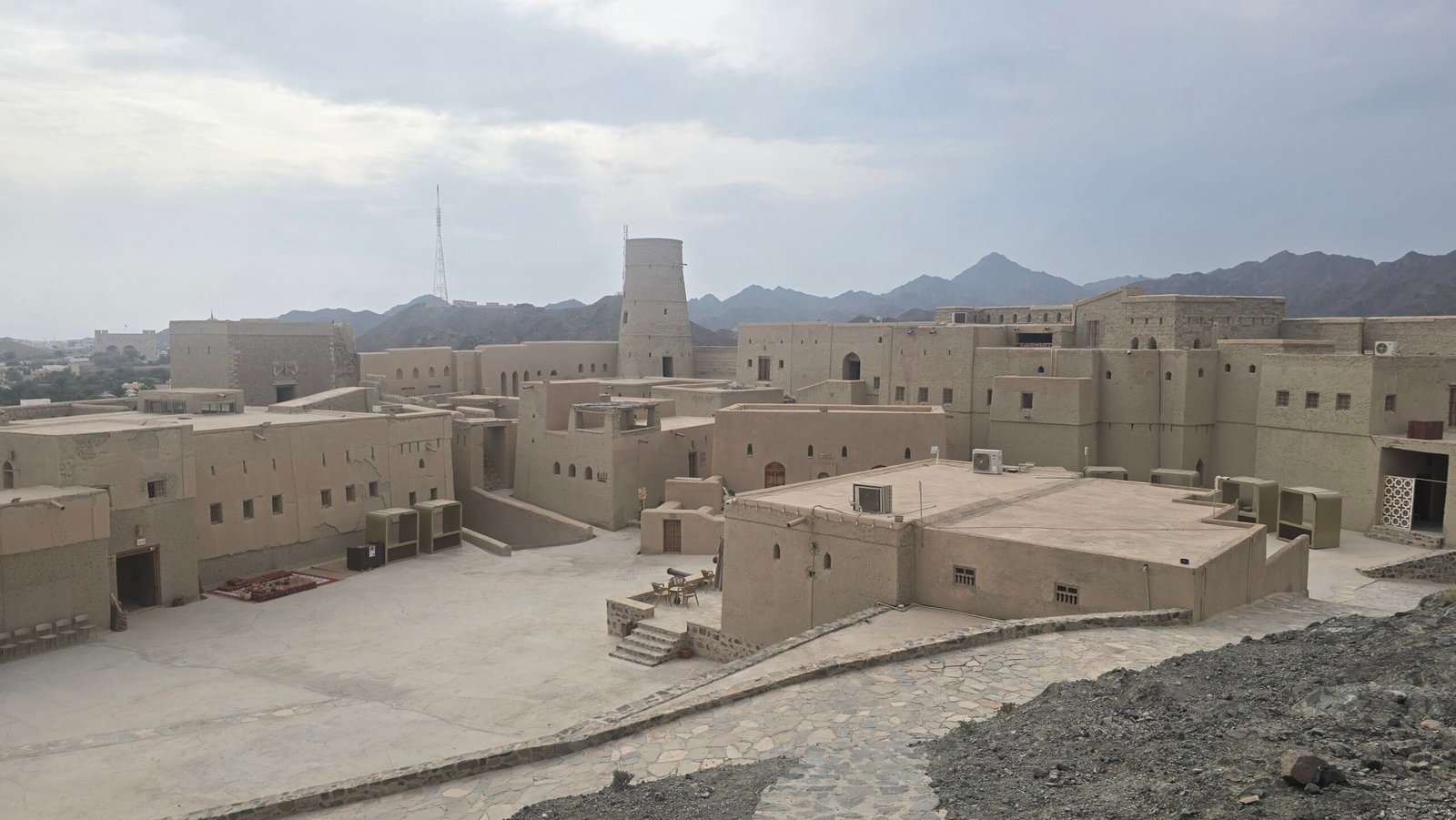
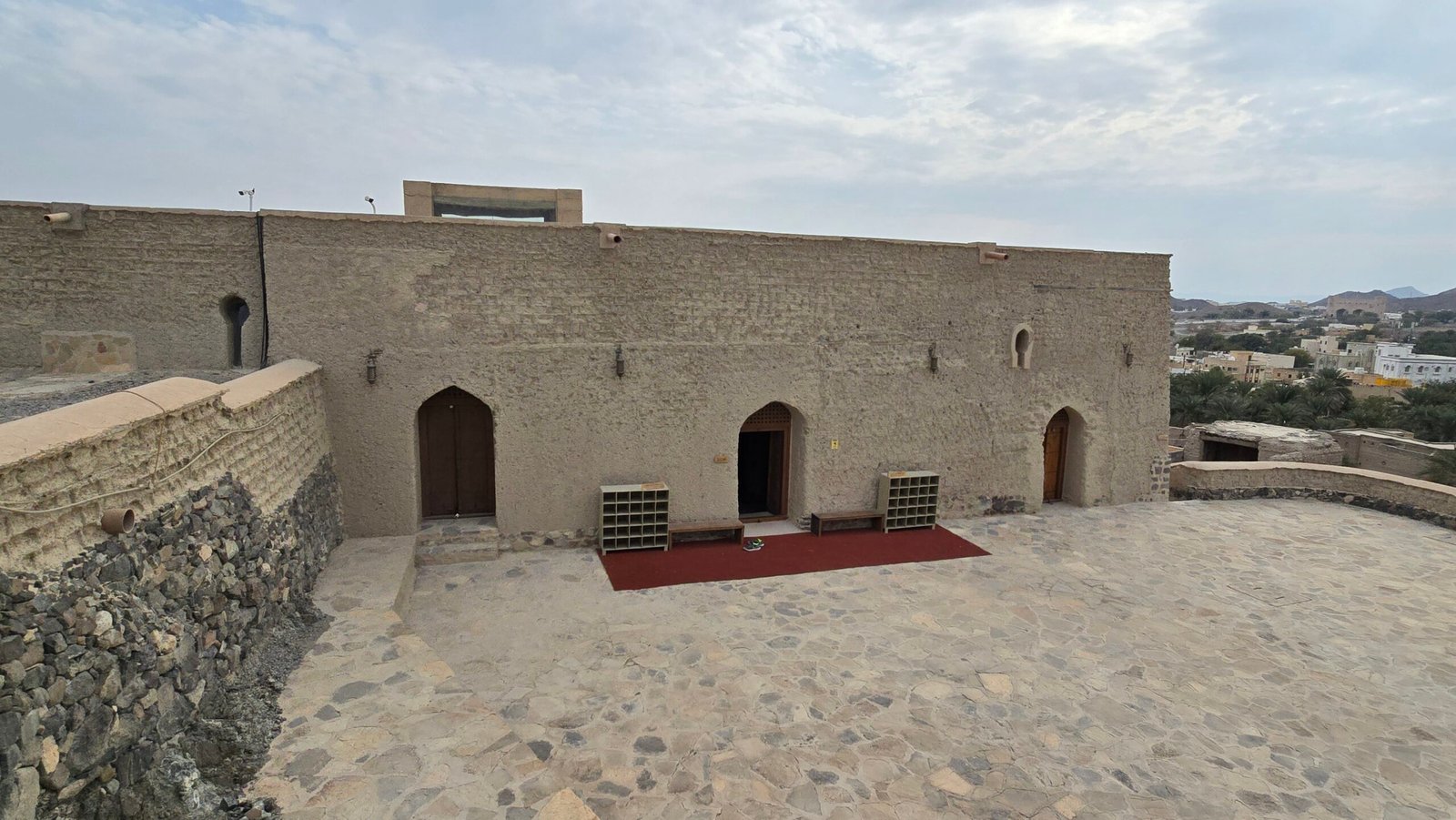
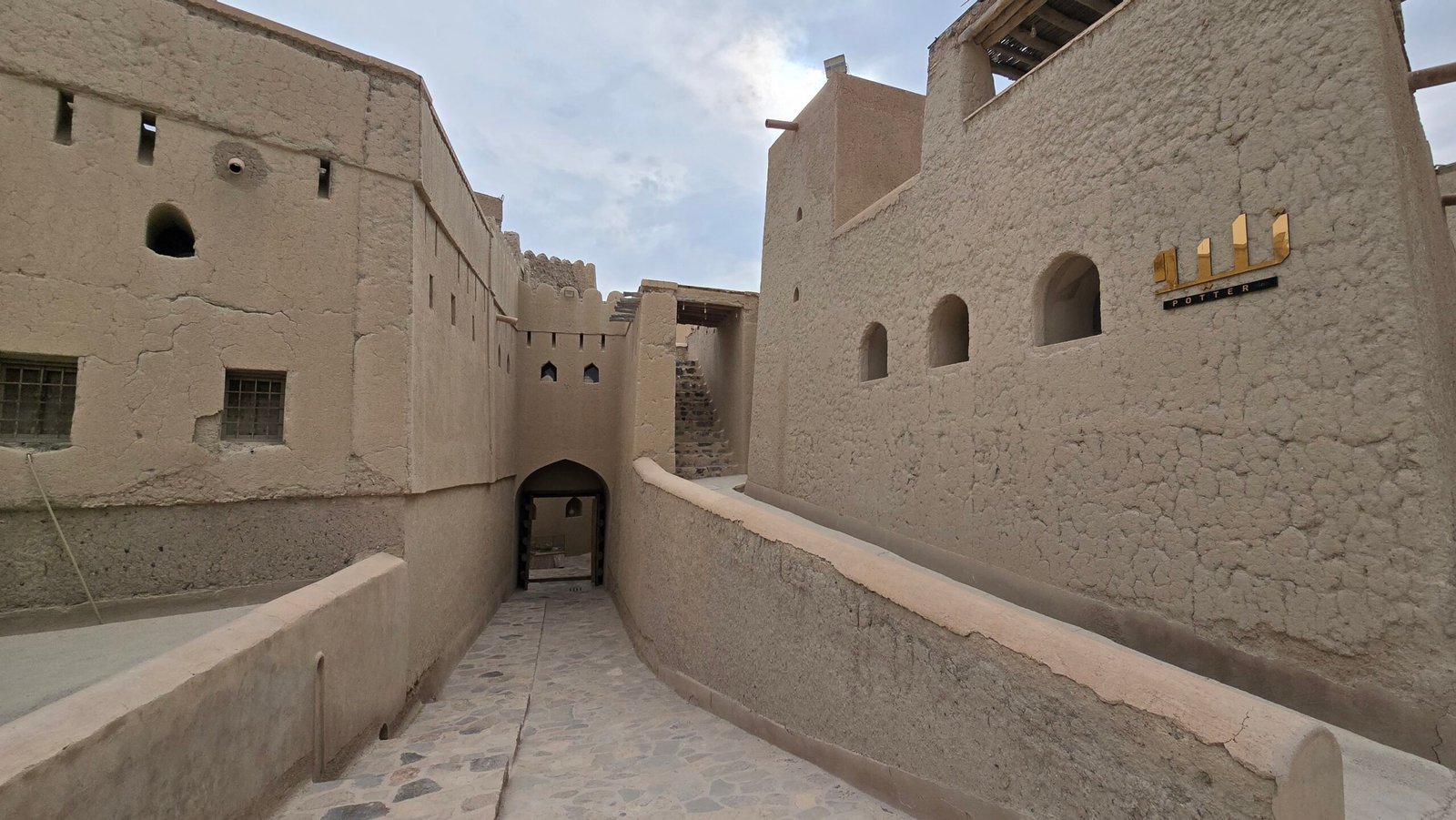
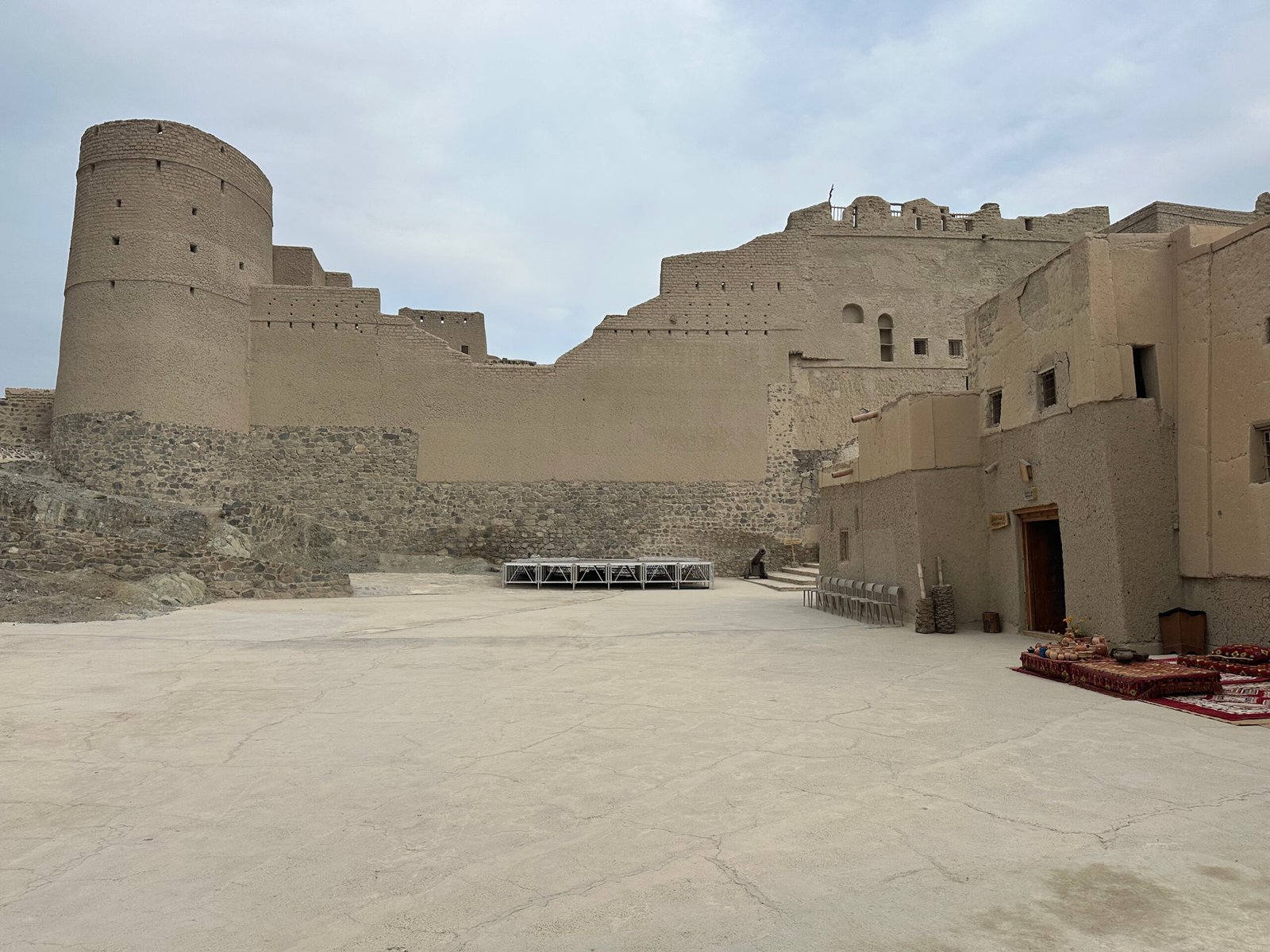
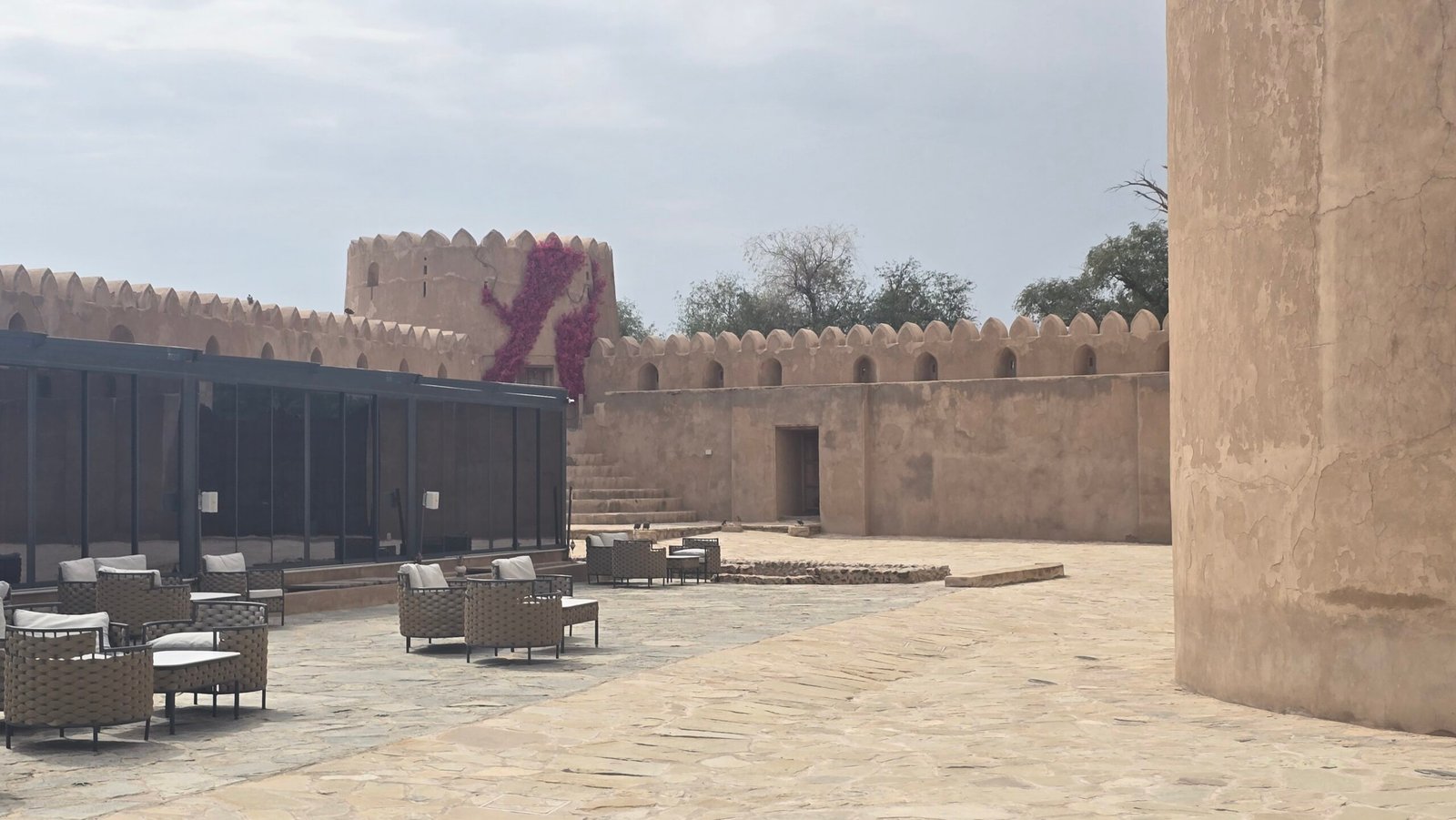
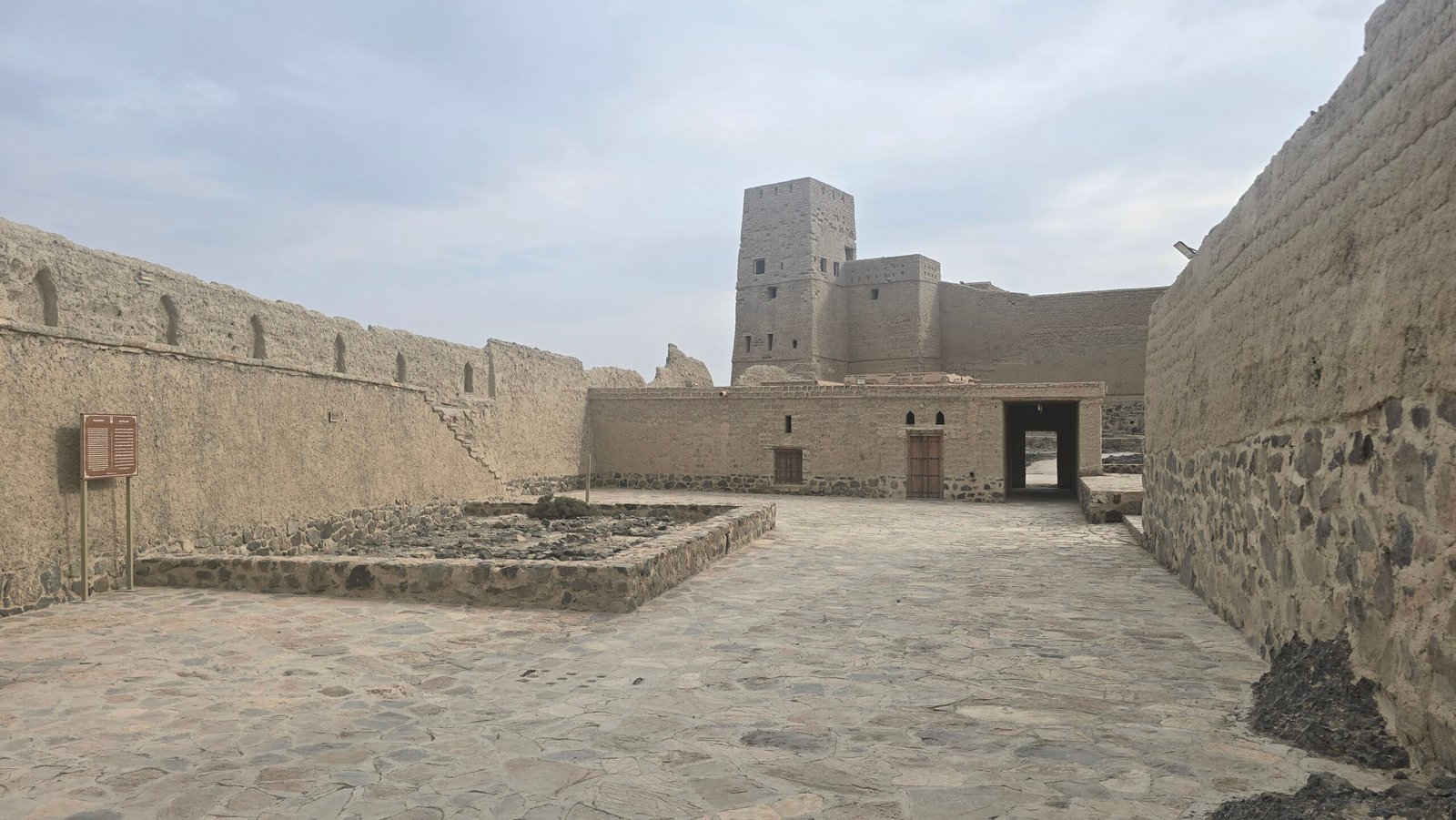
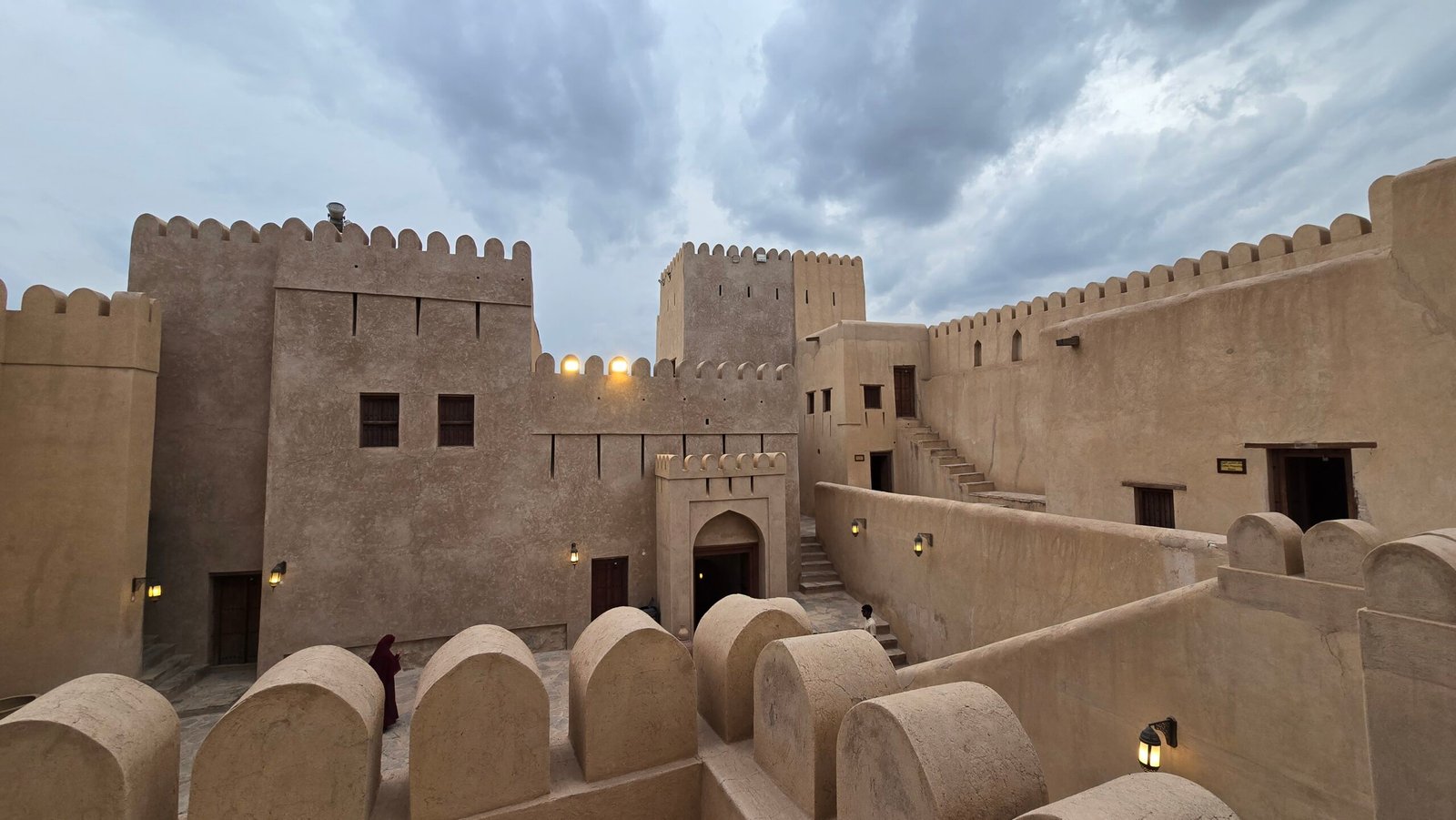
As you approach the oasis town of Bahla, you simply cannot miss the fort’s towering, sand-colored walls rising dramatically above the surrounding palm groves. This isn’t just your average fort; it is a massive, sprawling complex that proudly holds the title of Oman’s only UNESCO World Heritage-listed fort.

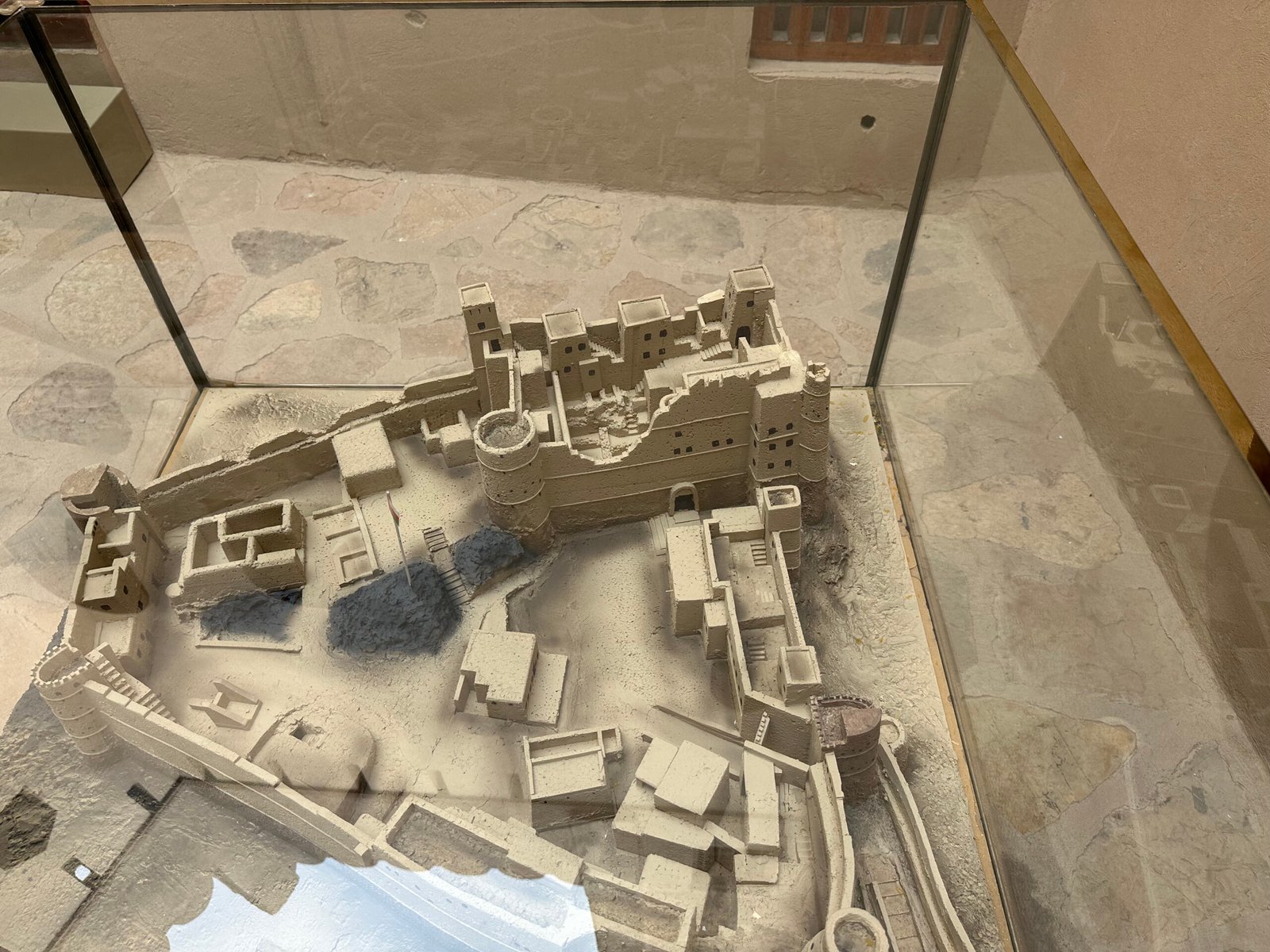
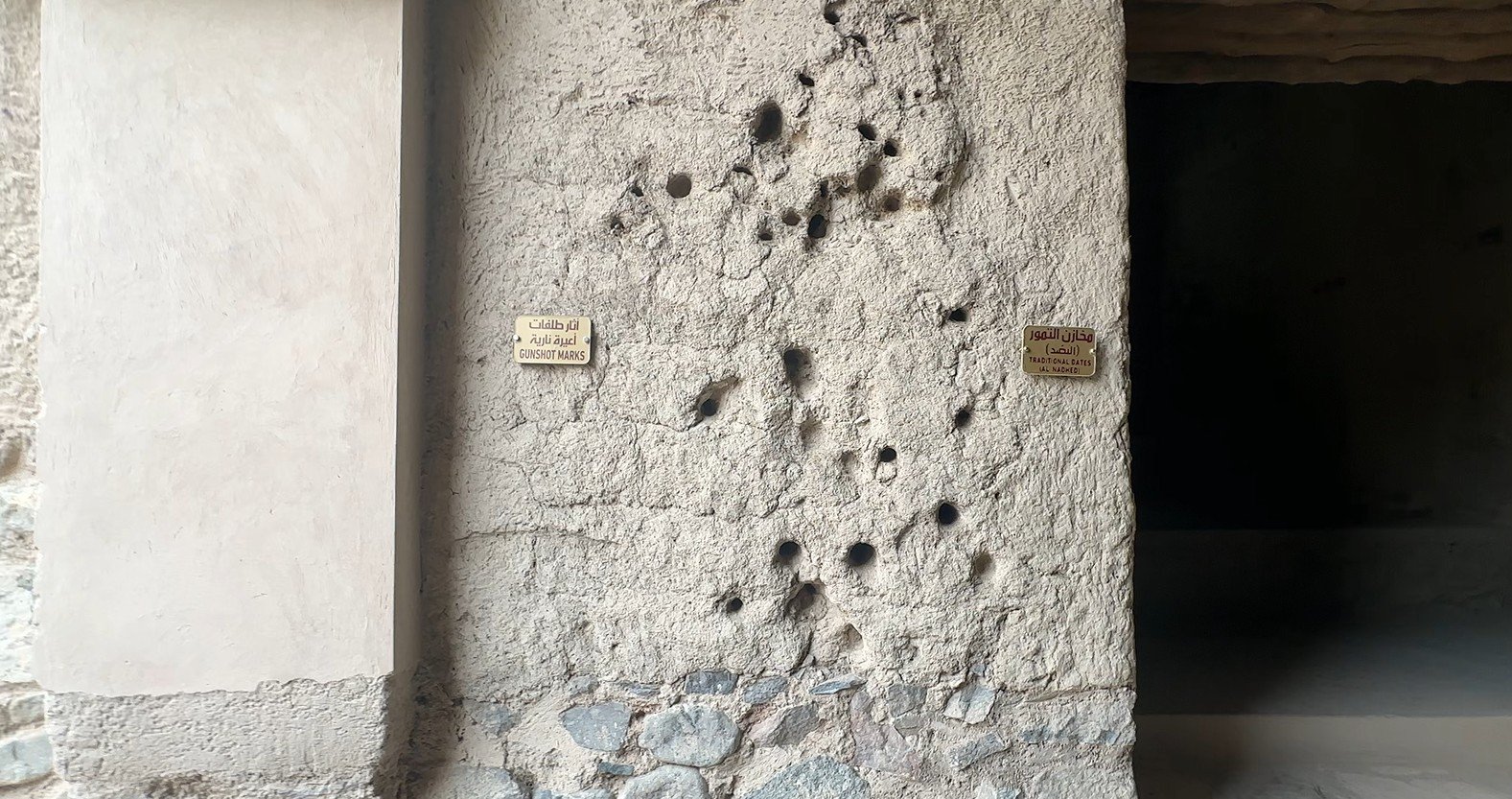
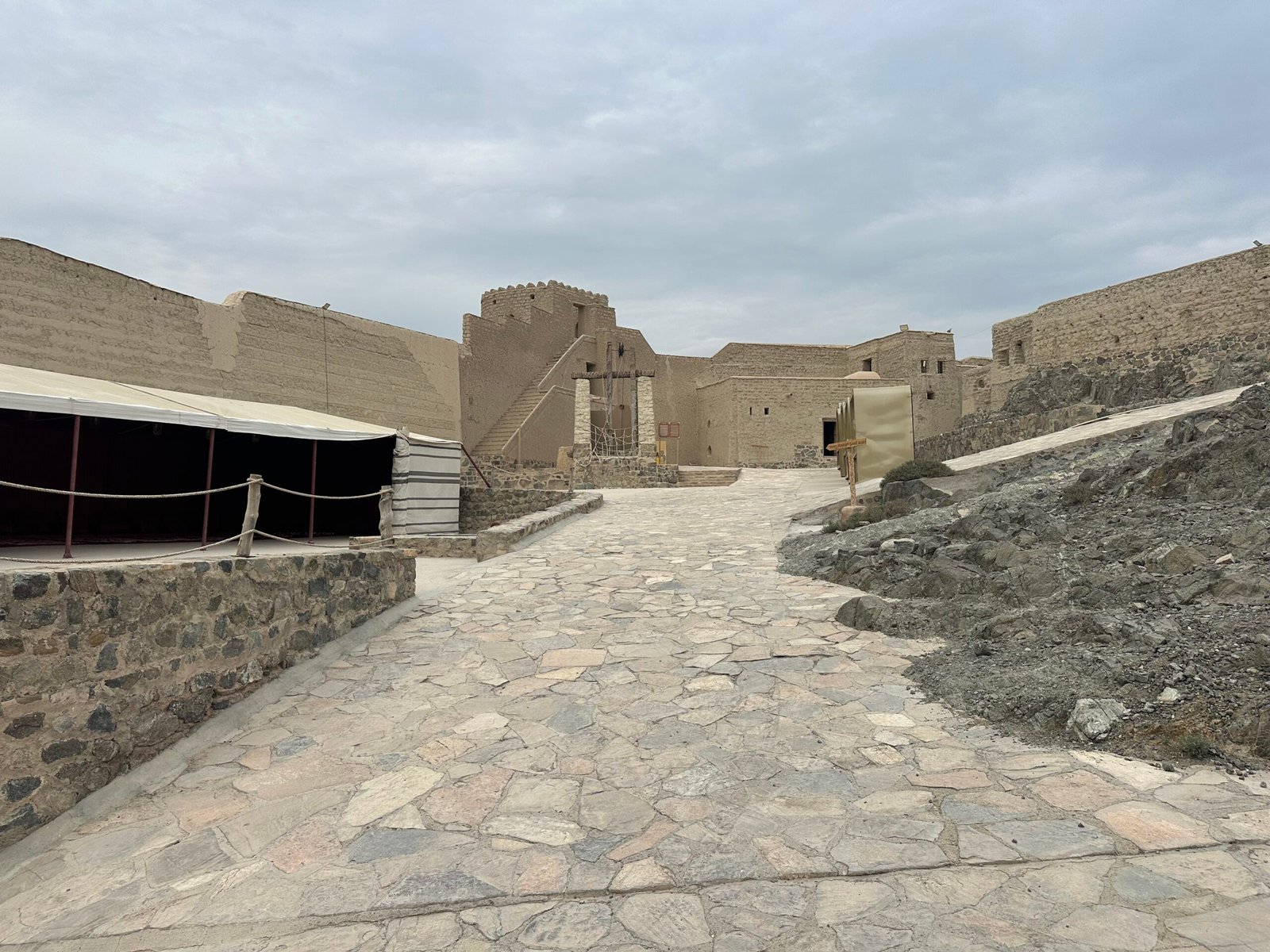
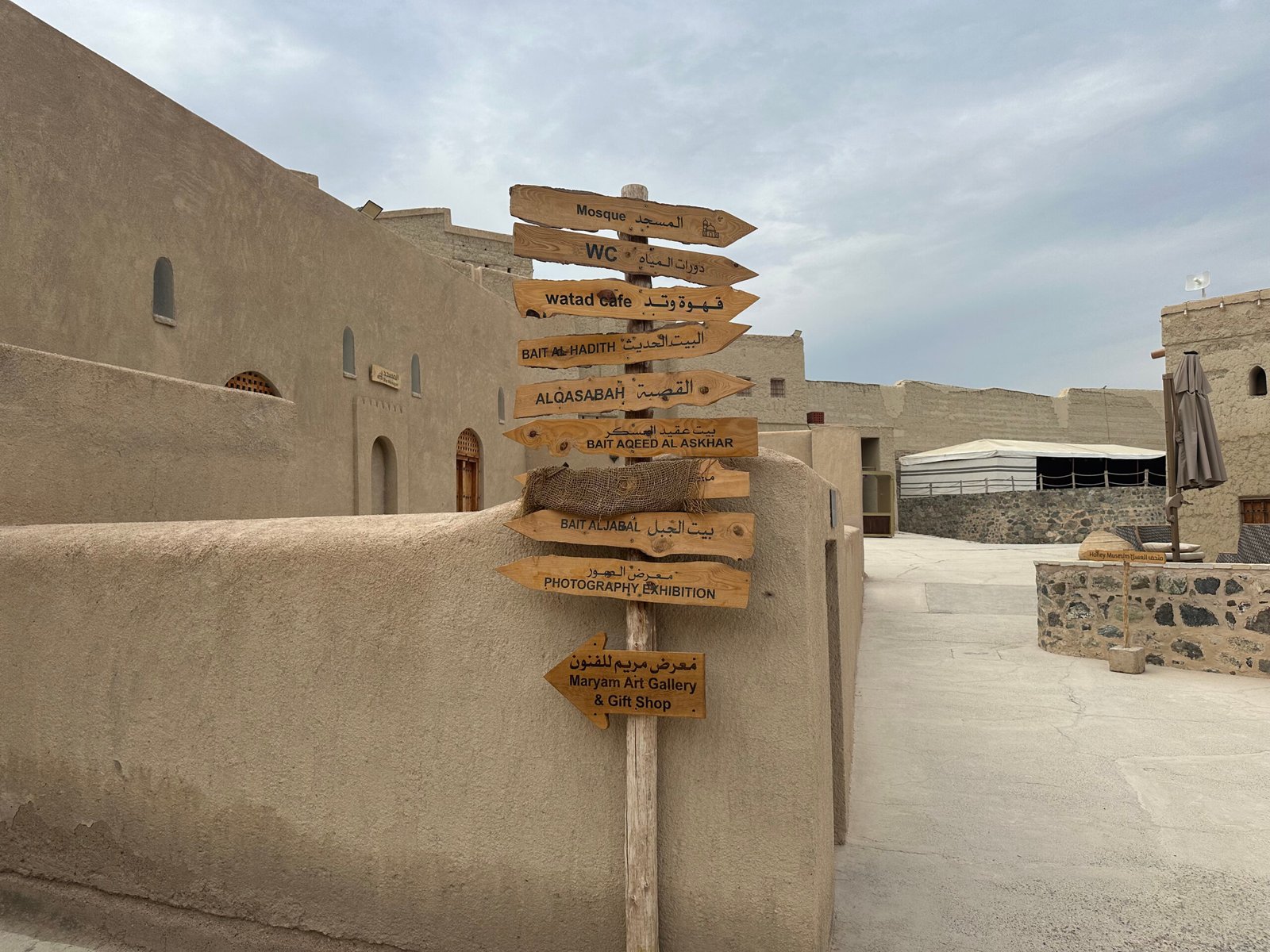
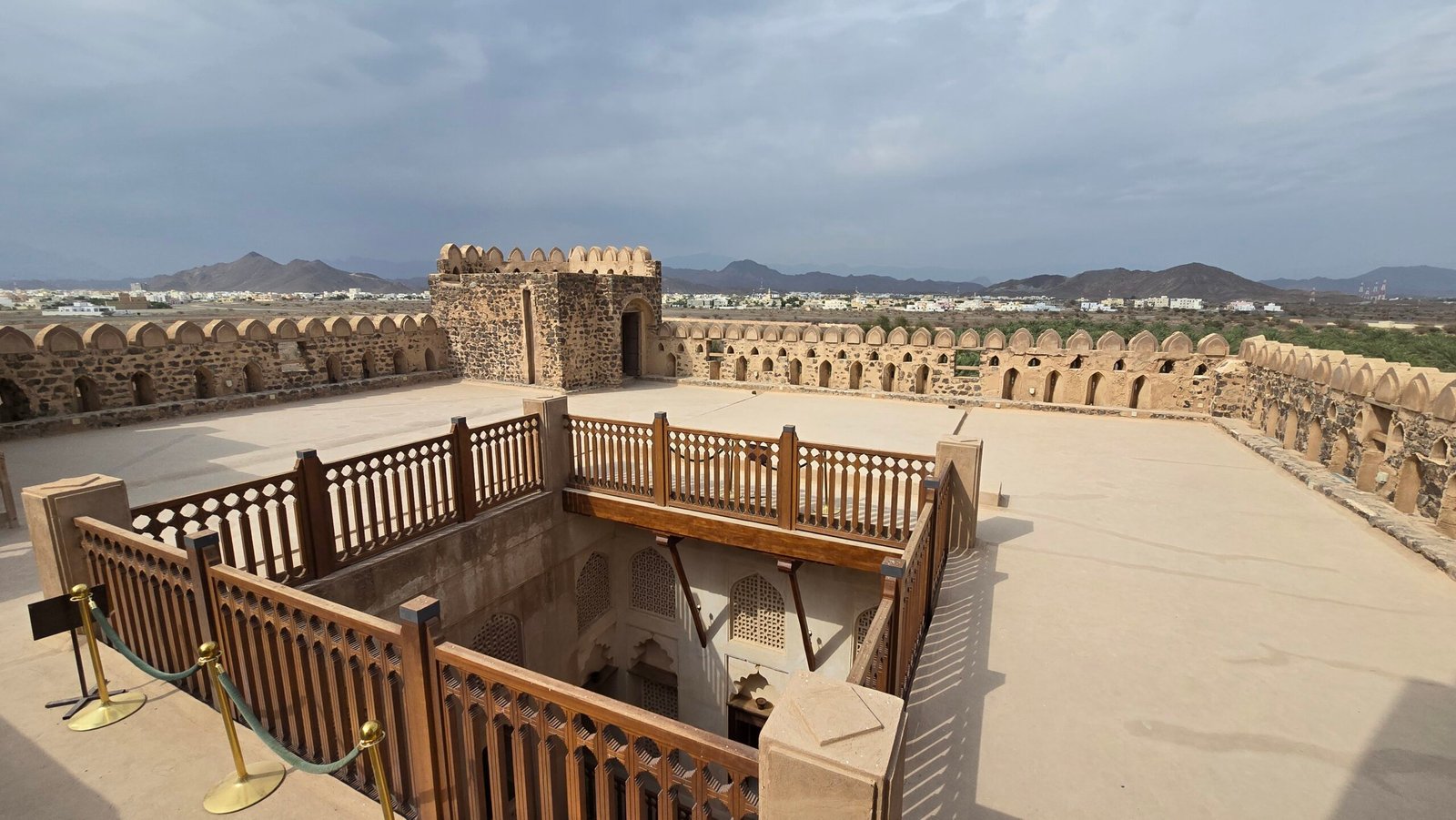
Built primarily by the Banu Nabhan tribe between the 12th and 15th centuries, the fort is deeply steeped in local myths and legends, with old tales often associating the area with ancient magic and jinn (spirits). We easily spent a solid 1.5 to 2 hours exploring its labyrinthine corridors, climbing the rounded watchtowers, and discovering the maze of unfurnished rooms. Because it’s so impossibly vast and less commercialized than other sites, you truly feel like an explorer uncovering ancient secrets.

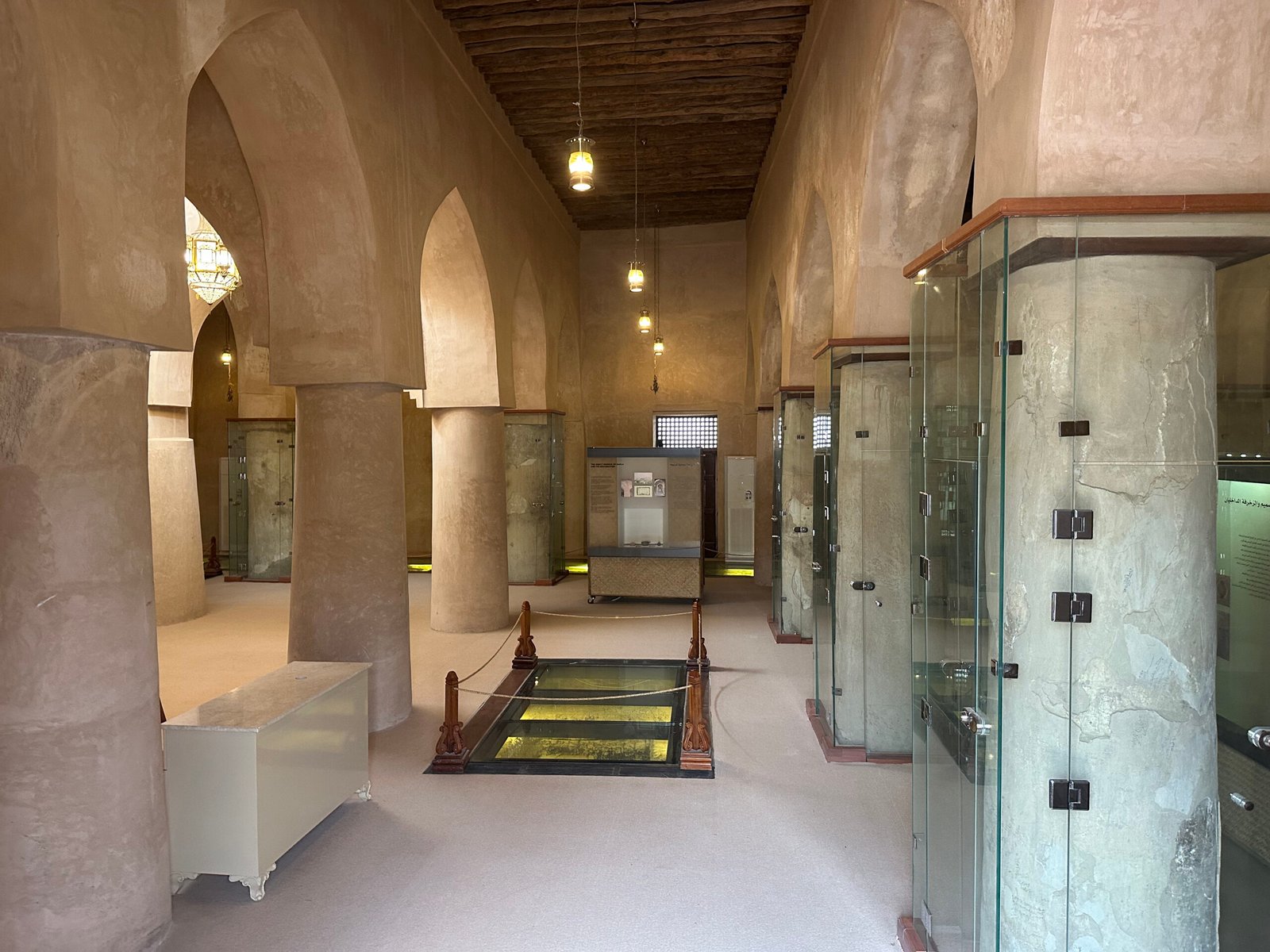
Bloggers Tip: The entrance fee for international adult tourists is around 5 OMR (with discounted rates for children and Omani nationals). While you are there, you absolutely must visit the beautiful old Friday Mosque (Grand Mosque of Bahla). It is just a quick one-minute walk right outside the fort walls, and the entrance is conveniently included in your fort ticket! Also, the town of Bahla is famous across Oman for its traditional pottery—if you have a few extra minutes, keep an eye out for local artisan workshops nearby to pick up an authentic, handmade souvenir.

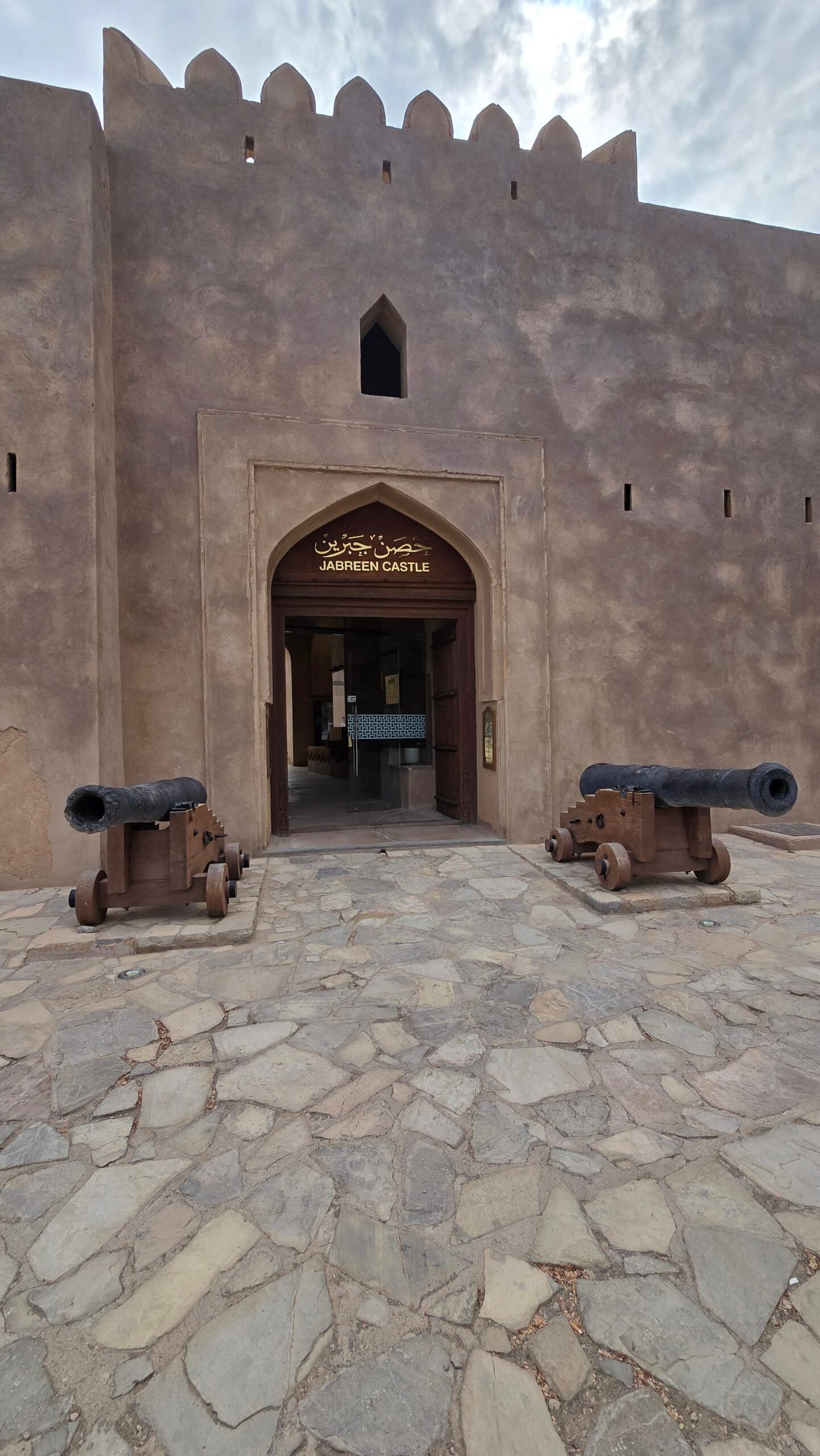
📍 Stop 4: The Palatial Jabreen Castle

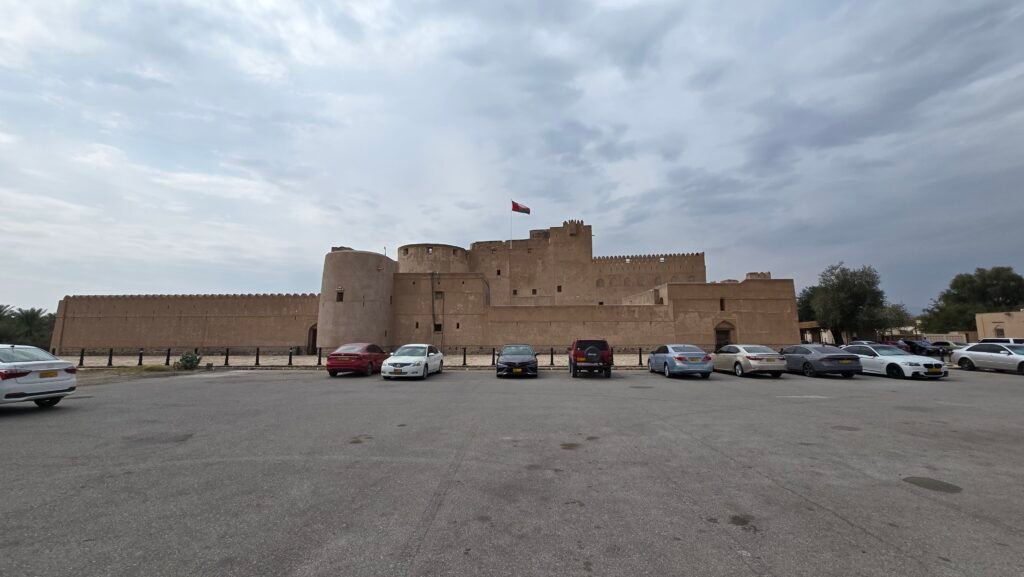
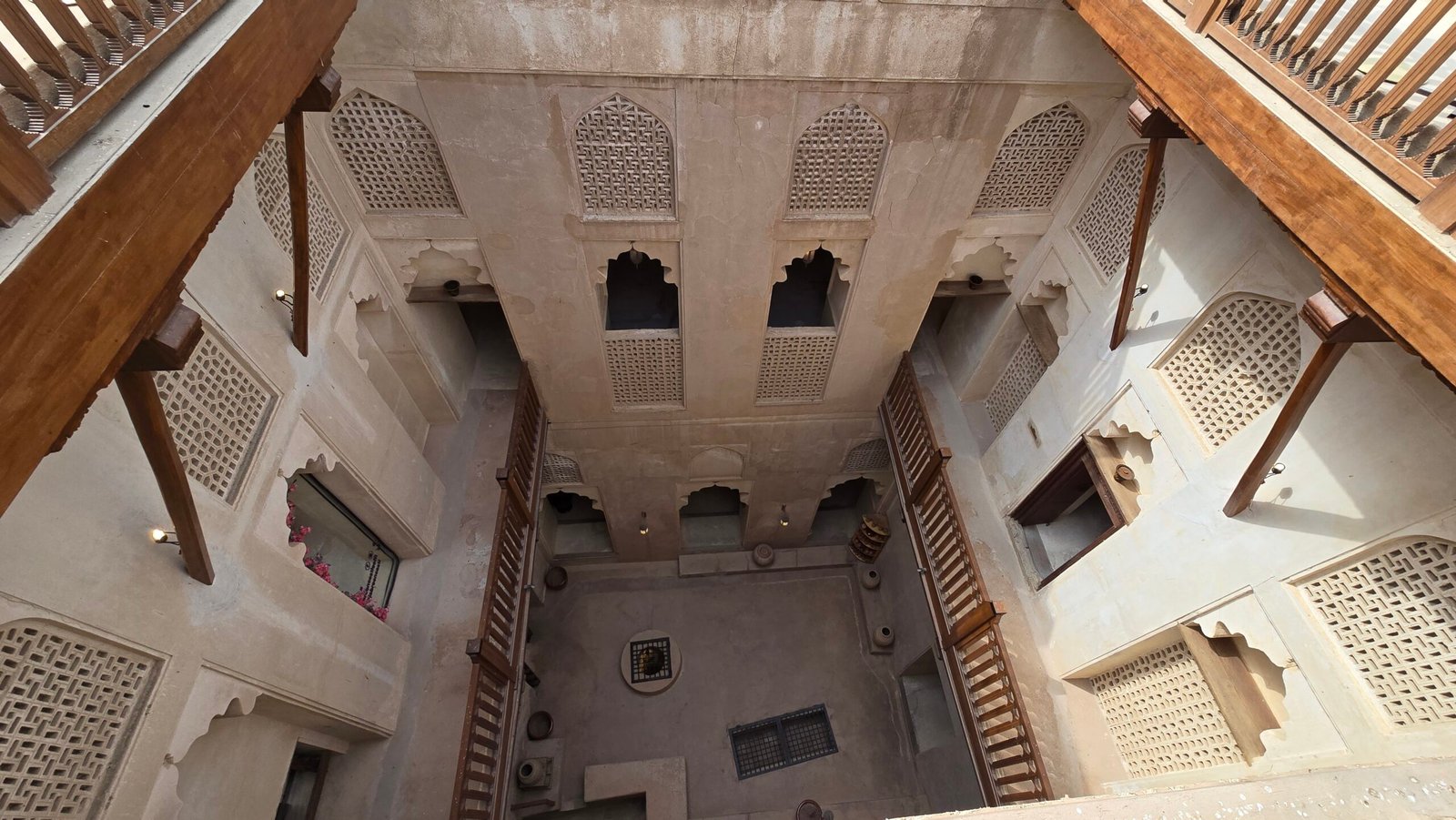
Leaving the military might of Bahla behind, a very quick, 10 to 15-minute drive south brought us to a completely different architectural masterpiece: the stunning Jabreen Castle (sometimes spelled Jibreen).

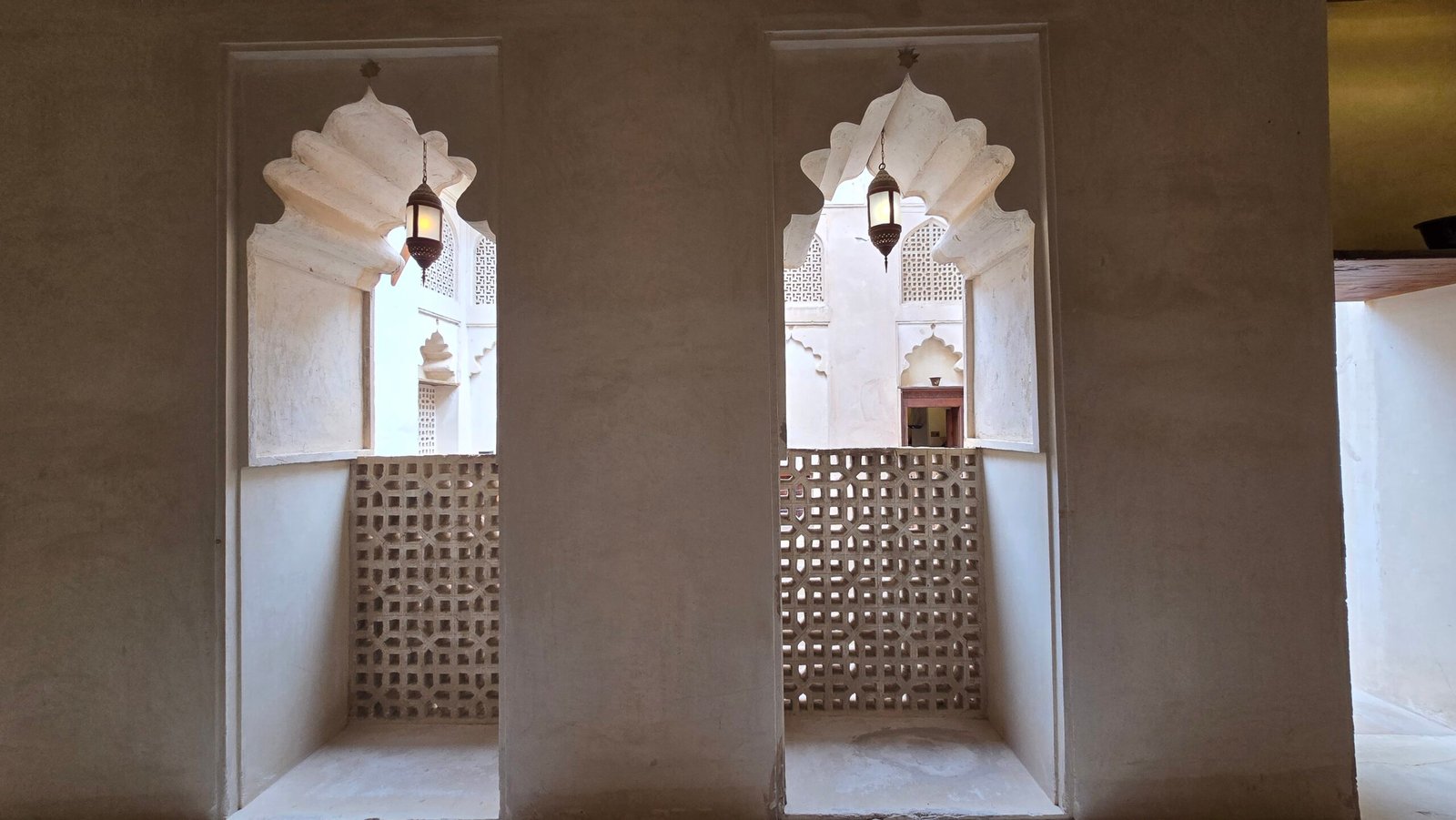
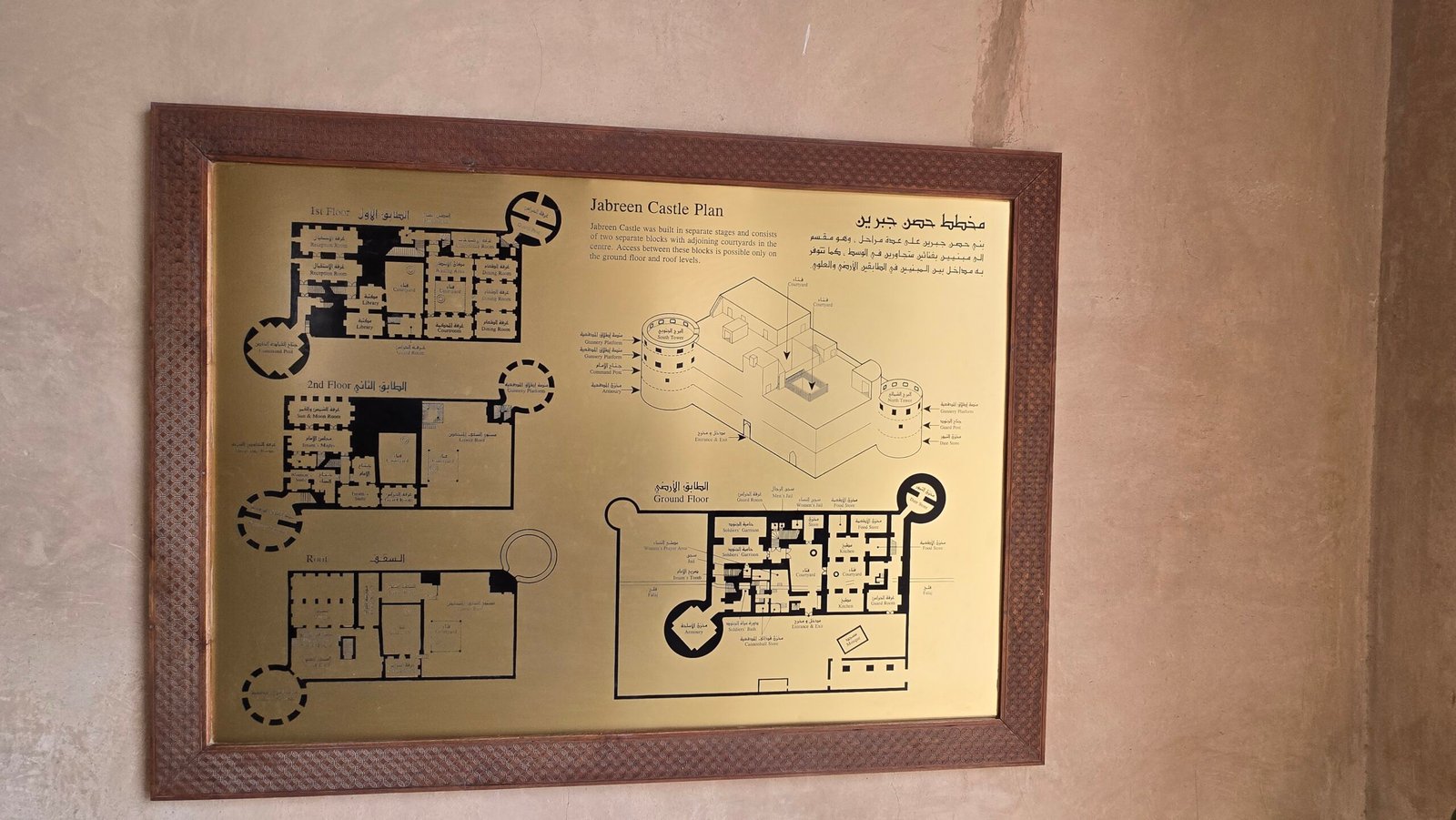
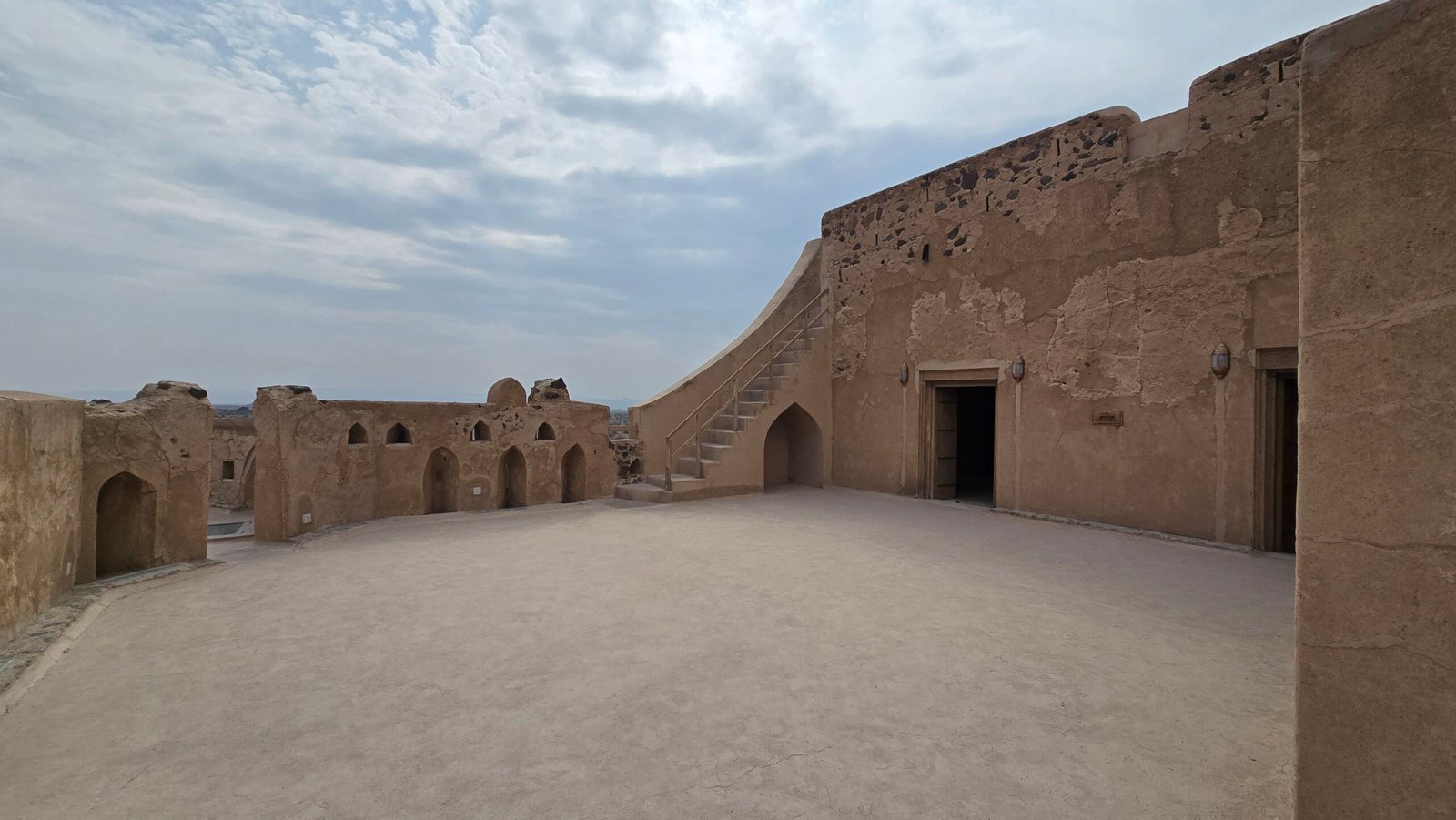
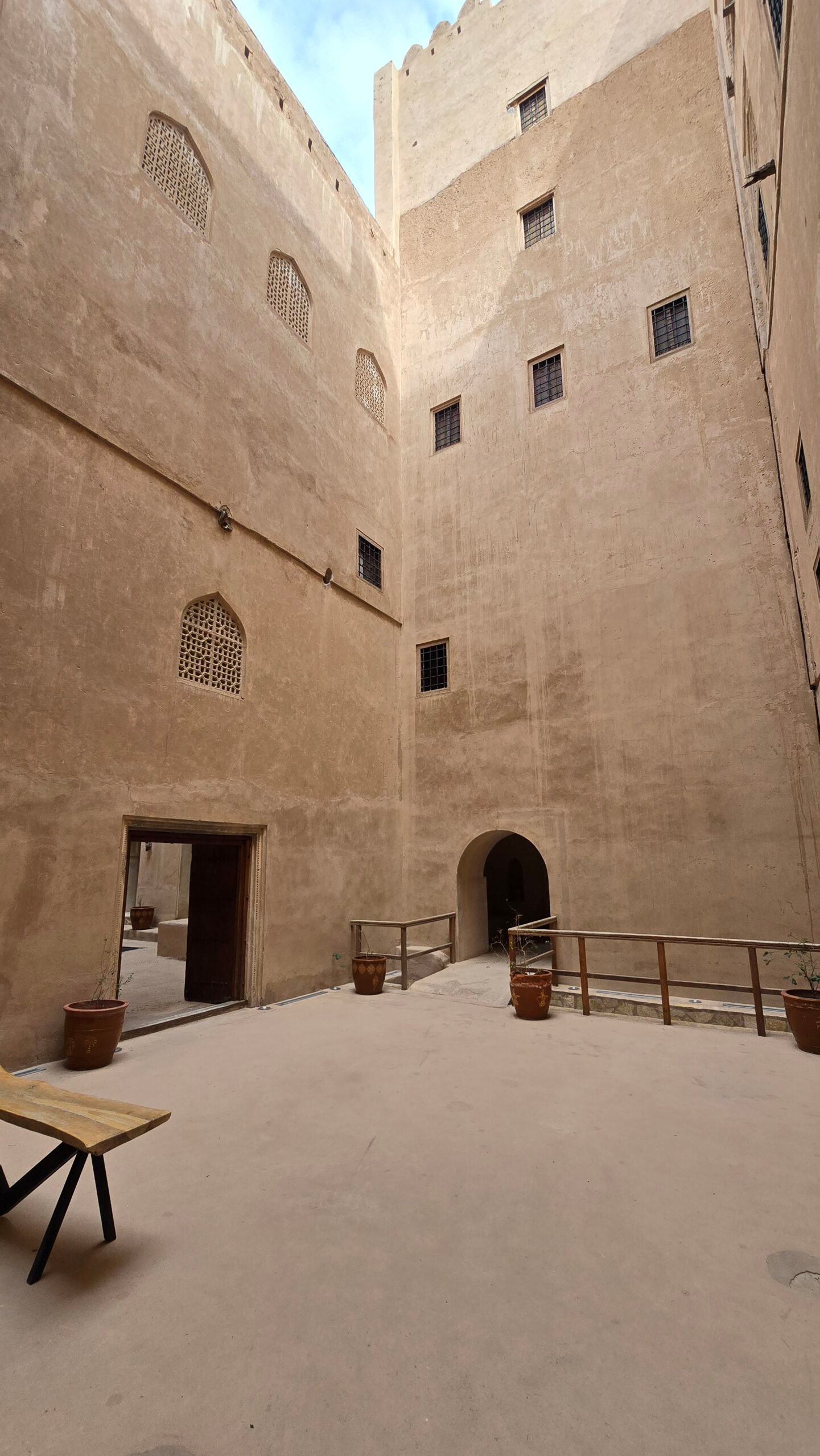
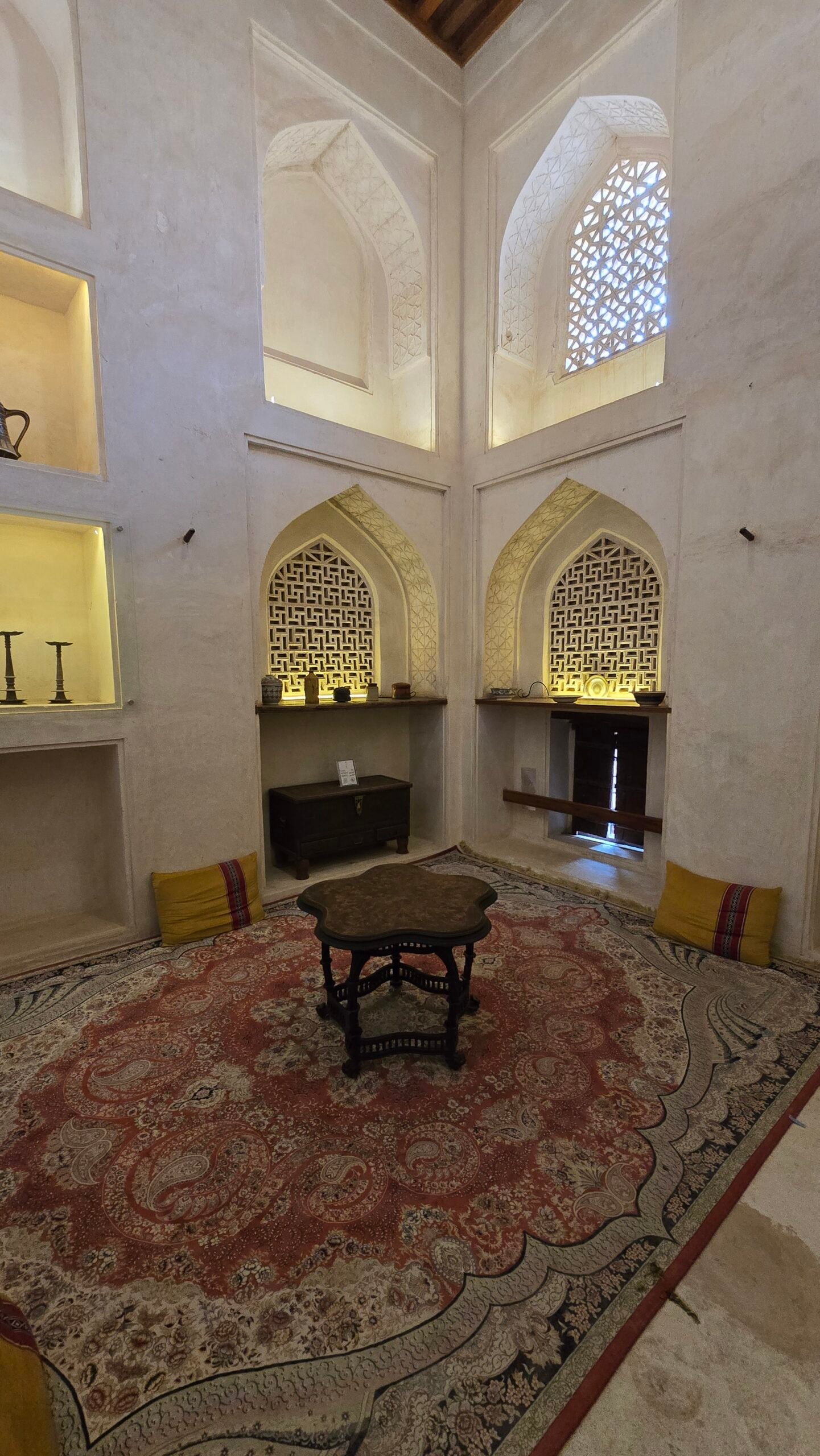
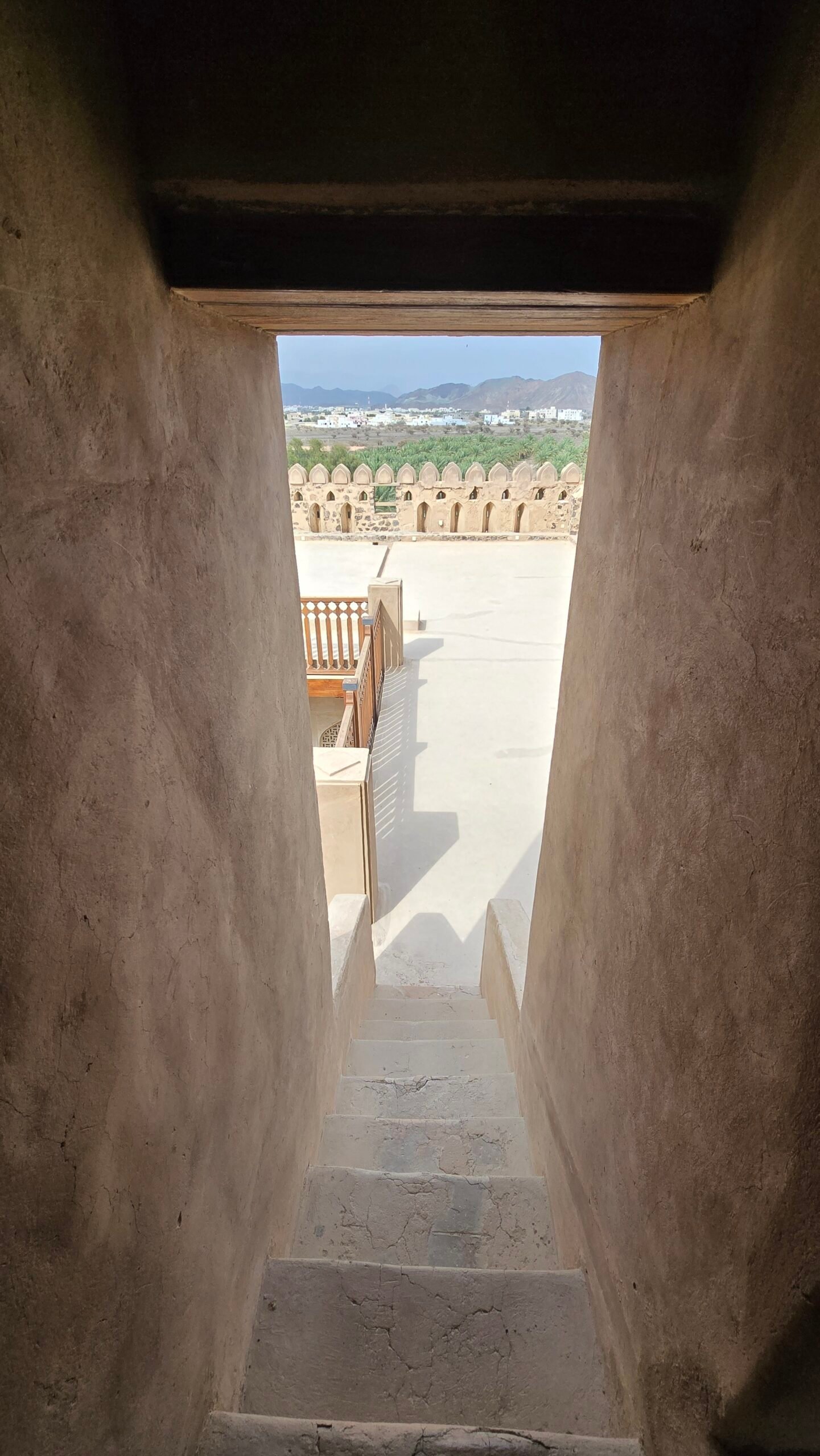
If Bahla was built for raw power and defense, Jabreen was built for artistry, intellect, and elegance. Constructed in the late 17th century by Imam Bil’arab bin Sultan, this is less of a rugged fortress and more of a beautifully preserved, refined palace that originally served as a vibrant center of learning for astrology, medicine, and Islamic law.

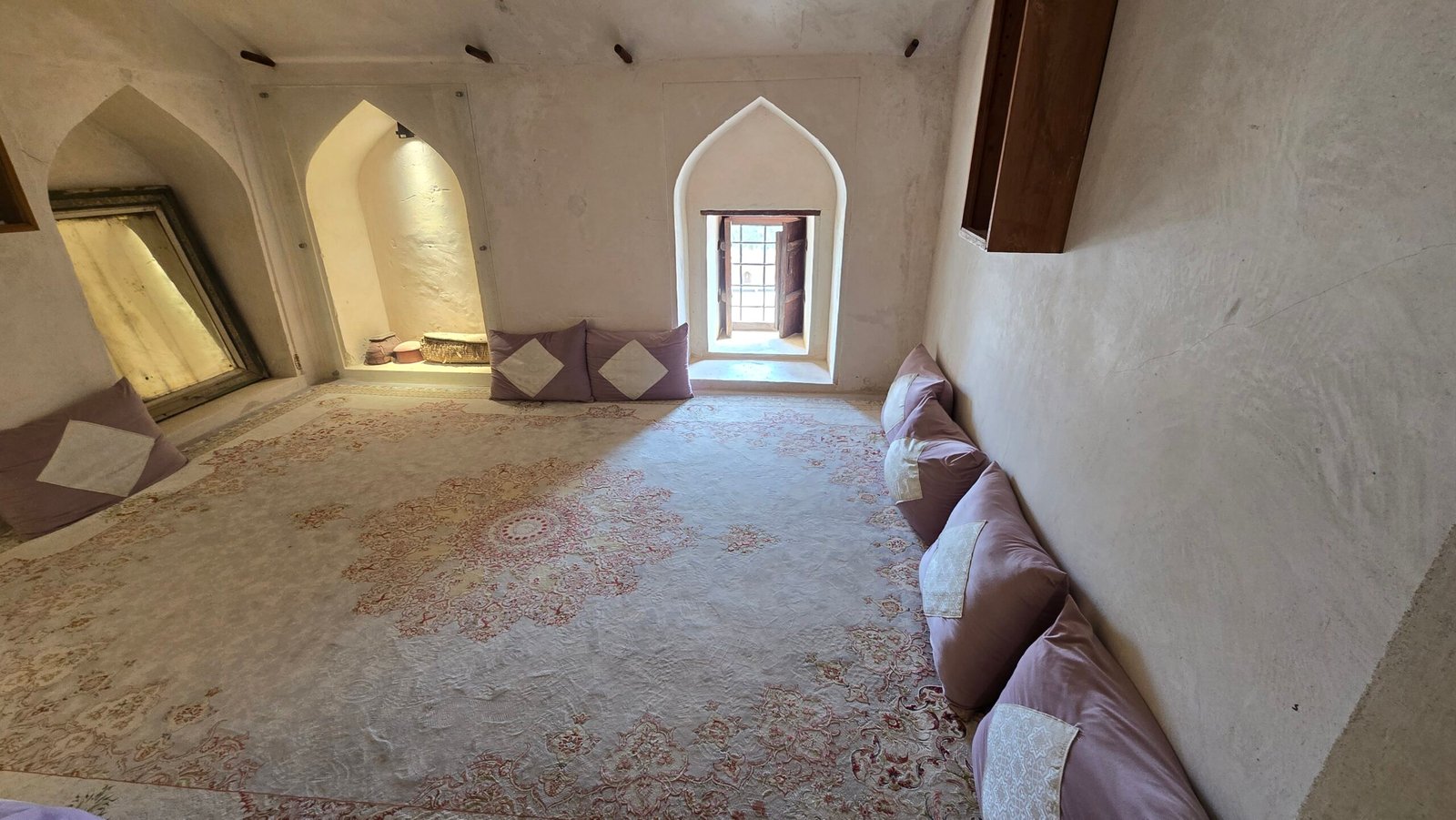
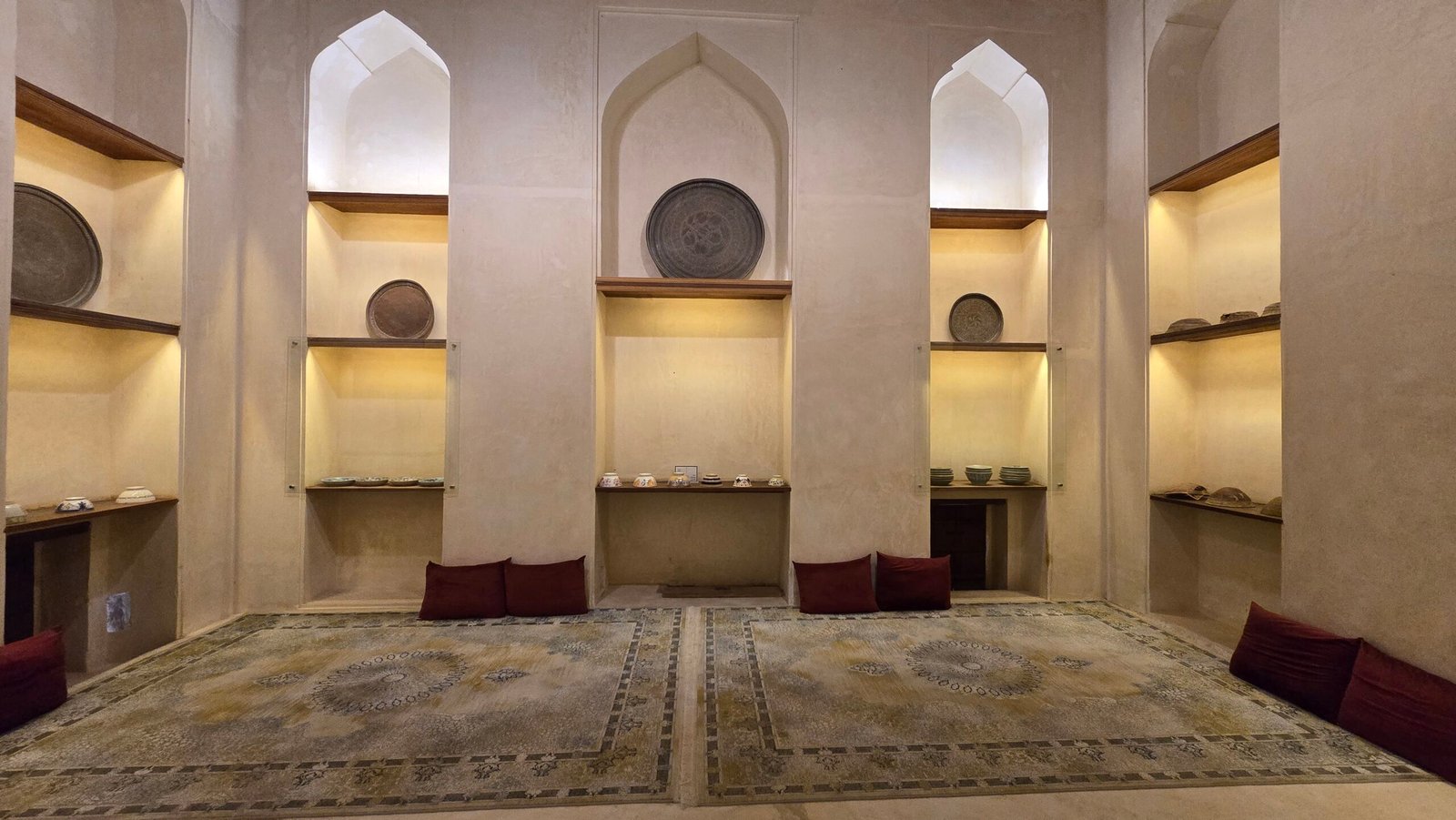
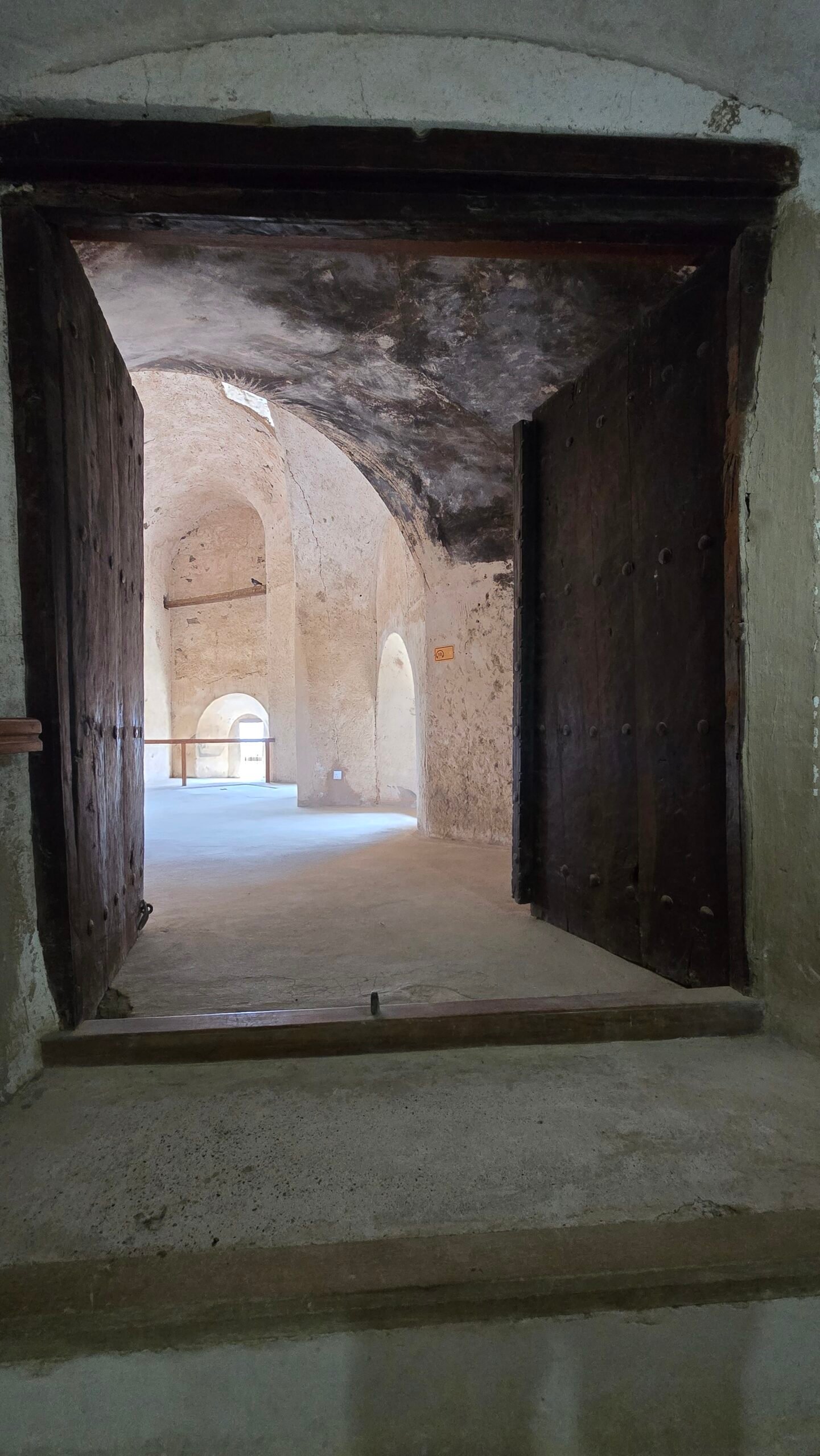
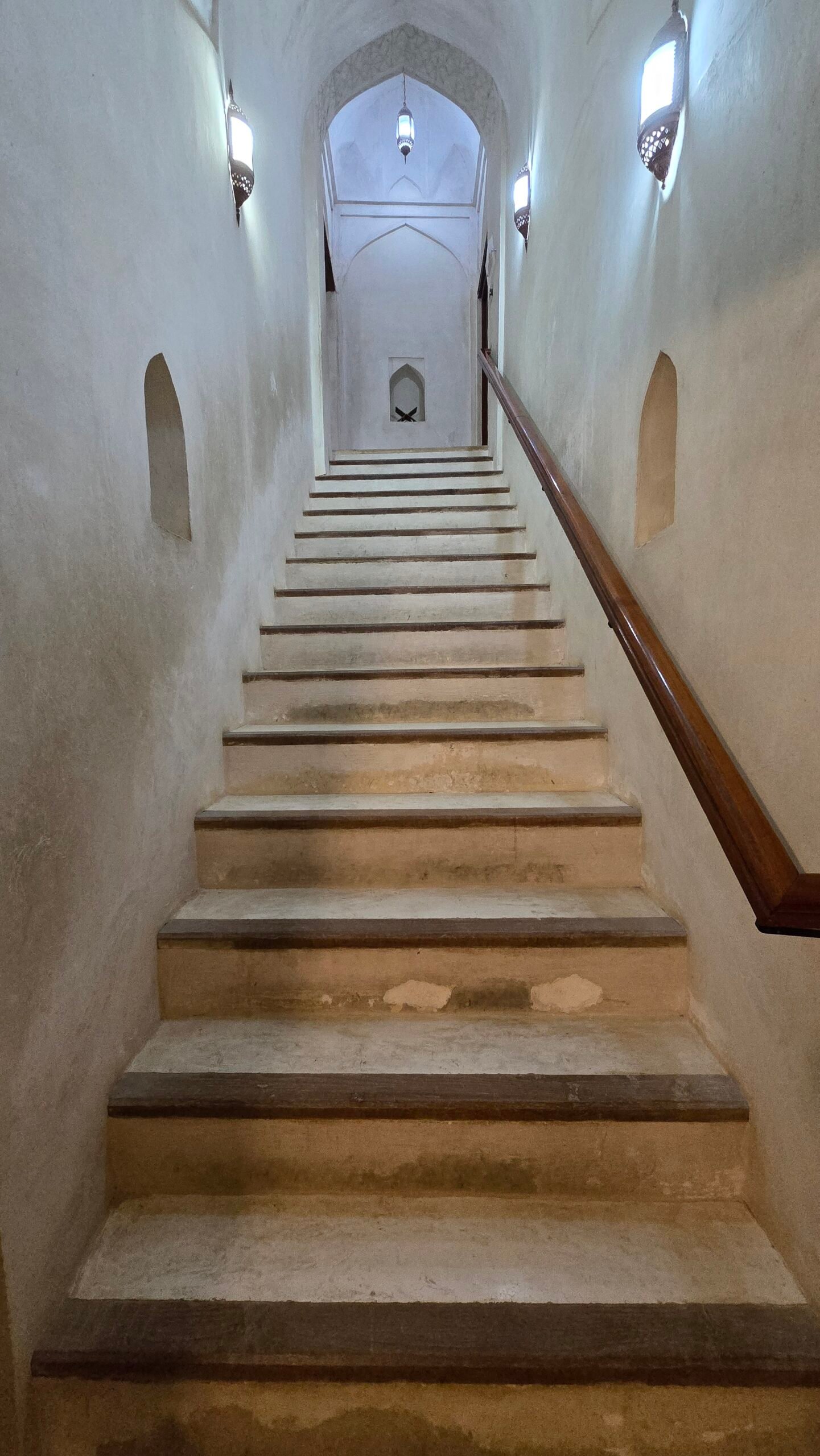
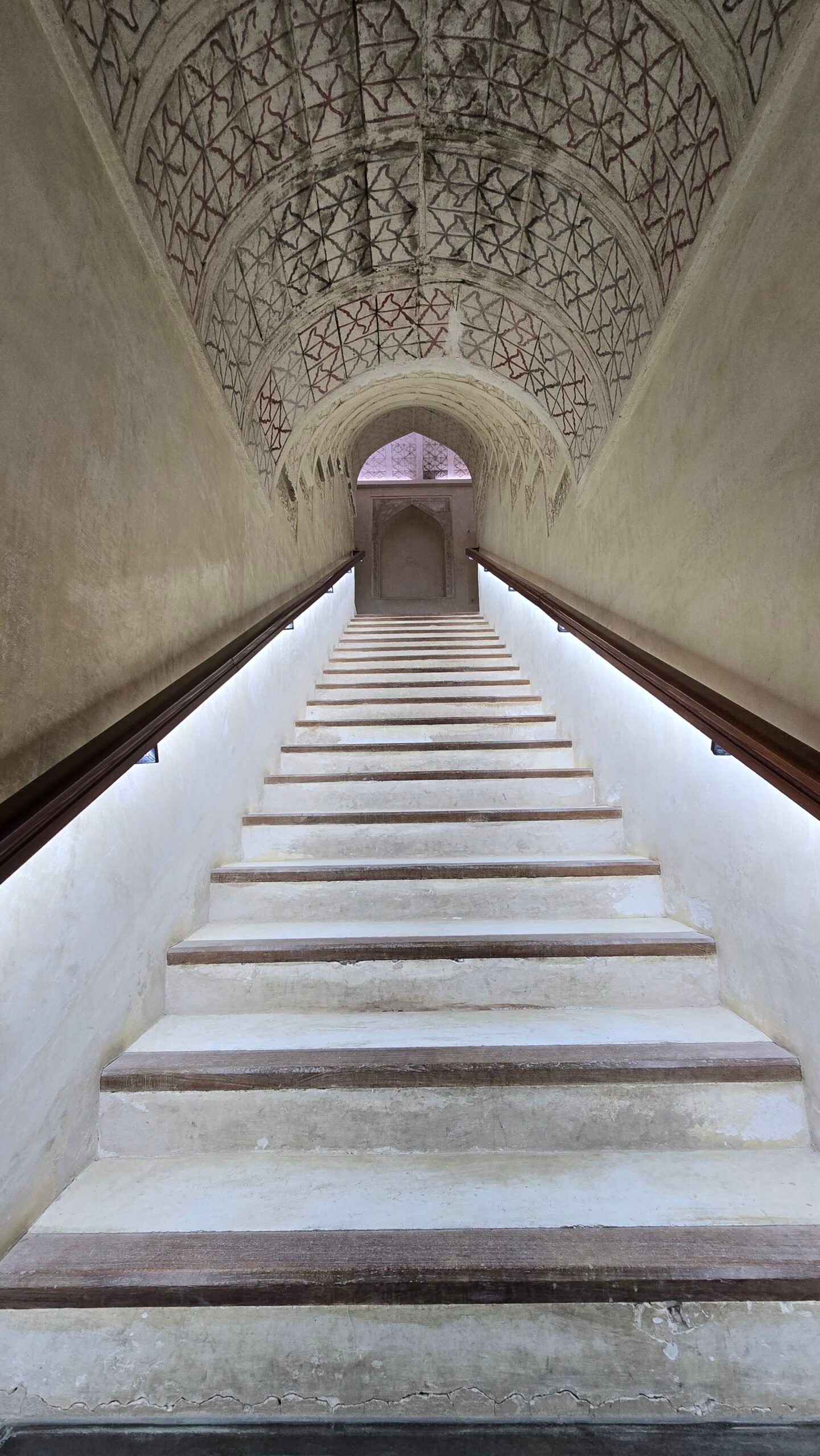
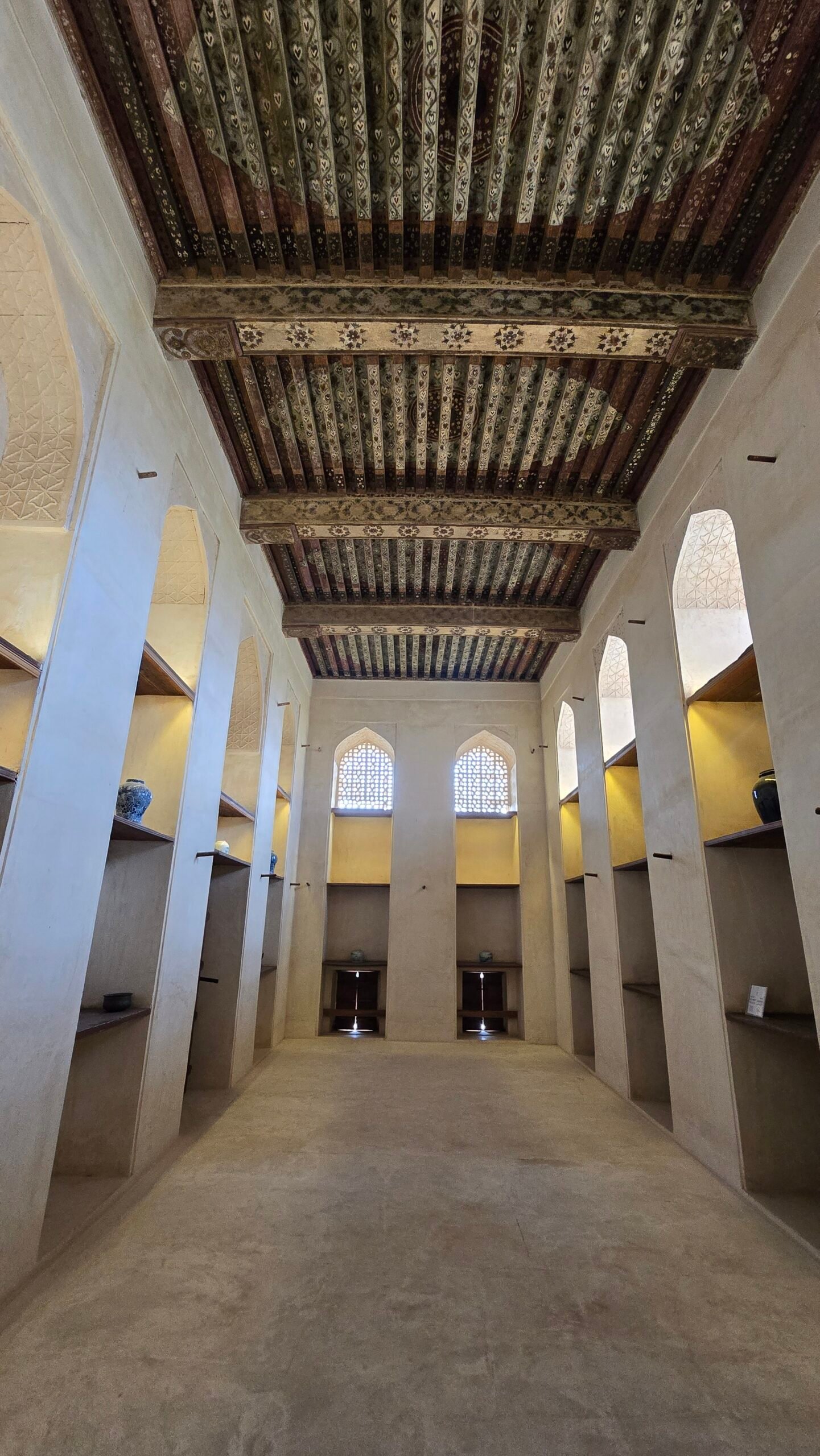
We spent about an hour wandering through its three stories, and the contrast to Bahla is striking. Prepare to be blown away by the intricate, hand-painted wooden ceilings (especially in the famous “Sun and Moon Room”), the ornate carved doors, and the beautiful arched courtyards. You can even see the traditional date storage room, complete with floor channels designed to collect sweet date syrup!

Bloggers Tip: When you pay your entrance fee (usually around 3 OMR), be absolutely sure to ask for the audio guide! It is incredibly well-produced and brings the empty rooms to life with fascinating stories about the Imam, the castle’s hidden defensive features, and the intricate design details you would definitely miss on your own.

📍 End: Nizwa Fort, Old Town Walls & Central Souq

To complete our epic grand loop, we hopped back onto Route 21 for an easy 30 to 40-minute drive, returning to where our journey began: the historic heart of Nizwa. Arriving in the late afternoon is the absolute perfect timing to experience the city’s main attractions, just as the harsh midday sun begins to soften into a golden glow.

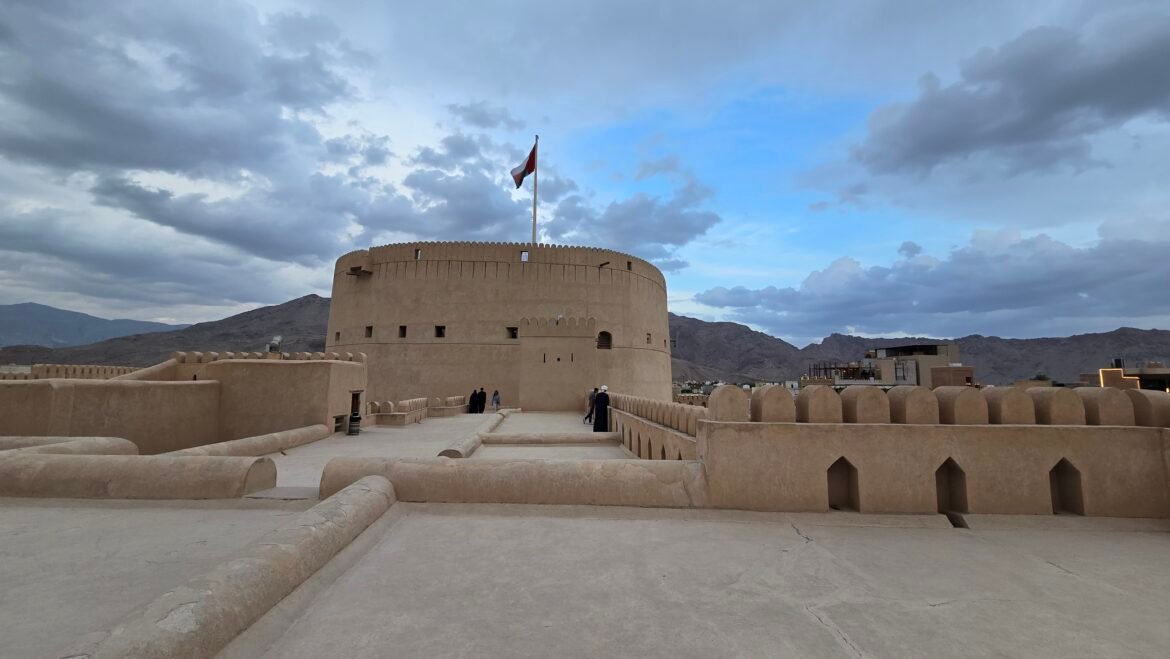
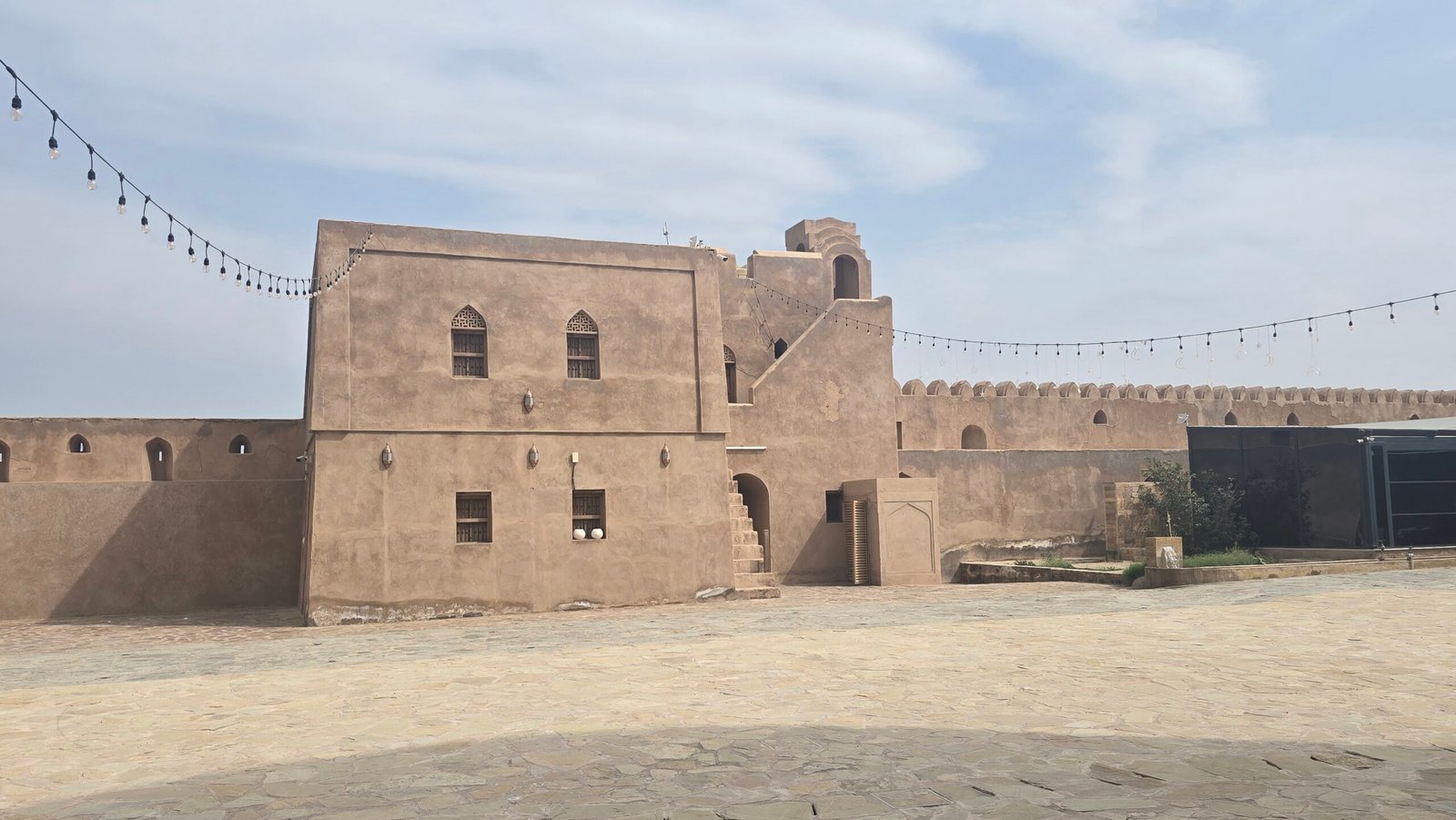
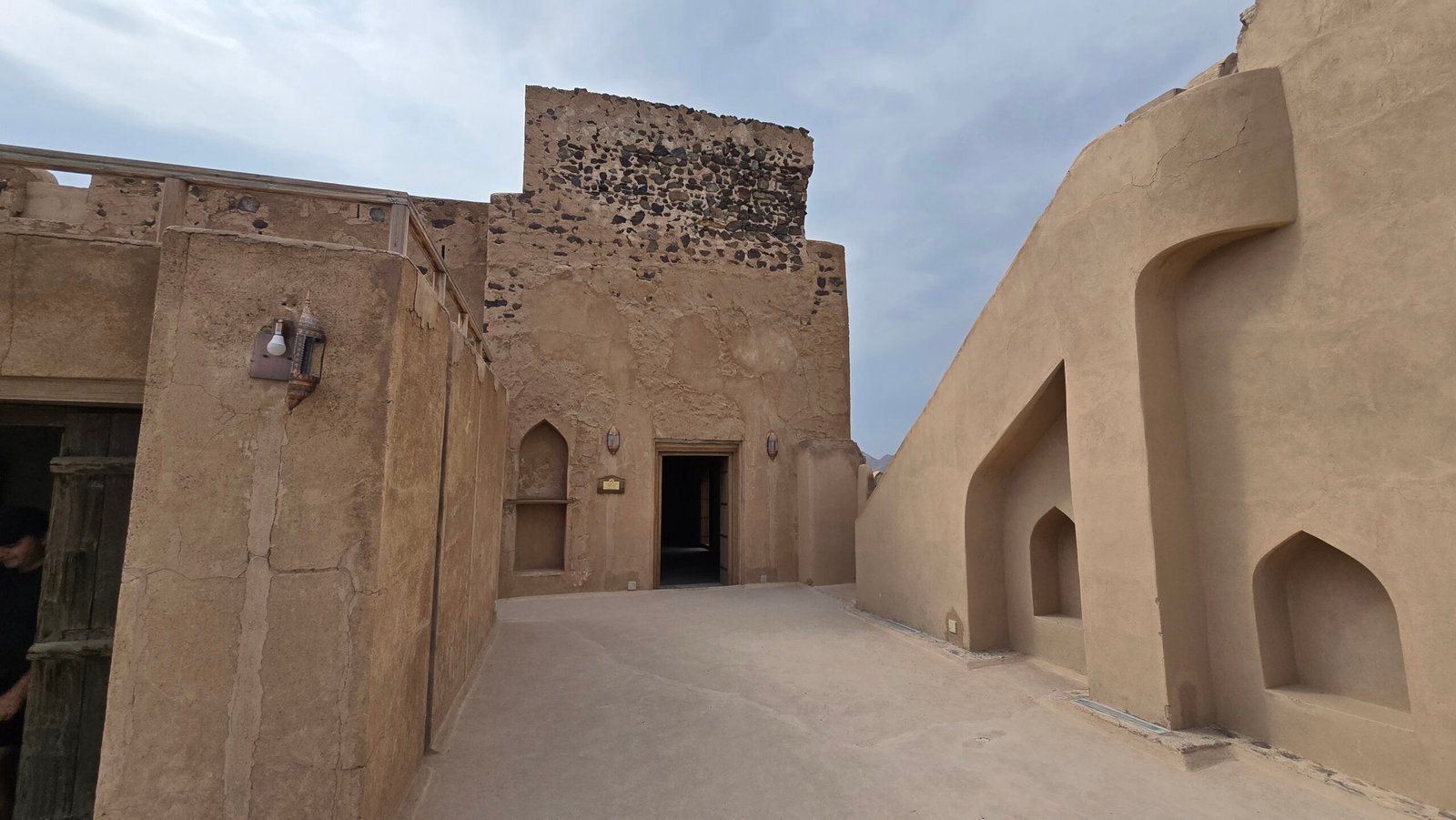
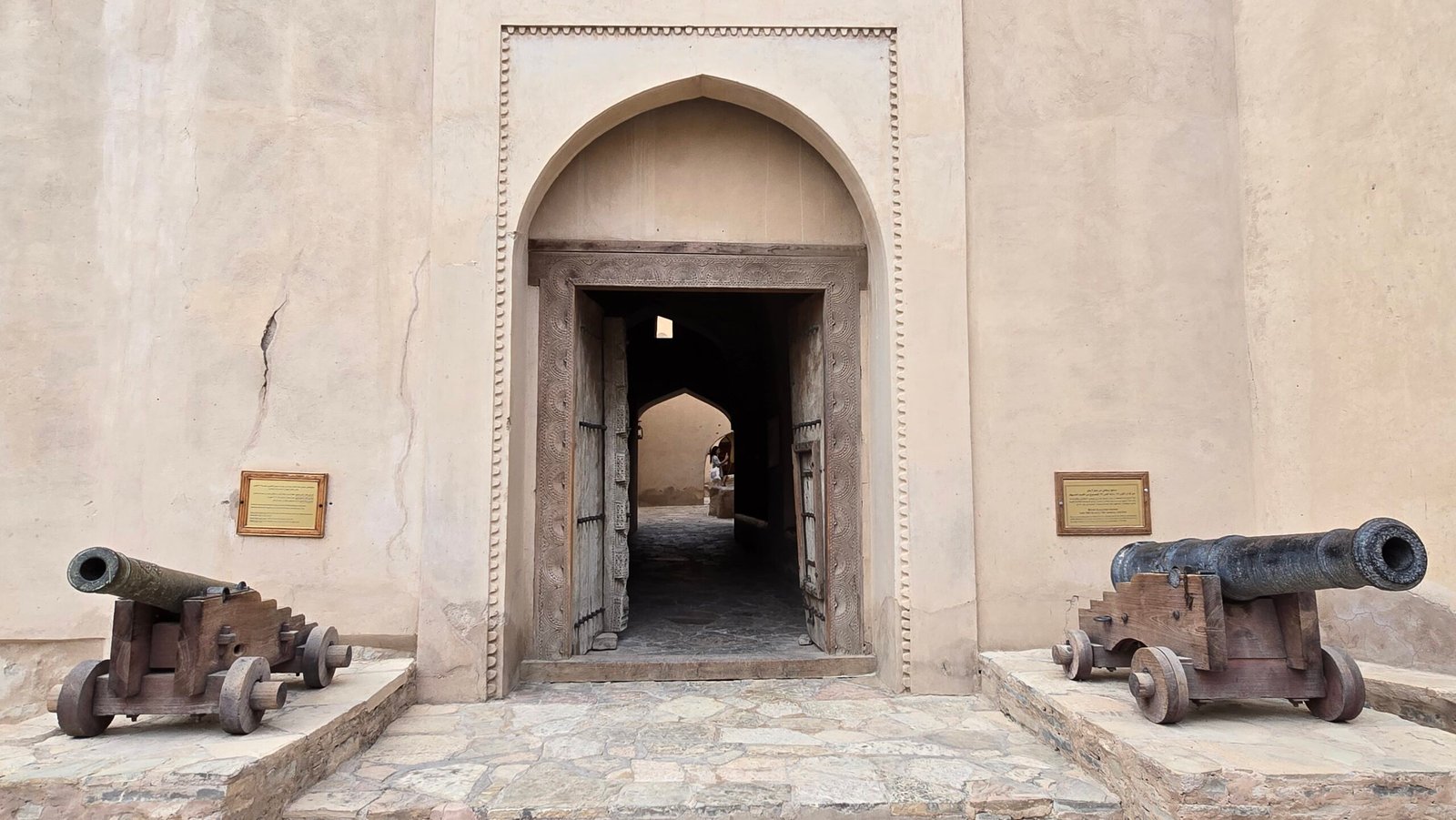
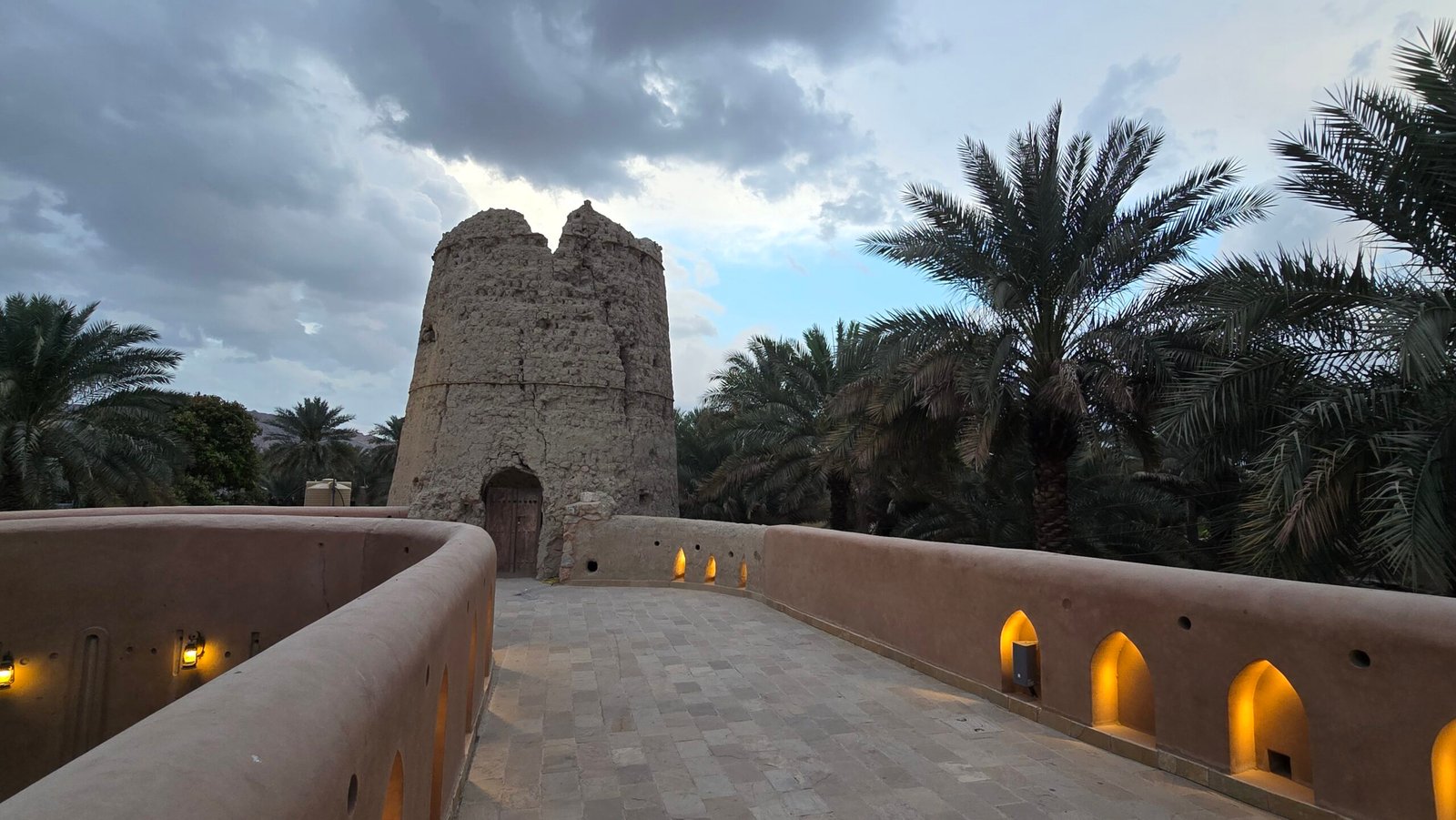
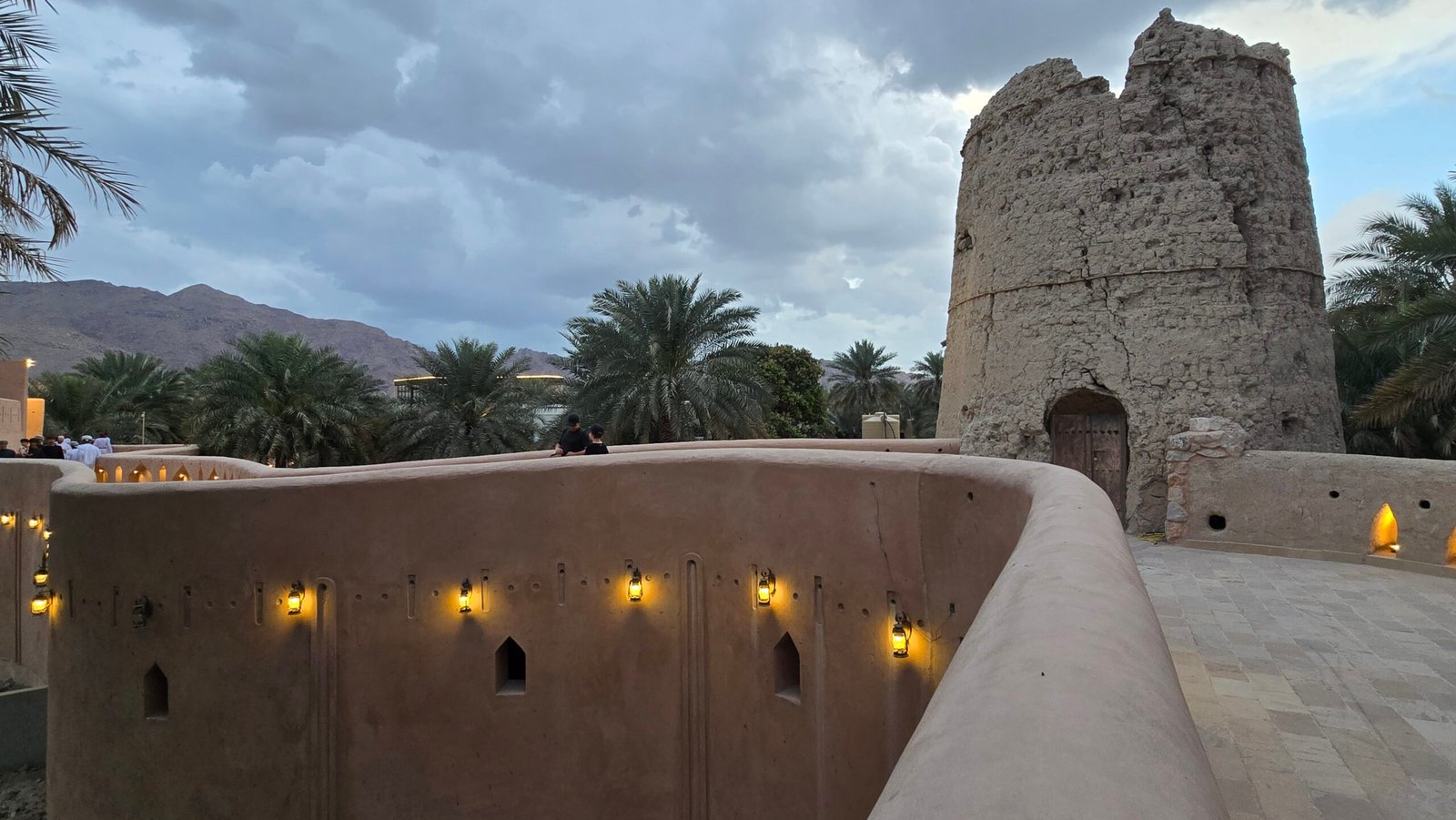
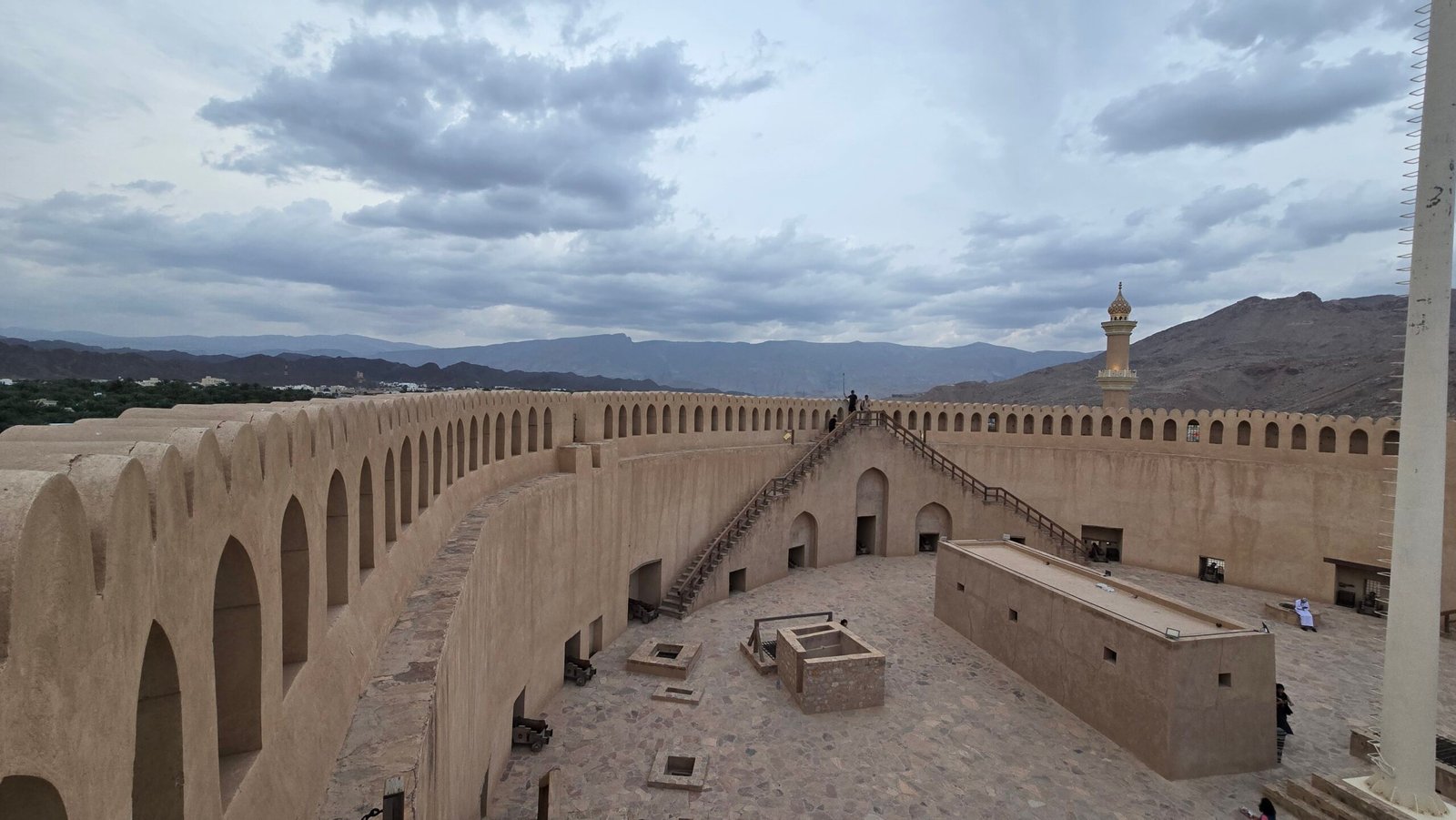
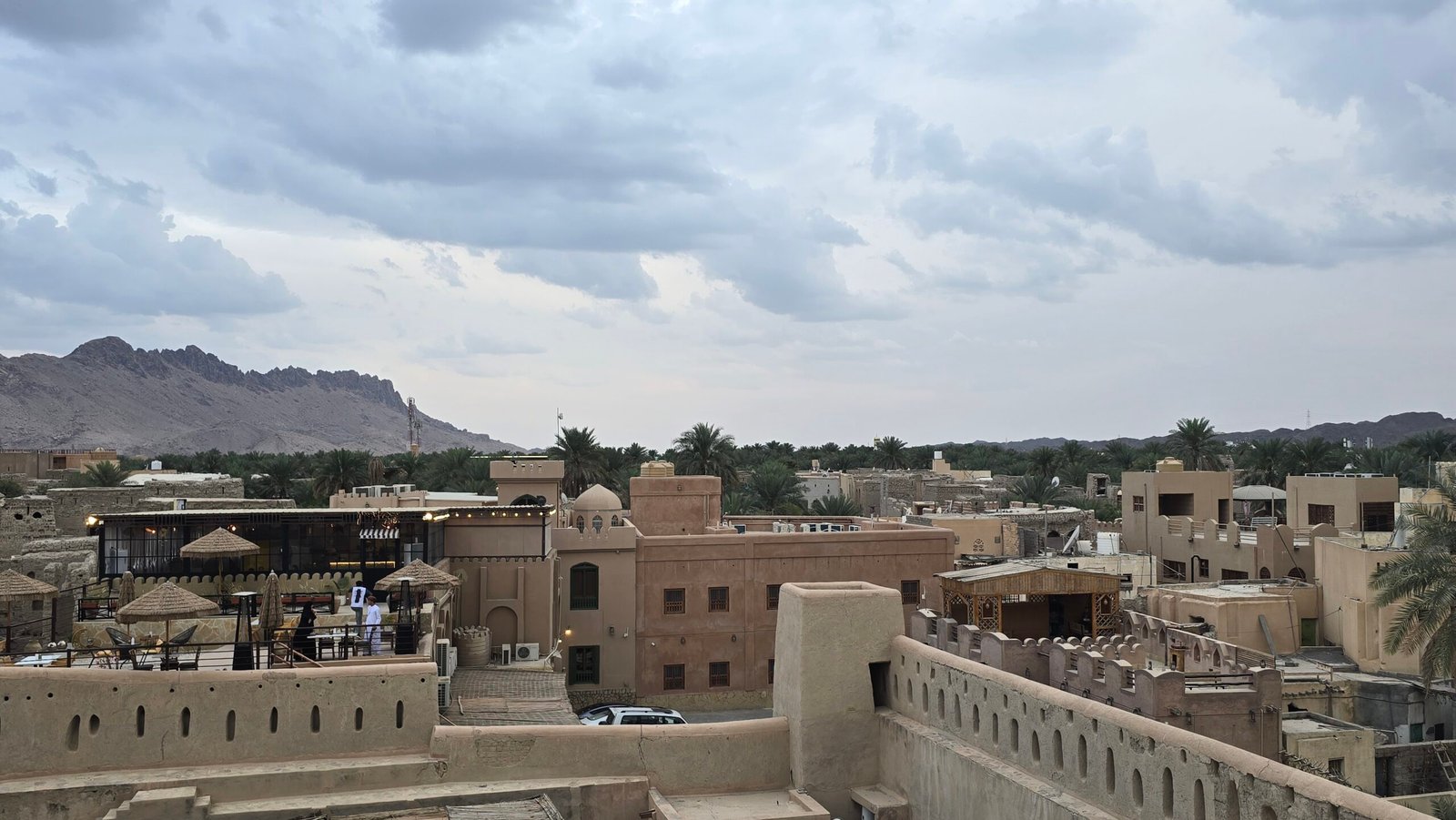
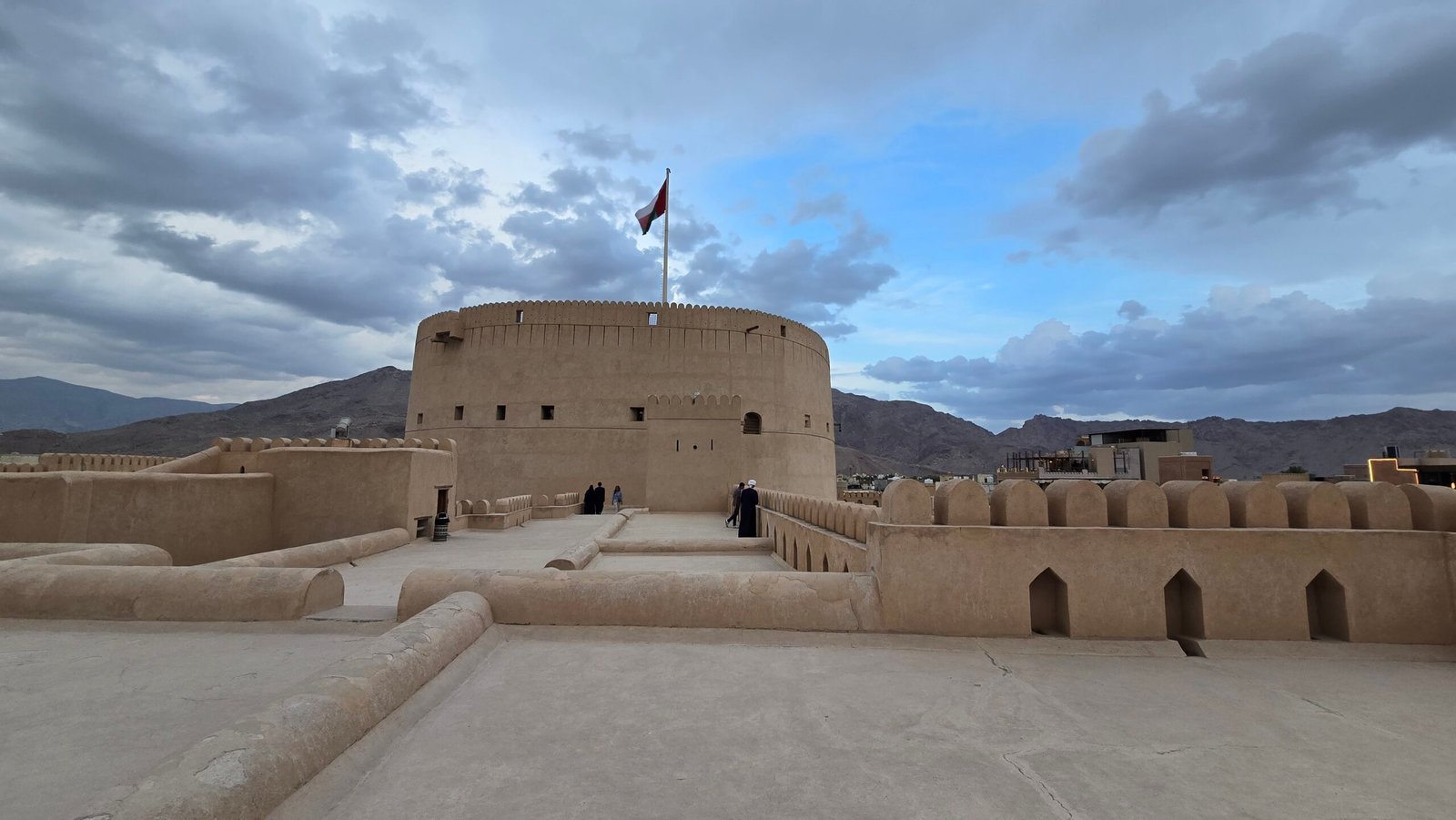
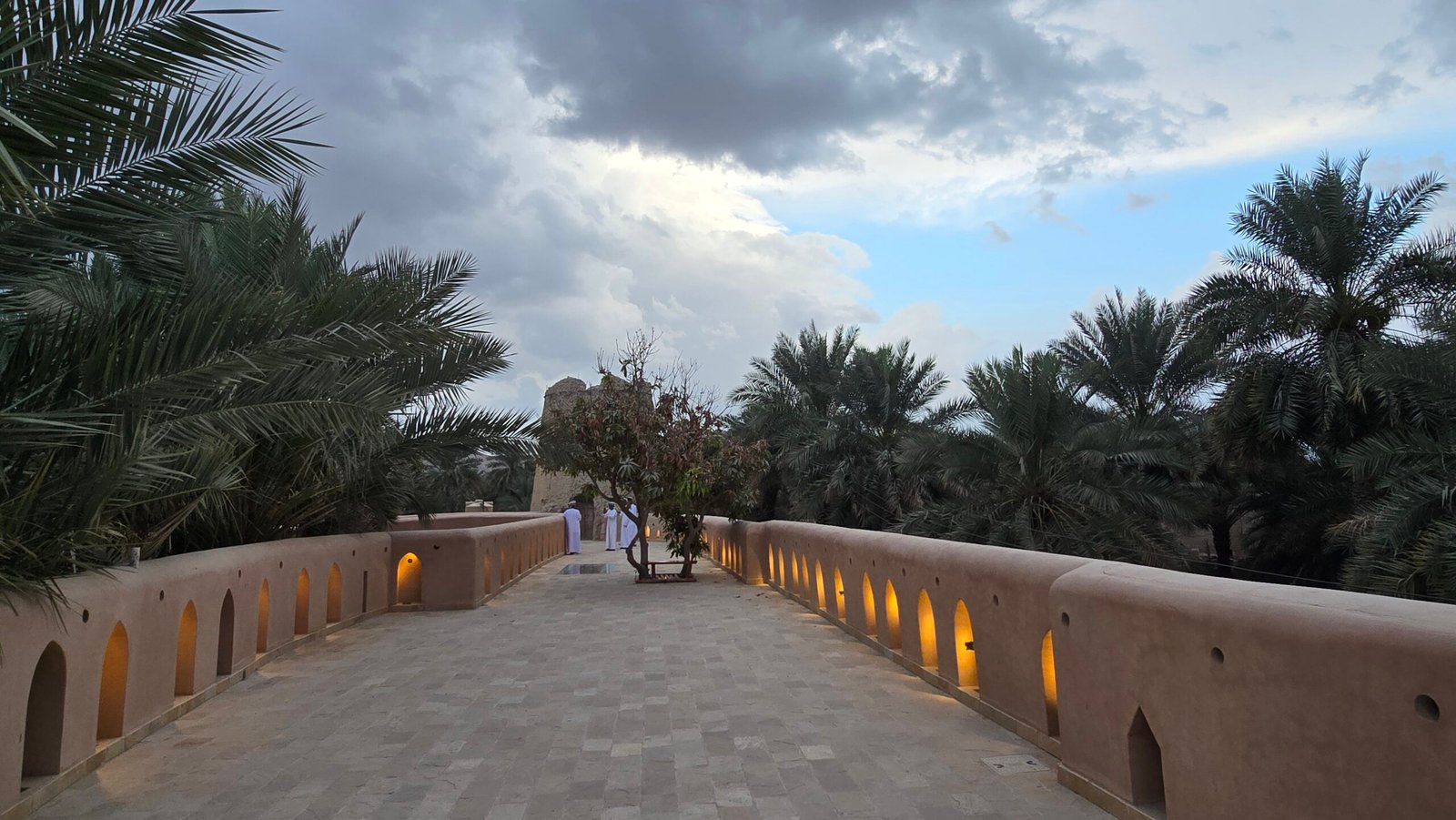
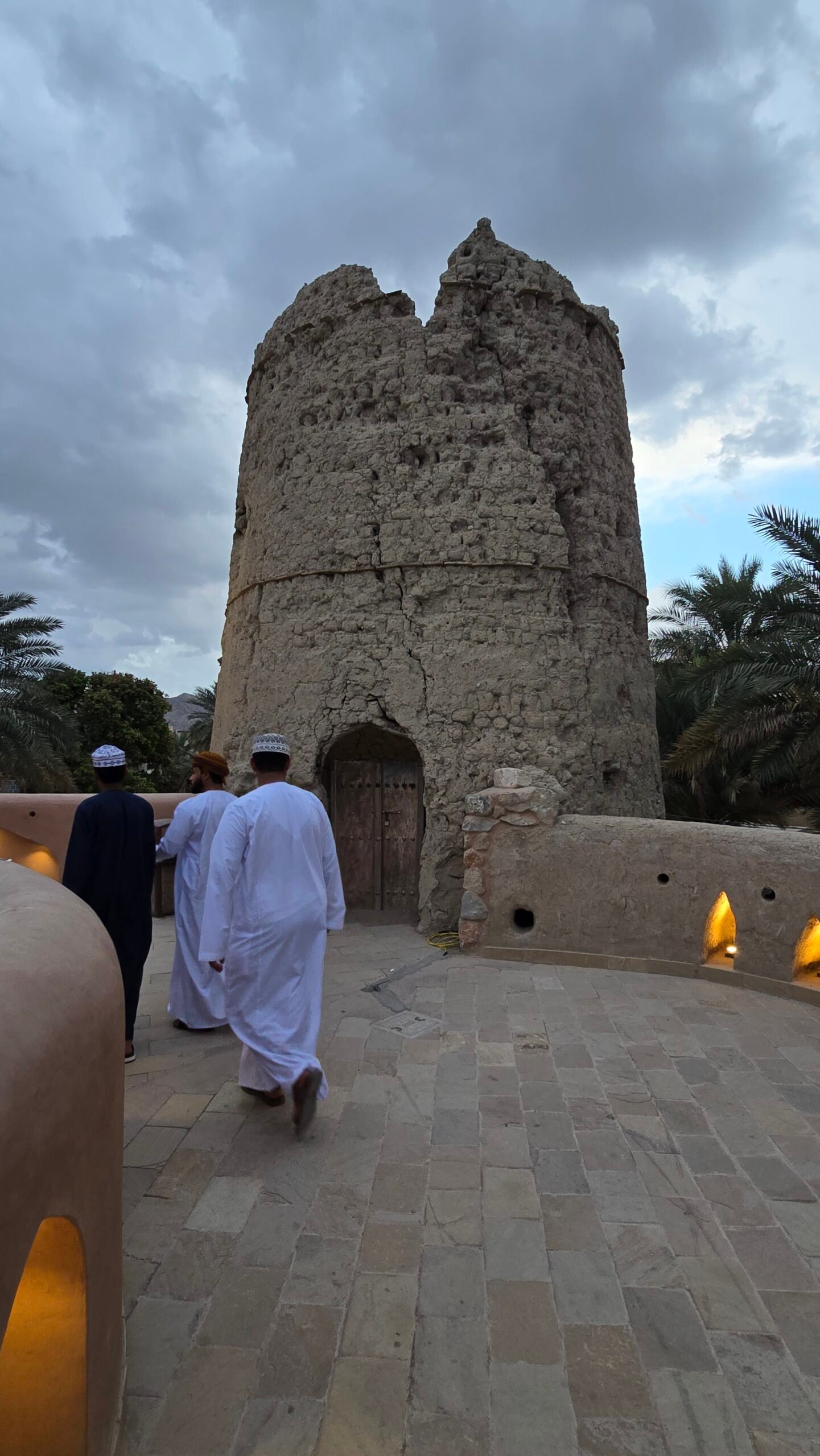
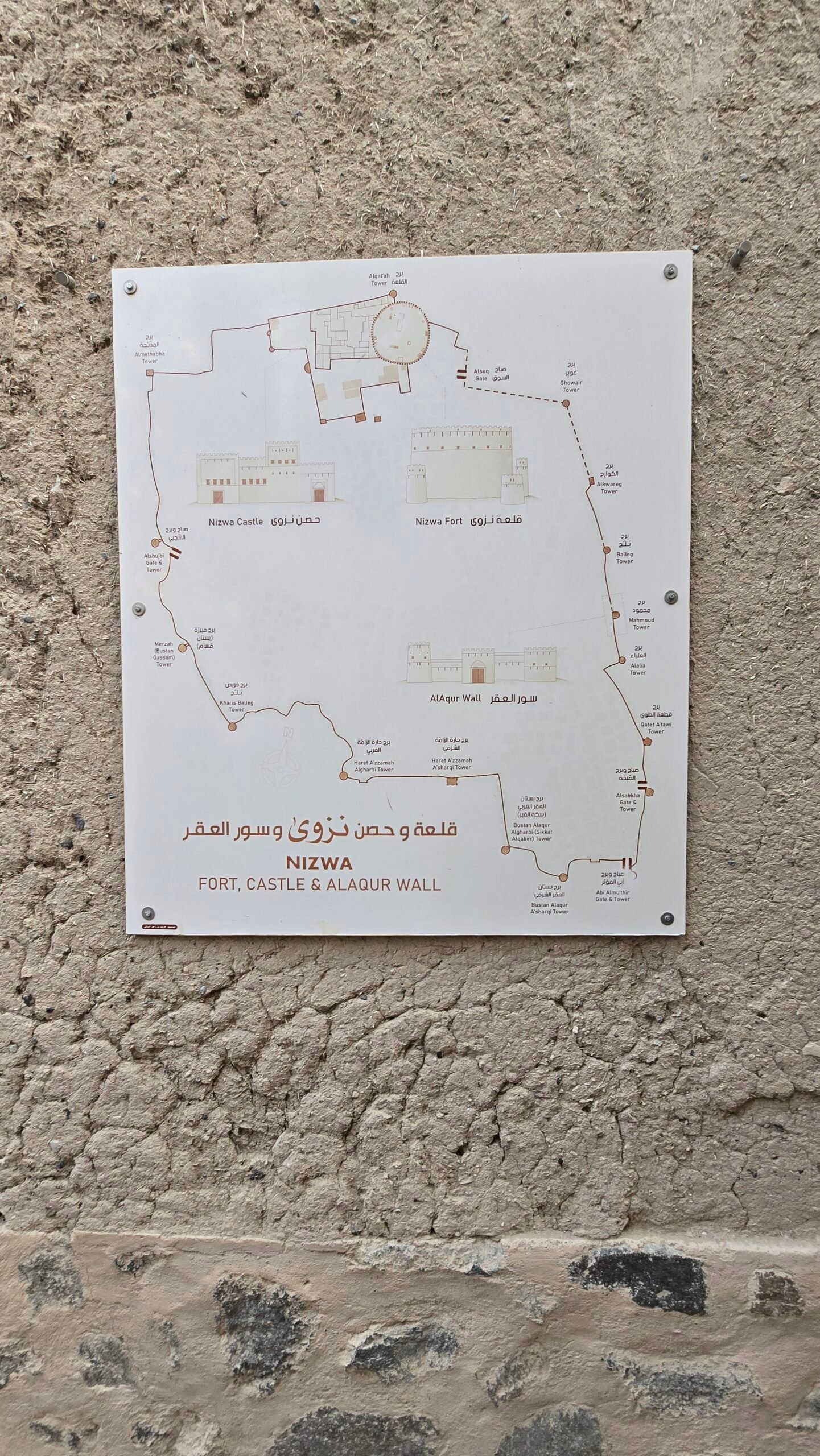
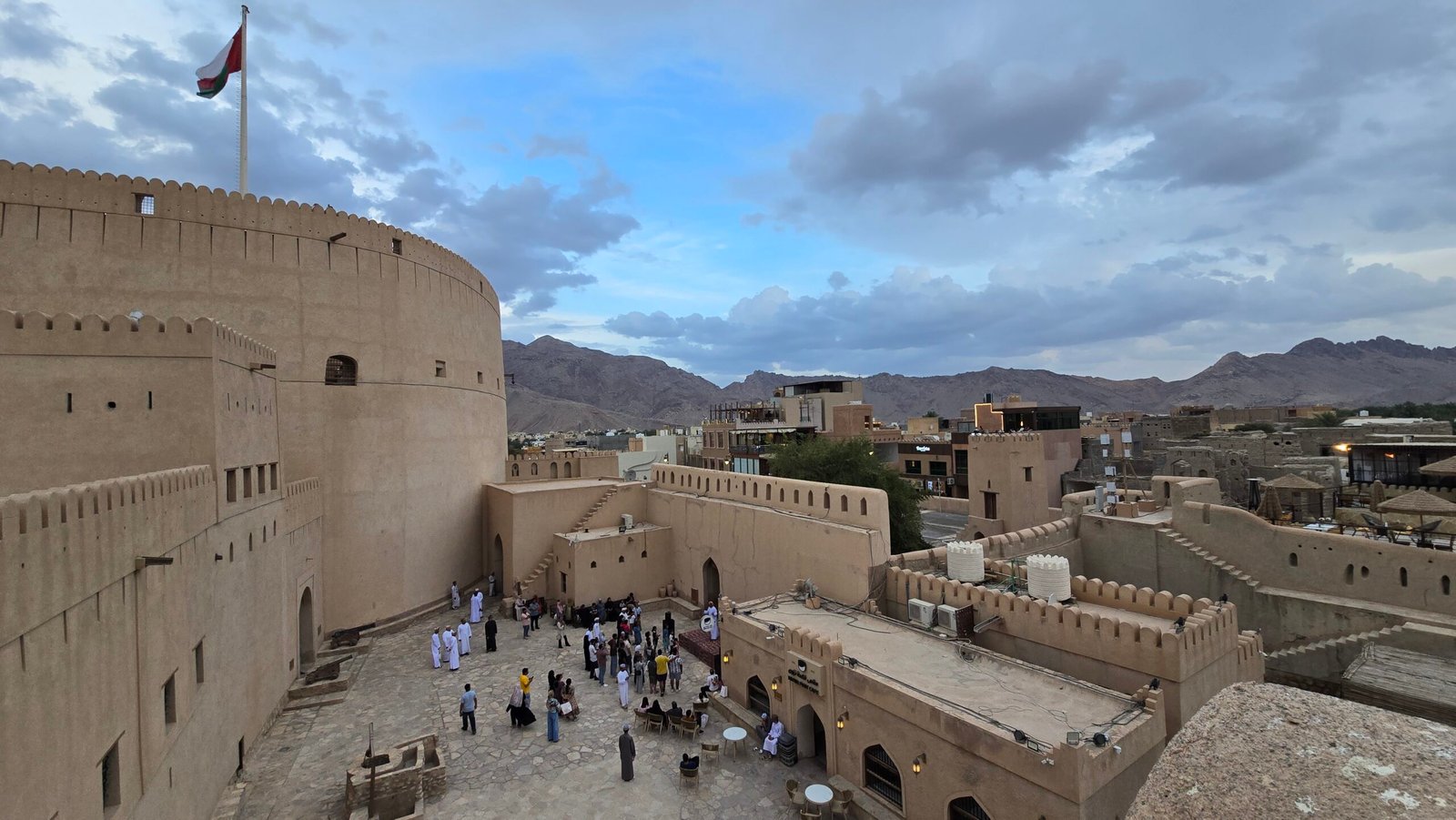
We finally made our way inside the mighty Nizwa Fort (entrance fee is 5 OMR for international visitors). Built in the 17th century, this stronghold is famous across Oman for its massive, 30-meter-high cylindrical tower. The absolute highlight here is climbing the narrow stairs to the top and taking a long walk along the wide, fortified walls. From this vantage point, you are rewarded with breathtaking, 360-degree views of the sprawling green date palm oasis contrasting sharply against the rugged backdrop of the Hajar Mountains.

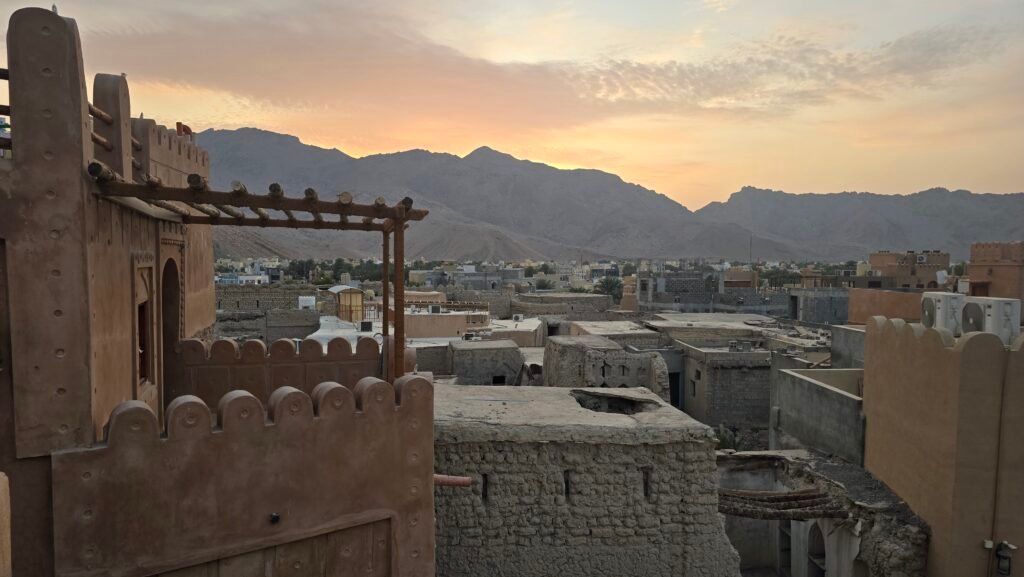
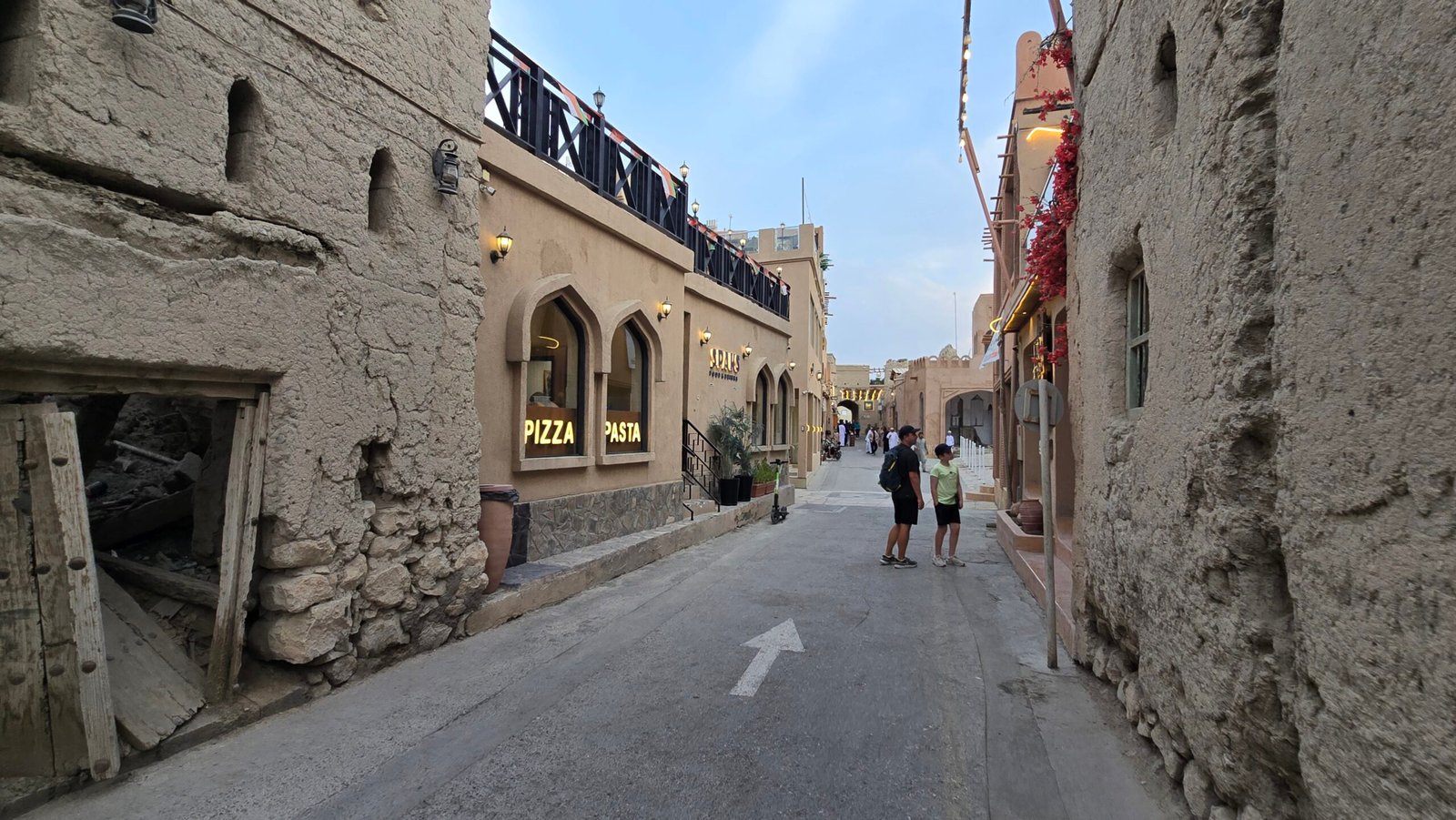
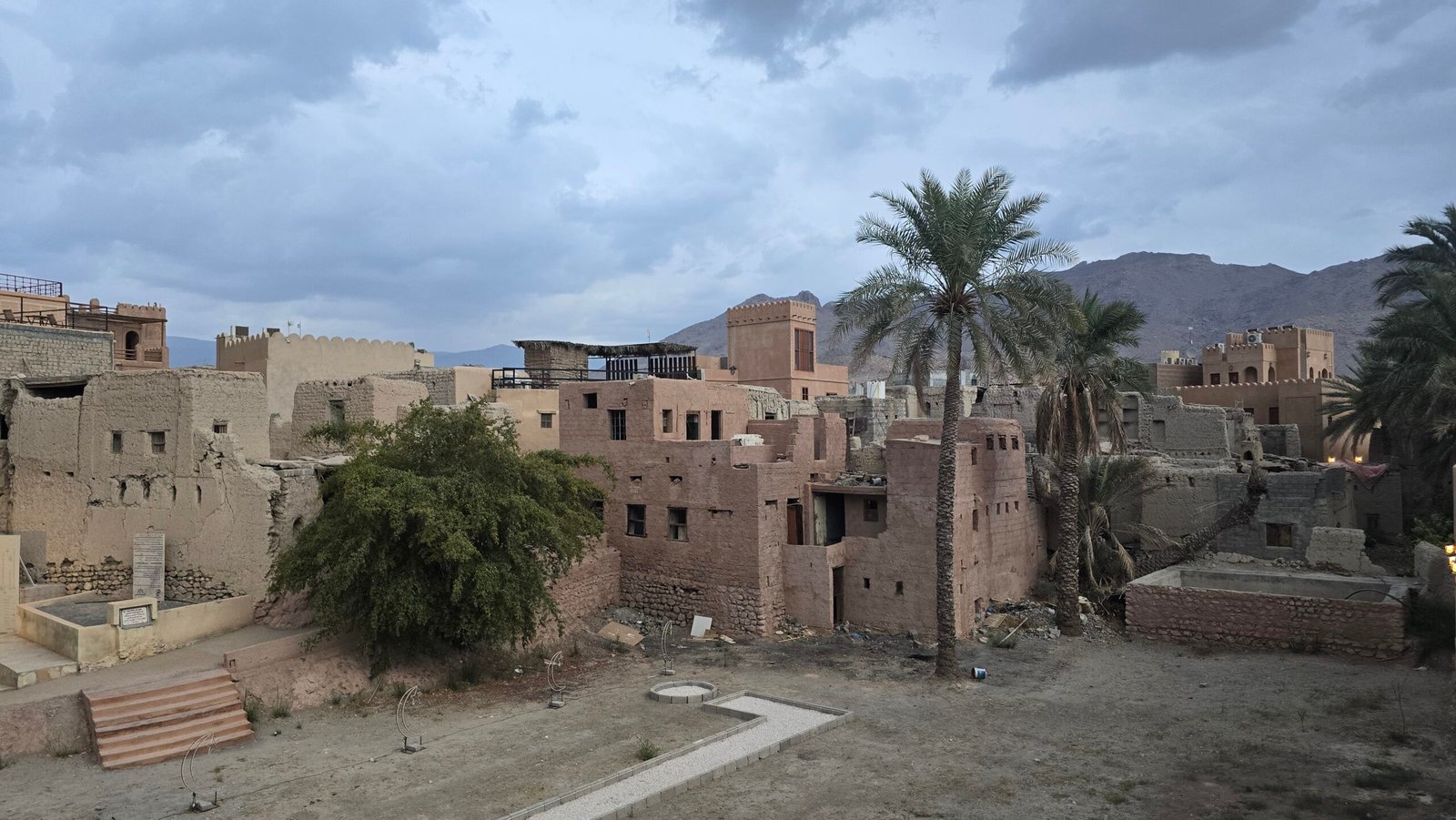
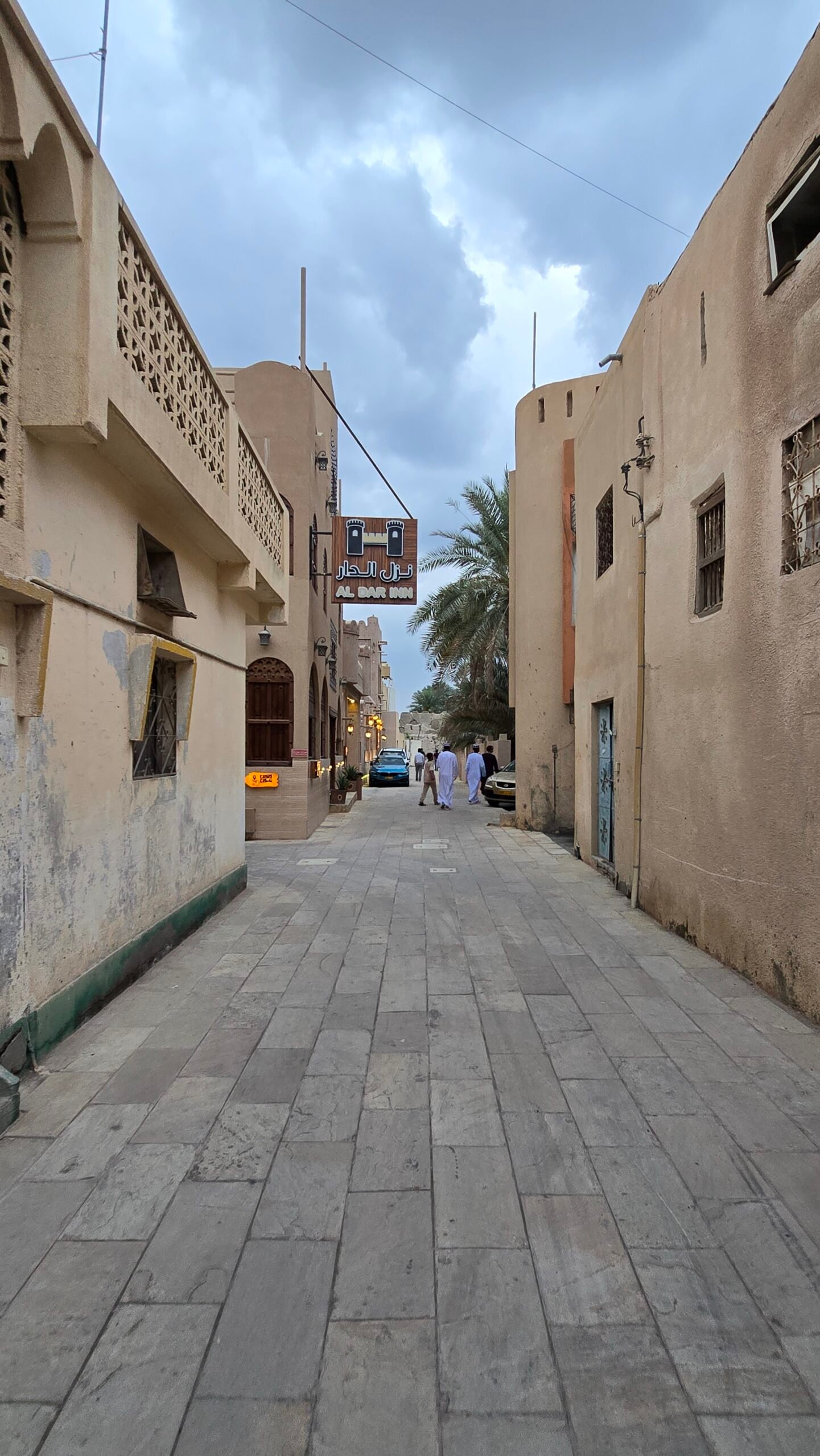
After exploring the fort, we stepped out to discover the Harat Al Aqr neighborhood—Nizwa’s ancient walled city. A fantastic addition to any visit is the beautifully restored Al Aqr city wall walk. For a small ticket price of 1 OMR for international tourists (0.5 OMR for locals), you can stroll along the top of the old town’s defensive walls. It offers an incredible, elevated perspective of the traditional mud-brick houses, winding alleys, and ancient falaj water systems that make up the historic quarter.

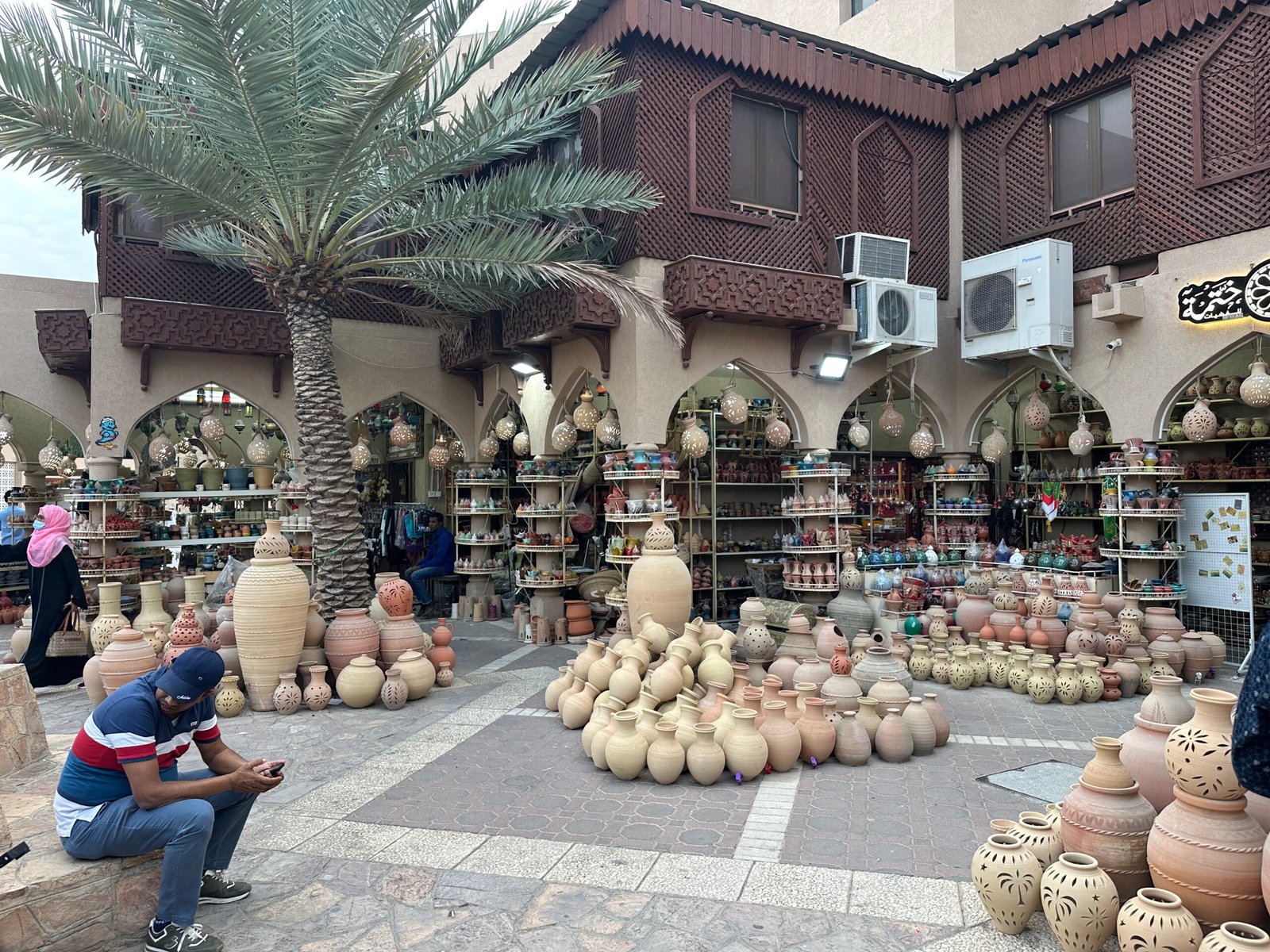
Just steps away lies the famous Nizwa Central Souq, one of the oldest and most atmospheric traditional markets in the country. As evening sets in, the souq really comes alive. It’s separated into distinct sections, making it an adventure to navigate. We wandered through the date halls to sample some of the sweetest varieties in Oman, admired the intricate handmade clay pottery, and browsed the gleaming silver stalls, famous for crafting the traditional Omani khanjar (curved daggers).

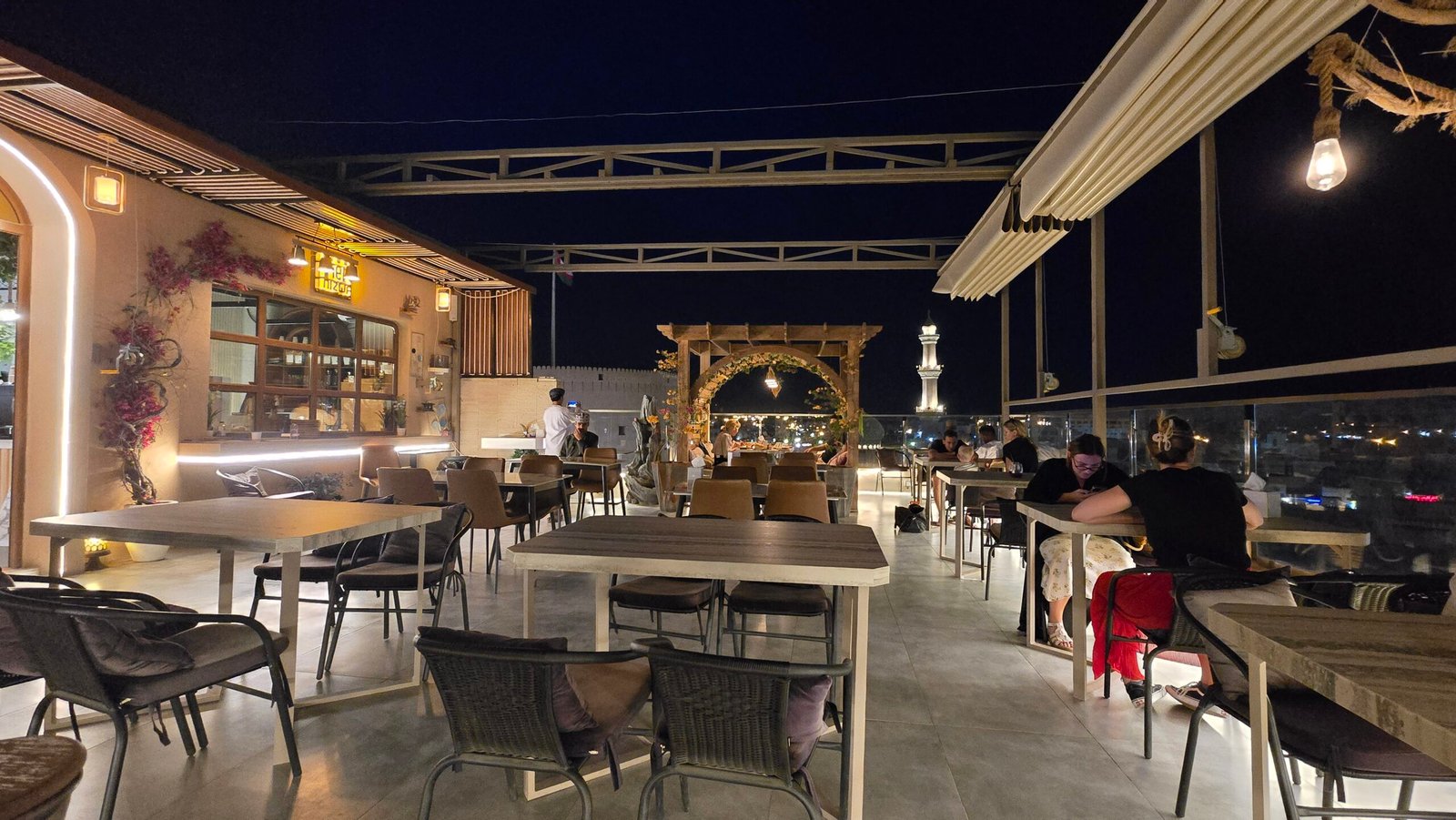
Bloggers Tip: After a long, incredibly satisfying day of exploring, there is no better way to cap off the trip than by heading up to one of the local rooftop restaurants nestled right next to the souq. Sitting under the stars, enjoying some traditional Omani spiced rice and grilled meats while looking out over the beautifully illuminated fort and the glowing domes of the nearby mosque, is pure magic. It’s the perfect end to the ultimate Omani day trip.

Trip Statistics & Final Thoughts

This itinerary creates a seamless 132-kilometer loop. According to our route plan (see the map!), the total estimated driving time is approximately 2 hours and 20 minutes. Of course, you’ll spend much more time at the locations, making this a full, satisfying day from morning to evening.

We took Route 21 and several other well-paved roads, passing through small, charming villages along the way. This day trip from Nizwa is a perfect blend of adventure, ancient history, dramatic architecture, and rich local culture. It’s a journey I’ll never forget, and I highly recommend it to anyone visiting Oman. Happy travels!

March 27, 2026 0 comments
0 FacebookTwitterPinterestEmail
Is Cancel For Any Reason (CFAR) Travel Insurance Worth It? Your 2026 Guide
Travel Insurance

Is Cancel For Any Reason (CFAR) Travel Insurance Worth It?

by Travel Geek March 26, 2026
written by Travel Geek

Travel feels a bit unpredictable right now. With recent airspace closures in the Middle East causing major flight reroutes and delays this spring, many travelers are looking for better ways to protect their vacation money.

Regular travel insurance is great for medical emergencies or lost bags. It usually will not help if you simply feel unsafe flying or just want to stay home. This is where Cancel For Any Reason (CFAR) travel insurance comes in. Let’s look at what CFAR actually is, how much it costs, and if it makes sense for your next trip.

What is CFAR Travel Insurance?

Think of CFAR as a special upgrade to a normal travel insurance policy. It lets you back out of your trip for reasons standard policies ignore, like general anxiety, changing your mind, or sudden geopolitical tension.

There is a catch. You cannot just buy it whenever you want. You almost always have to add this coverage within 14 to 21 days of making your very first trip payment. If you book a hotel on May 1st but wait until May 25th to buy insurance, you are out of luck.

Also, you have to insure 100% of your prepaid, non-refundable trip costs. You cannot just insure the flight and ignore the hotel. Usually, you must cancel your trip at least 48 hours before you leave to get your money back.

The “Known Event” Rule and War Exclusions

Why are so many people looking at CFAR right now? Standard insurance policies have strict rules against covering acts of war. If an airline cancels your flight because a country closed its airspace due to a conflict, regular insurance usually denies your claim.

Even with CFAR, timing is everything. Insurance companies follow a strict “Known Event” rule. You cannot buy insurance for a house that is already on fire. When the recent Middle East conflict escalated on February 28, 2026, it became a known event. Any policy bought after that exact date will not cover issues related to that region’s conflict. To use CFAR properly, you have to buy it right after you book, long before bad news hits the front page.

Top 5 CFAR Insurance Providers for 2026

If you want the best payout, look for plans that reimburse at least 75% of your trip cost. Here are the top choices right now based on recent market data:

  1. Allianz Travel (Cancel Anytime): Gives back an impressive 80%. You have 14 days to buy it. They even let you cancel on the day you leave.

  2. Travel Insured International (FlexiPAX): Reimburses 75%. Gives you a generous 21 days from your first deposit to buy the policy.

  3. Seven Corners (Trip Protection): Reimburses 75%. Very budget-friendly. You have 20 days to buy it.

  4. Tin Leg (Gold): Reimburses 75%. Great if you want high emergency medical limits. You have 14 to 15 days to purchase.

  5. IMG (Travel LX): Reimburses 75%. Best for expensive luxury trips because it covers up to $150,000. You have 20 to 21 days to buy.

Let’s Do the Math: Is It Worth the Cost?

Normal travel insurance costs about 4% to 10% of your total trip. Adding CFAR increases that price by about 50%. A policy with CFAR will likely cost between 6% and 12% of your entire vacation budget.

Imagine you bought a $1,500 flight to Cancun. A standard policy might cost $105. Adding CFAR brings your insurance bill to about $157. If you cancel, a top-tier CFAR plan gives you 75% back, which is $1,125 in cash.

Here is where you need to be careful. If you bought a strict “Basic Economy” ticket that offers zero refunds or credits, CFAR is a smart buy. You spend $157 to save $1,125.

But what if you bought a standard economy ticket? Most major airlines dropped change fees recently. If you cancel a standard ticket, the airline will give you a $1,500 travel credit good for one year. If the airline gives you a full credit, the insurance company will say you did not lose any money. They will deny your CFAR claim.

To get that $1,125 cash from the insurance company, you actually have to reject the airline’s $1,500 credit. Unless you desperately need the cash and never plan to fly again, buying CFAR just to cover a standard flight is usually a bad idea.

CFAR vs. Fully Refundable Tickets

You might wonder if you should just buy a fully refundable airline ticket instead. Refundable tickets are incredibly easy to use. You click a button and get 100% of your cash back. But airlines charge a massive premium for them, sometimes doubling the cost of your flight.

CFAR is different because it protects your entire vacation budget. If you pay a bit more for CFAR, it covers your cheap non-refundable flight, your hotel deposits, and your prepaid tours all at once. A refundable ticket only protects the flight.

If you are booking a big, expensive vacation with lots of moving parts, CFAR is a fantastic safety net. Just make sure you buy it within two weeks of your first deposit, and pay close attention to what kind of airline ticket you are holding. Planning ahead is the best way to travel with peace of mind.

March 26, 2026 0 comments
0 FacebookTwitterPinterestEmail
What to Pack: 7 Travel Items That Actually Matter
Travel AccessoriesTravel Gear

What to Pack: 7 Travel Items That Actually Matter in 2026

by Travel Geek March 25, 2026
written by Travel Geek

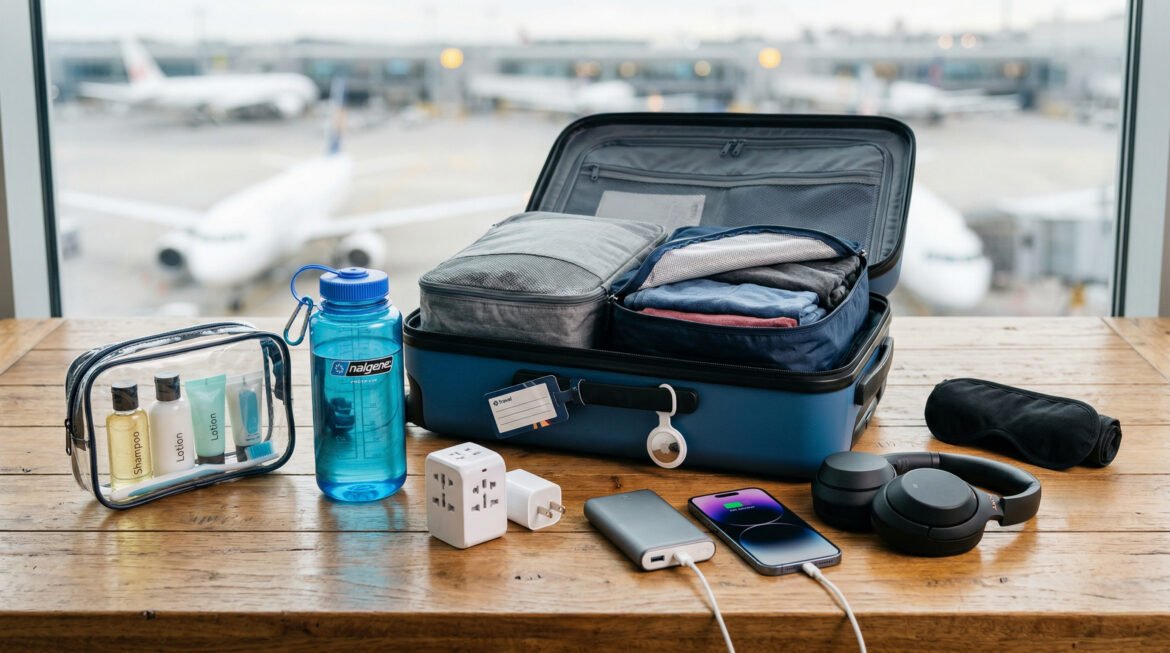
Getting ready for a trip can feel overwhelming, especially if you are new to traveling. Packing the right gear makes a huge difference. You want items that save time, save space, and keep you out of trouble at airport security.

Based on travel guidelines and security rules, here are the seven most useful accessories to pack for a smooth trip.

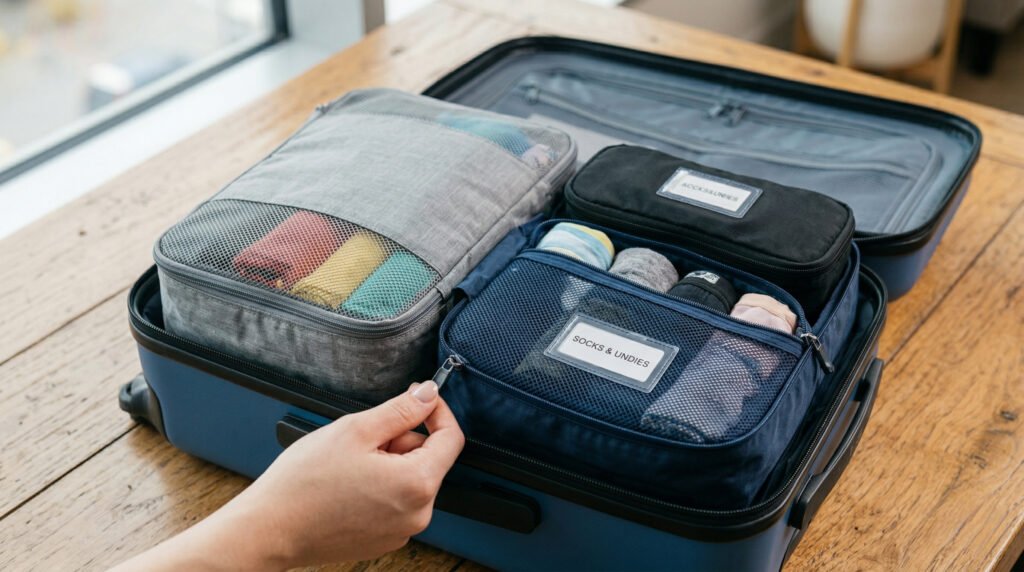
1. Packing Cubes

Packing Cubes

These are small zippered fabric bags that act like drawers for your suitcase. They keep your socks, shirts, and underwear separated so you can find them fast.

  • Why you need them: They keep your bag organized so you do not have to dig through a messy suitcase.

  • Keep in mind: Compression cubes have an extra zipper to squeeze out air and save space, but they might wrinkle your clothes. Try to stick to just two or four cubes total so you do not waste space with too many zippers. Keep one cube near the top of your bag with a quick change of clothes.

  • Estimated Price: $30 to $60

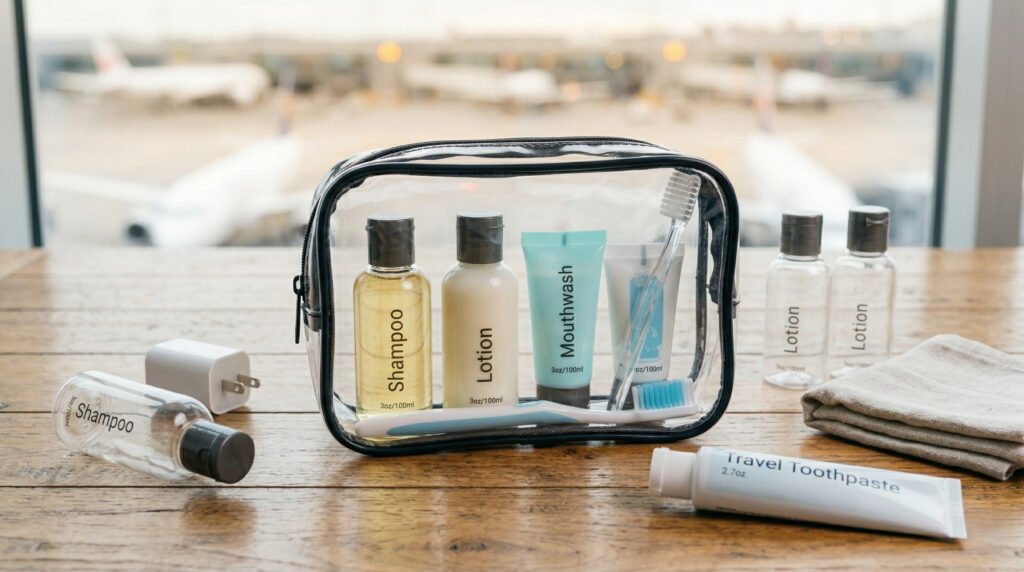
2. Clear Toiletry Kit

Clear Toiletry Kit

Airport security has strict rules about liquids. You are allowed containers that hold 3.4 ounces (100 milliliters) or less, and they all must fit in one clear, quart-sized bag.

  • Why you need it: A sturdy, reusable clear pouch with leak-proof travel bottles stops shampoo from spilling all over your clothes. It also speeds up your trip through the security line.

  • Keep in mind: Refilling your own travel bottles is cheaper and creates less waste than buying tiny, single-use travel soaps.

  • Estimated Price: $15 to $40

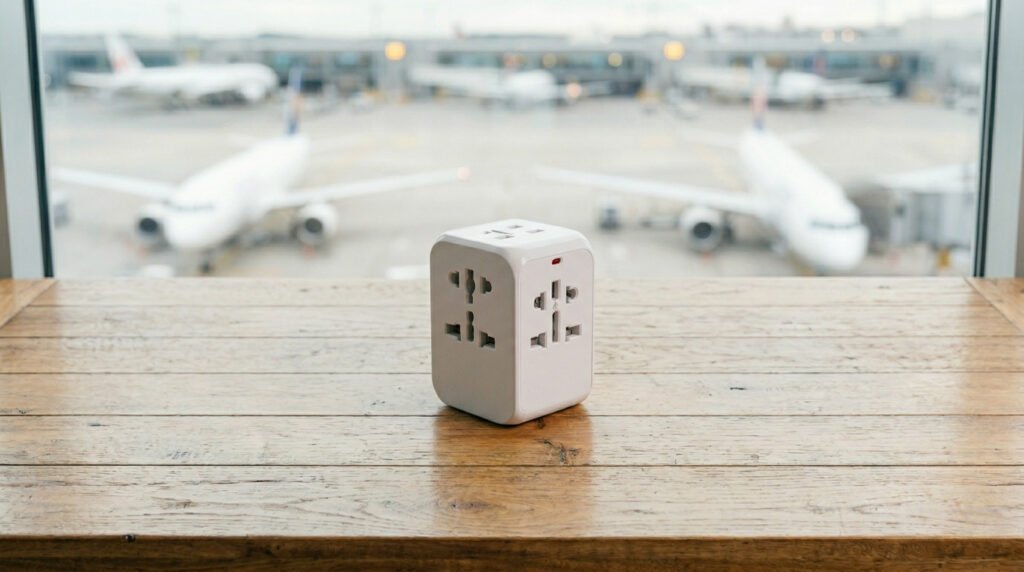
3. Universal Adapter and Fast Charger

Universal Adapter and Fast Charger

Different countries have different wall outlets. A universal plug adapter ensures you can plug your electronics in anywhere you travel.

  • Why you need it: The best adapters now include built-in USB ports. This allows you to charge your phone, tablet, and laptop all at once from a single wall plug.

  • Keep in mind: Most travel adapters do not convert voltage. If you bring high-power items like hair dryers, make sure they are rated for the local voltage so they do not break or cause a fire hazard.

  • Estimated Price: $40 to $110

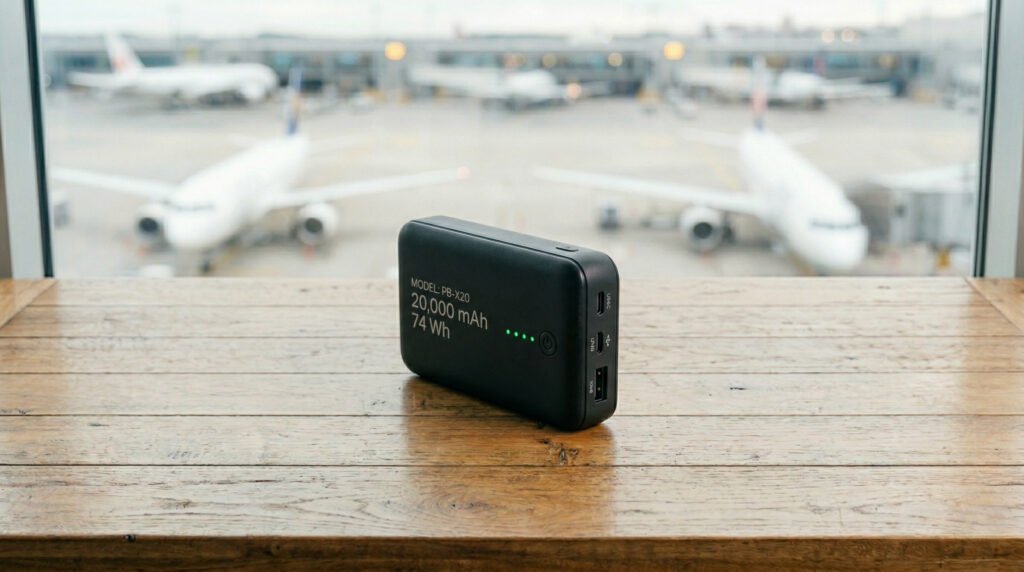
4. Portable Power Bank

Portable Power Bank

A dead phone during a flight delay is a major headache. A portable battery pack keeps your devices running when you cannot find an open wall plug.

  • Why you need it: It keeps your maps, boarding passes, and emergency contacts accessible all day.

  • Critical Note on Rules: You must check the latest airline regulations before you fly. Under the newest 2026 aviation guidelines, airlines are very strict about batteries. Power banks are strictly carry-on only due to fire risks. Most airlines limit you to a maximum of two power banks, and they must be under 100 Watt-hours (Wh) unless you get special permission. The battery’s capacity must be clearly printed on the outside of the device, or security might take it away. Also, many airlines now forbid you from using or recharging your power bank while the plane is in the air.

  • Estimated Price: $20 to $135+

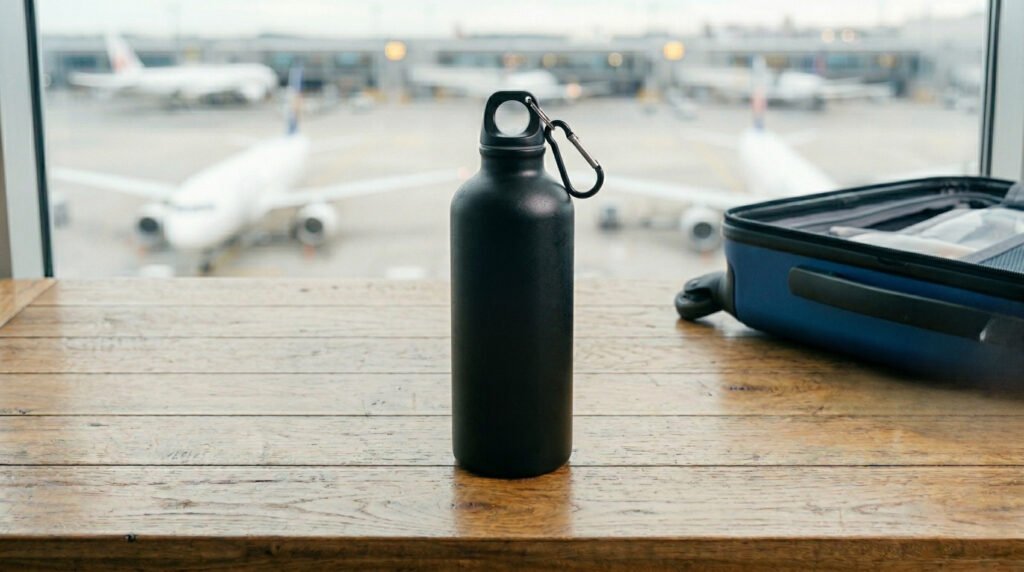
5. Reusable Water Bottle

Reusable Water Bottle

Buying bottled water at the airport gets expensive fast.

  • Why you need it: You can bring an empty plastic or insulated metal bottle through the security checkpoint. Once you pass security, fill it up at a water station. It keeps you hydrated on the plane and saves money during your trip.

  • Keep in mind: If you are traveling to a place where the tap water is unsafe to drink, use your bottle to store clean, filtered, or boiled water.

  • Estimated Price: $15 to $45

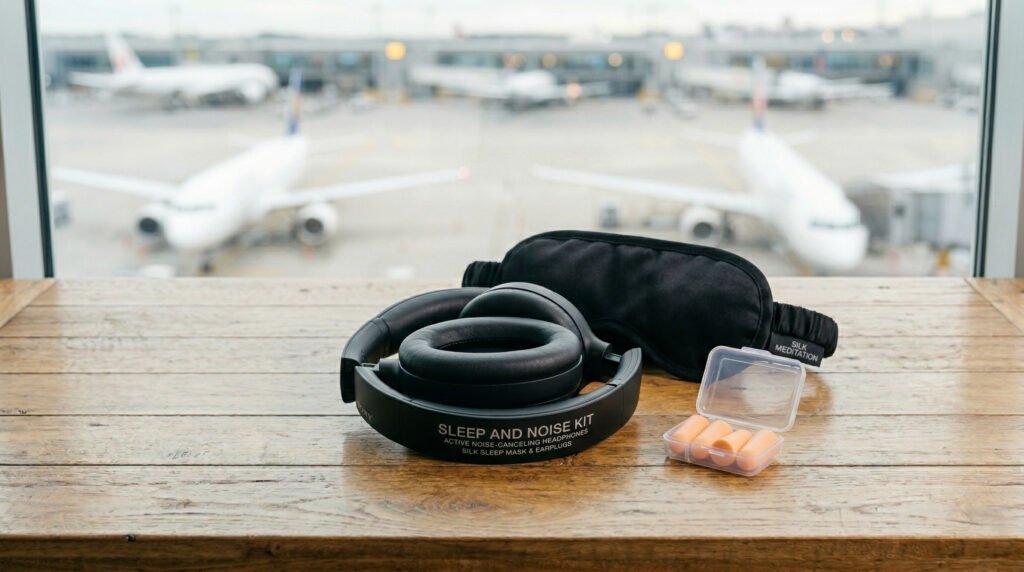
6. Sleep and Noise Kit

Sleep and Noise Kit

Airplane cabins are surprisingly loud. The constant engine noise makes it hard to relax and can ruin your sleep.

  • Why you need it: Bring soft earplugs and a comfortable eye mask to block out the light and sound. Getting good rest while flying helps fight off jet lag.

  • Keep in mind: A basic foam earplug and eye mask set is very cheap. If you prefer to listen to music or movies, active noise-canceling headphones are a fantastic upgrade, though they cost much more and take up extra space in your bag.

  • Estimated Price: $10 to $450+

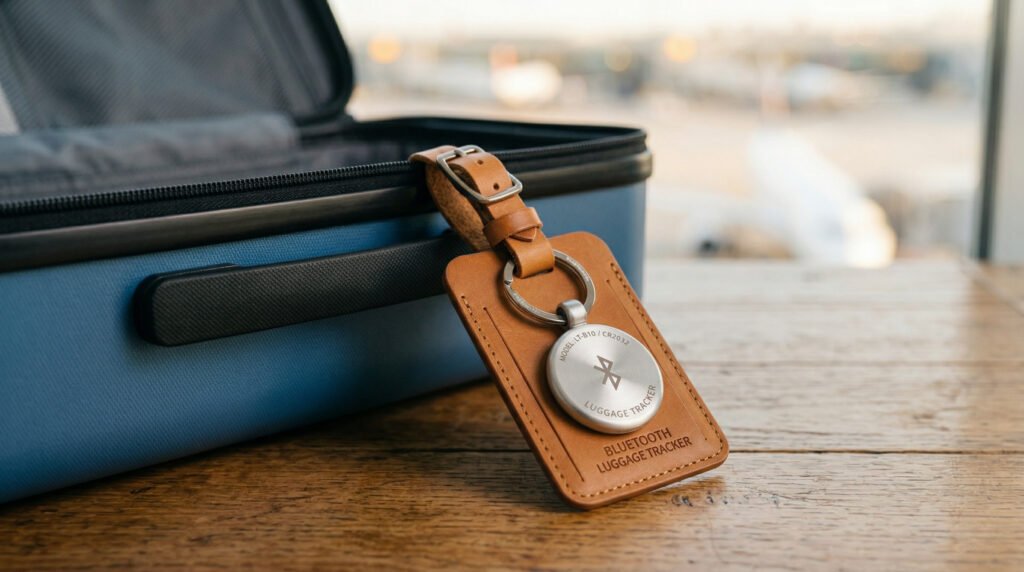
7. Bluetooth Luggage Tracker

Bluetooth Luggage Tracker

Small tracking tags like Apple AirTags, Samsung SmartTags, or Tiles help you keep tabs on your bags.

  • Why you need it: Toss one inside your checked suitcase. If the airline misplaces your luggage, you can track its location from your phone.

  • Keep in mind: They are lightweight, inexpensive, and allowed in checked bags. Put the tracker deep inside a secure pocket of your luggage so it does not fall out.

  • Estimated Price: $29 per tag

Tailor Your Gear to Your Trip

Depending on your plans, some items matter more than others:

  • Business Trips: Focus on a strong charger and power bank to keep your laptop and phone running.

  • Backpacking: Keep things light. Use basic packing cubes and a lightweight plastic water bottle.

  • Family Vacations: Give everyone their own packing cube to stop clothes from getting mixed up. Put a tracker in strollers and checked bags.

  • Remote Work: Invest in a high-quality universal charger and a comfortable set of noise-canceling headphones to help you focus.

The Three-Module Packing Strategy

To keep packing simple, break your gear into three easy groups:

  1. Organization: Packing cubes for your clothes.

  2. Liquids: Your clear, security-ready toiletry bag.

  3. Power: Your adapter, charger, cables, and carry-on power bank.

Add your empty water bottle, your sleep kit, and a luggage tracker, and you will be ready to go!

The Ultimate Packing Decision Matrix

7 Must-Have Travel Accessories

flowchart TD
  %% Define Styles
  classDef decision fill:#fdf2f8,stroke:#db2777,stroke-width:2px,color:#9d174d
  classDef product fill:#eff6ff,stroke:#2563eb,stroke-width:2px,color:#1e40af
  classDef startend fill:#f0fdf4,stroke:#16a34a,stroke-width:2px,color:#166534
  
  %% Nodes safely wrapped in quotes
  A(["Start: Upcoming trip"])
  B{"Flying?"}
  C["Prioritize organization
+ hydration + comfort"] D{"Carry-on
only?"} E["Item 1 & 2: Packing cubes
+ 3-1-1 toiletry kit"] F["Item 3: Add luggage tracker
for checked bags"] G{"Bringing
laptop/tablet?"} H["Item 4 & 5: 65-100W PD charger
+ High-capacity power bank"] I["Item 4 & 5: Compact charger
+ Smaller power bank"] J{"Long-haul /
sleep disruption?"} K["Item 6: ANC headphones
+ eye mask"] L["Item 6: Light sleep kit"] M{"Water quality
uncertain?"} N["Item 7: Filtered water bottle"] O["Item 7: Standard reusable
water bottle"] P(["Done: Pack modules
& verify battery rules"]) %% Flow Map A --> B B -->|No| C B -->|Yes| D D -->|Yes| E D -->|No| F F --> E C --> G E --> G G -->|Yes| H G -->|No| I H --> J I --> J J -->|Yes| K J -->|No| L K --> M L --> M M -->|Yes| N M -->|No| O N --> P O --> P %% Apply Classes class A,P startend class B,D,G,J,M decision class E,F,H,I,K,L,N,O product
March 25, 2026 0 comments
0 FacebookTwitterPinterestEmail
9 Best International Alternatives to Phuket Fitness Street
AfricaAsiaCosta RicaDestinationsEuropeHealth and WellnessIndonesiaMexicoMiddle EastMoroccoPortugalSouth AfricaSouth AmericaThailandTravel TipsUAEUSA

9 Best International Alternatives to Phuket Fitness Street

by Travel Geek March 23, 2026
written by Travel Geek

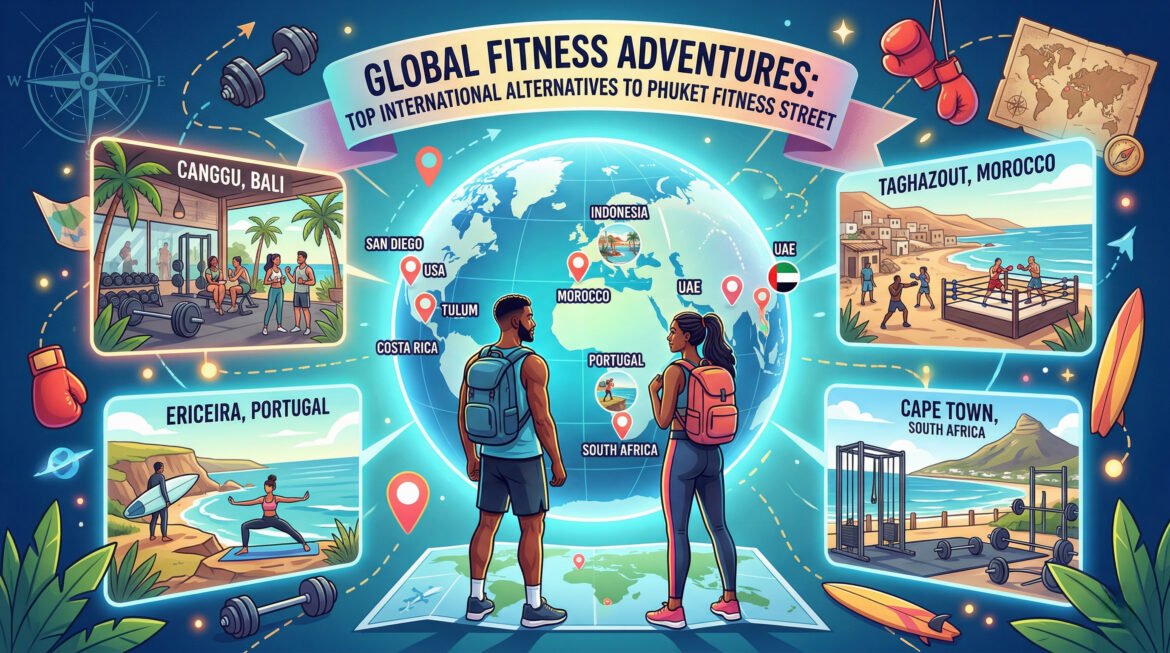
Are you planning a training trip? Phuket’s Soi Ta-iad, widely known as Fitness Street, has been the top choice for athletes for years. It packs Muay Thai camps, heavy lifting gyms, and healthy cafes into one walkable road.

But as it gets busier and more expensive, many travelers are looking for new spots. If you want a fresh place to sweat, you have some amazing options across the globe. Let’s look at the best international alternatives to Phuket Fitness Street for your next fitness holiday.

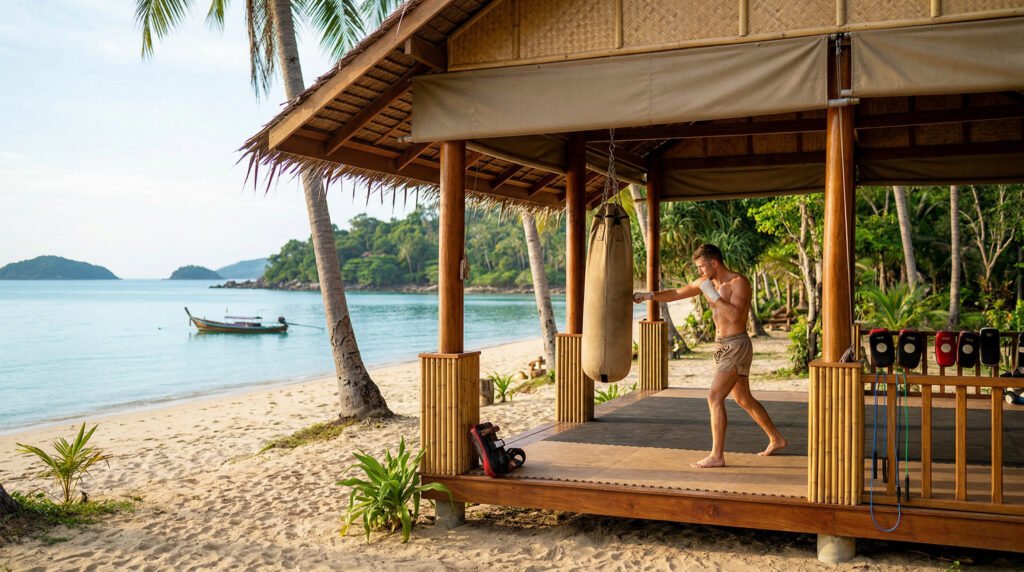
Canggu and Uluwatu, Bali (Indonesia)

Canggu and Uluwatu, Bali (Indonesia)

Best for: Social vibes and beautiful gyms

If you love trendy cafes and amazing gym designs, Bali is for you. Canggu is packed with top-tier fitness clubs. Places like Body Factory offer heavy weights, outdoor turf tracks, and cold plunges. You get a highly active social scene full of travelers.

The main downside is the heavy traffic. Getting from your room to the gym can be stressful on a scooter. It is a great choice if you have a budget of $1,200 to $2,000 a month and want to mix intense workouts with beach club weekends.

Lamai, Koh Samui (Thailand)

Lamai, Koh Samui (Thailand)

Best for: Quiet, focused training camps

Maybe you want to stay in Thailand but avoid the massive crowds. Lamai beach on Koh Samui offers a true retreat experience. Facilities here run all-inclusive camps in the jungle near the ocean.

Instead of jumping between different gyms, you stay in one spot. Places like Koh Fit handle your bed, your daily meals, and your training schedule. It is perfect if you want to lose weight or learn martial arts without any distractions.

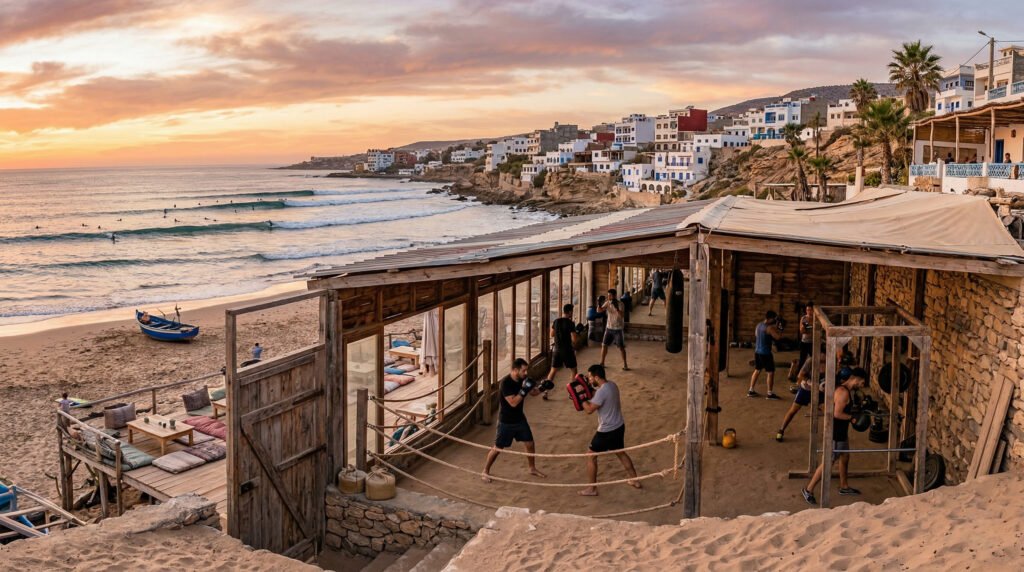
Taghazout and Tamraght (Morocco)

Taghazout and Tamraght (Morocco)

Best for: Budget travelers and surfers

Looking for a highly affordable option? The coast of Morocco is amazing right now. It has always been famous for surfing, but combat sports and lifting are growing fast.

You can get an unlimited gym and MMA pass for under $80 a month. The local food is cheap, and the towns are very authentic. If you want to train hard on a tight budget, this is the best spot on the planet.

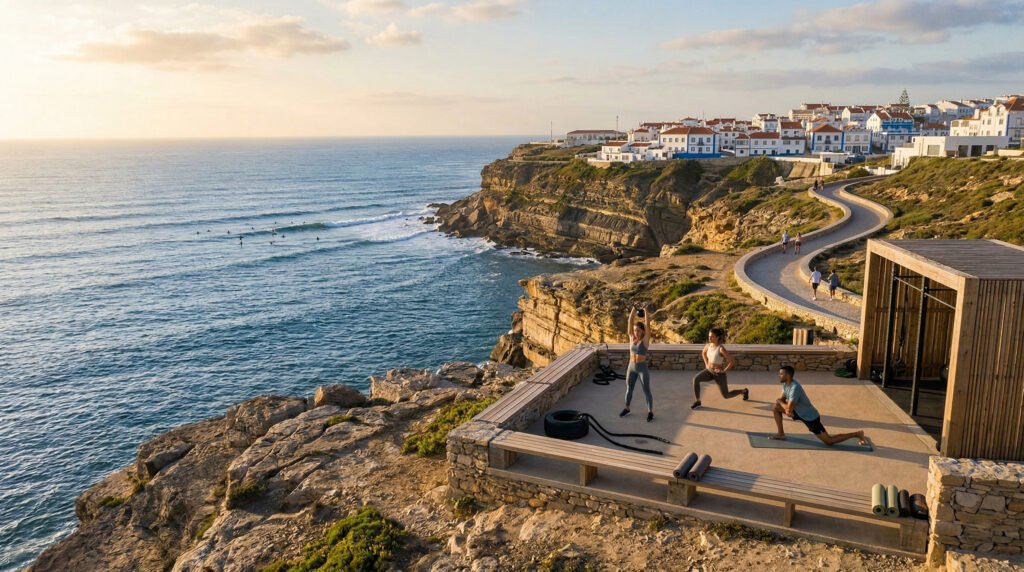
Ericeira (Portugal)

Ericeira (Portugal)

Best for: Walkable coastal living and remote workers

Ericeira is a beautiful surf town that is very easy to walk around. You can catch waves in the morning and hit a fitness class in the afternoon.

It is very friendly for people working from their laptops. You do not need a car to reach the beaches, organic markets, or gyms. It is a great European option if you want an active, balanced lifestyle.

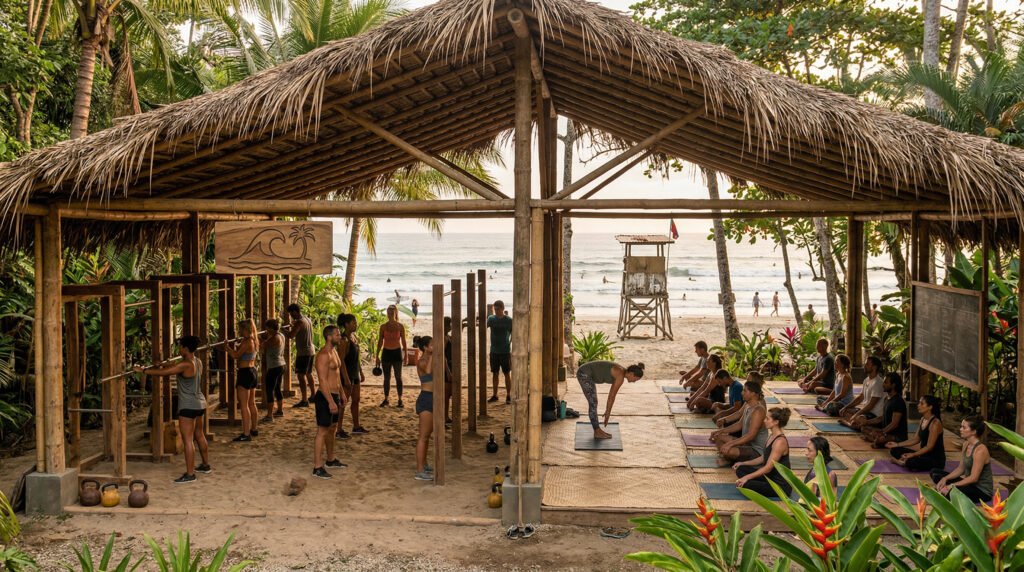
Santa Teresa (Costa Rica)

Santa Teresa (Costa Rica)

Best for: Rustic outdoor fitness and yoga

For a relaxed jungle vibe, try Santa Teresa. The town sits right on the beach and focuses heavily on surfing and wellness.

You will find outdoor bootcamps, amazing yoga studios, and open-air gyms. One local gym even uses its membership fees to fund the beach lifeguards. It is a friendly, active community deeply connected to nature.

Tulum (Mexico)

Tulum (Mexico)

Best for: Aesthetic photos and beach workouts

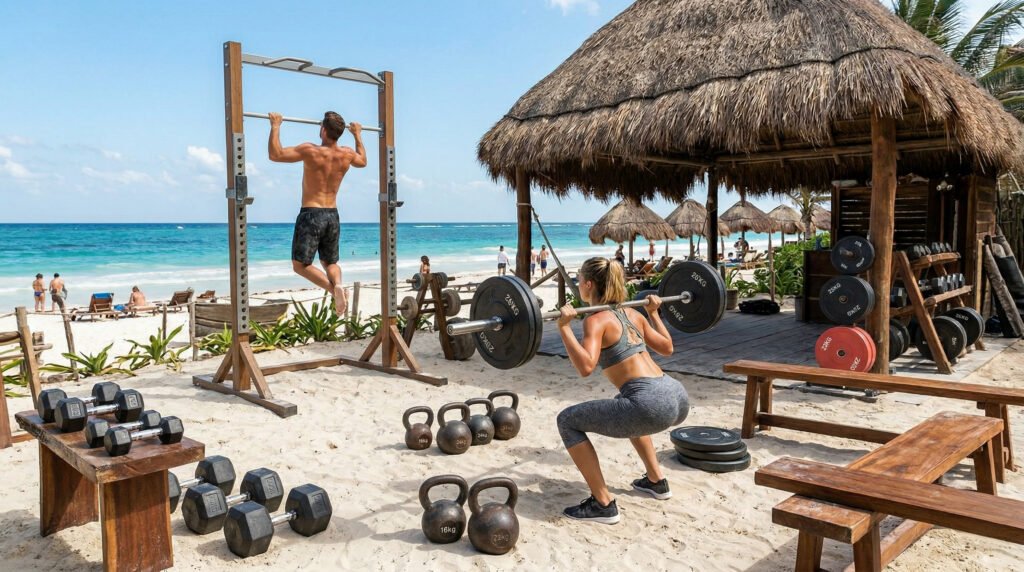
Tulum is famous for its looks. The Tulum Jungle Gym is built right on the sand and uses weights made from wood and stone. It is a very unique place to train.

Keep in mind that Tulum is very expensive. The local roads can be dusty and rough, and getting around is hard without overpaying for taxis. It is a fun spot for a short trip, but tough for a long stay.

San Diego (USA)

San Diego (USA)

Best for: Elite combat sports

If you want the absolute best coaching in mixed martial arts or Brazilian Jiu-Jitsu, go to San Diego. It is home to some of the top training camps on earth.

You will need a car because the gyms are spread far apart across different neighborhoods. The cost of living is very high, but the quality of instruction is unmatched.

Dubai (UAE)

Dubai (UAE)

Best for: Indoor luxury and air conditioning

Dubai offers the exact opposite of a sweaty outdoor jungle camp. Because it gets so hot, all the fitness action happens indoors.

You will find massive, perfectly cooled gyms with the best equipment money can buy. It is a high-cost city, but you get total comfort and premium service.

Cape Town (South Africa)

Cape Town (South Africa)

Best for: Free outdoor coastal training

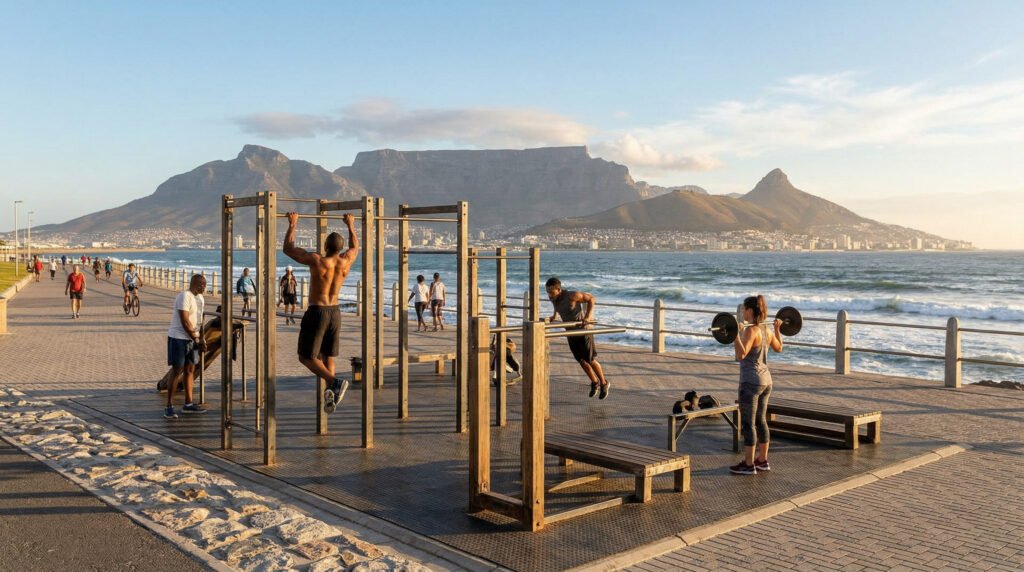
Cape Town takes a very different approach. The city built a huge, free outdoor gym right next to the ocean in the Sea Point area.

The equipment is made to survive the salty air. You can lift weights, do pull-ups, and enjoy an amazing ocean view without paying anything. It brings all types of athletes together in a fun, public space.

March 23, 2026 0 comments
0 FacebookTwitterPinterestEmail
Most Dangerous Tourist Attractions on Earth
AfricaAsiaAustraliaBoliviaChileChinaDestinationsDominicaEgyptEuropeIndonesiaNew ZealandOceaniaSouth AmericaSpainSwitzerlandUSAZambia

Most Dangerous Tourist Attractions on Earth

by Travel Geek March 22, 2026
written by Travel Geek

Have you ever planned a vacation and thought about adding a little danger to your itinerary? Most people look for relaxing beaches or quiet mountain cabins. But some travelers want to push their limits. They want to stand on the edge of an active volcano or hike a path hanging off a sheer cliff.

If you are looking for a massive adrenaline rush, you need to know what you are walking into. I have put together a guide to the most dangerous tourist attractions you can actually visit. These spots are stunningly beautiful, but they do not forgive mistakes. Let’s look at what makes these extreme destinations so risky, and exactly when you should plan your trip to stay as safe as possible.

Death Valley, California

Death Valley, California

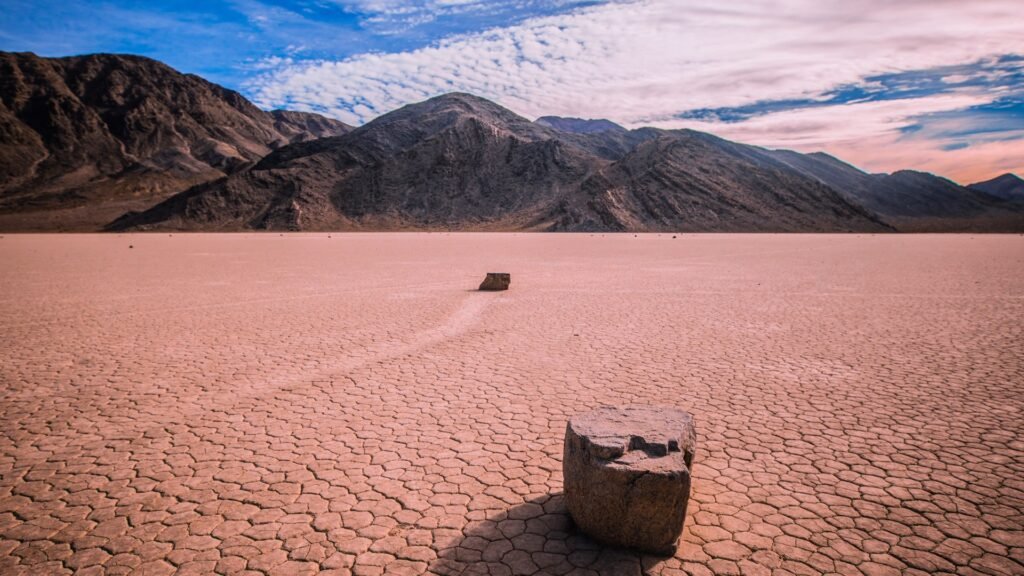
In California, Death Valley looks like another planet. You will find endless salt flats, rippling dunes, and rocks shaped by time. Photographers love the scenery. Road trippers visit every year. But this is also one of the hottest places ever recorded. Death Valley is huge, covering over three million acres. The Badwater Basin sits 282 feet below sea level, trapping the heavy heat. Temperatures climb high enough to shut down cars and overwhelm hikers. Simple mistakes turn into emergencies very fast. Out here, the sun is brutal.

Best Time to Visit: December to February. Winter offers mild, safe temperatures for exploring.

Villarrica Volcano, Chile

Villarrica Volcano, Chile

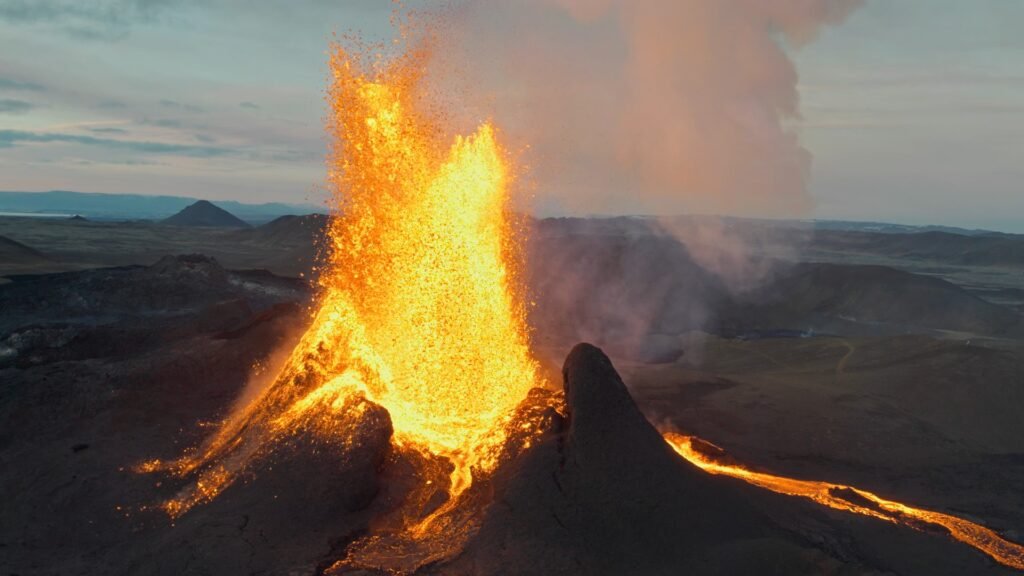
In Chile stands Villarrica. It is one of the most active volcanoes in South America. From far away, it looks like a perfect snow-capped cone. Up close, it is very much alive. Guided climbs take you to the top rim. If you are lucky, you can look down into a glowing lava lake. The mountain has erupted violently in recent years, sending ash and lava into the sky. Climbers often wear gas masks to handle the harsh sulfur fumes near the crater.

Best Time to Visit: December to March. The summer weather makes the climb less icy and far safer.

Mount Huashan, China

Mount Huashan, China

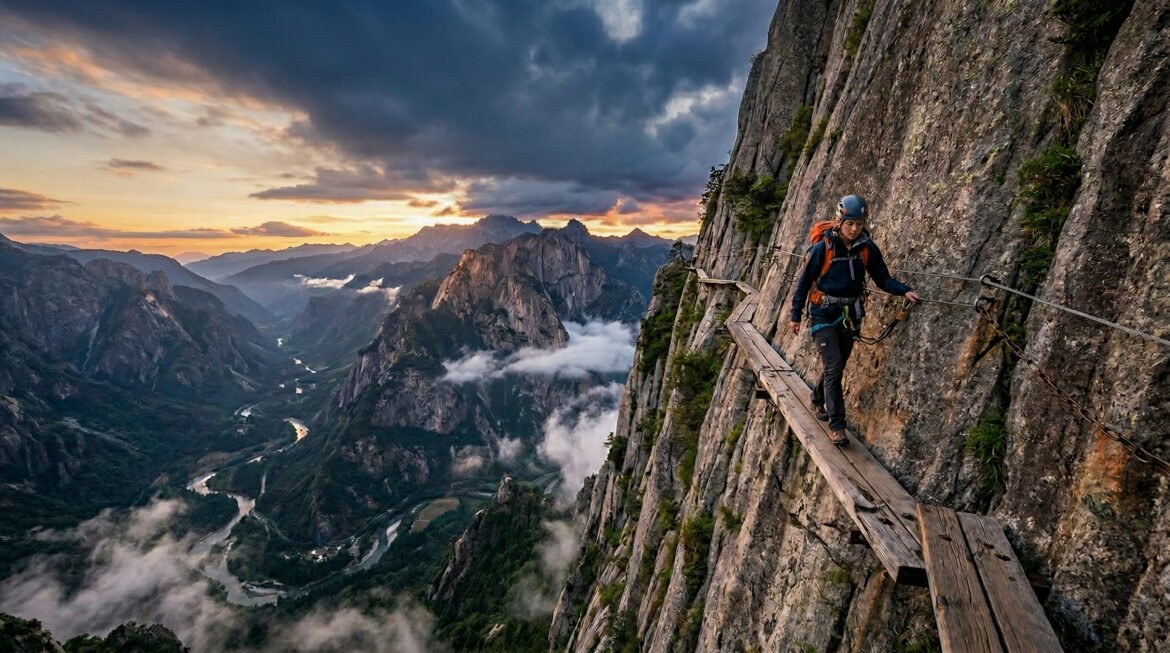
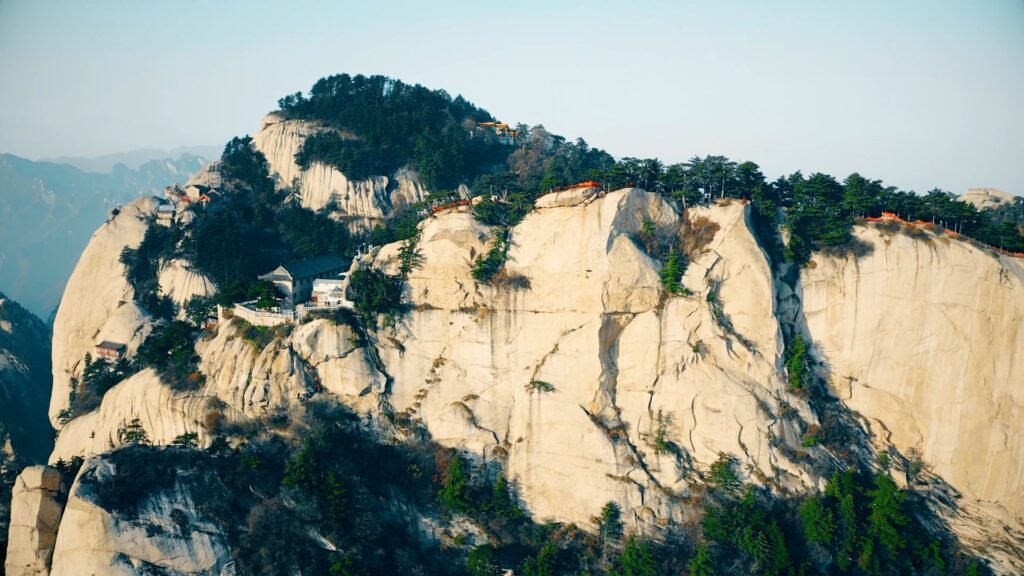
Mount Huashan in China is both sacred and scary. People have climbed it for centuries to visit ancient temples. Today, visitors come for the famous plank walk. It features wooden boards bolted to flat cliff faces high in the air. There are no wide paths or easy slopes. You only have thin boards, metal chains, and a drop that disappears into the clouds. Every single step takes complete focus.

Best Time to Visit: April to May or September to October. You want to avoid the freezing winter ice and heavy summer rain.

Karijini National Park, Australia

Karijini National Park, Australia

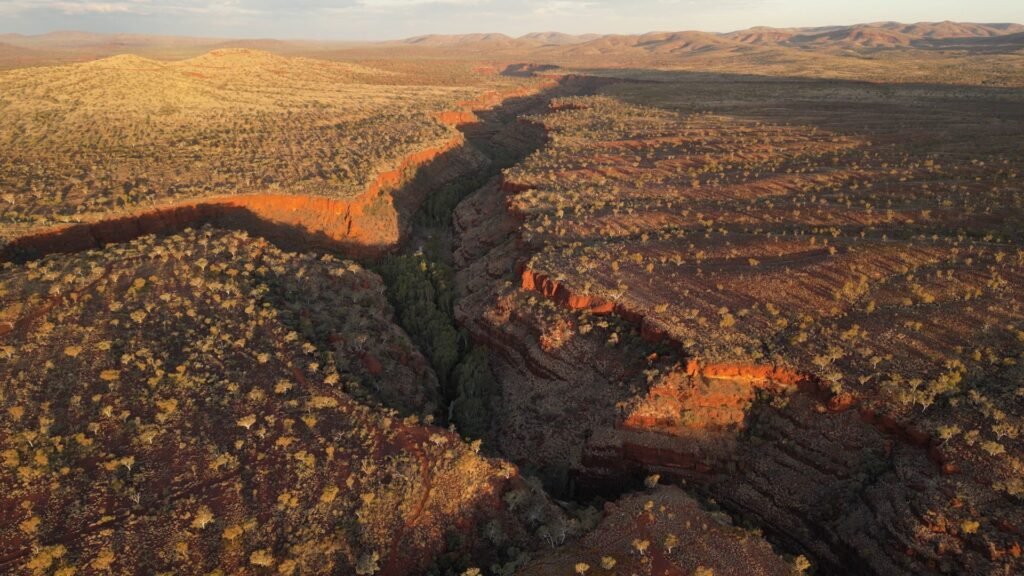
Karijini National Park in Australia offers wild, remote beauty. The area is full of deep red rock gorges and emerald green pools that look perfect for a swim. But flash floods, falling rocks, and sudden weather shifts often catch people off guard. Rainwater from miles away can funnel into the narrow gorges, causing water levels to rise several feet in a matter of minutes. This park rewards careful preparation and punishes a lack of attention.

Best Time to Visit: May to September. This is the dry season, which severely lowers the risk of flash floods.

El Caminito del Rey, Spain

El Caminito del Rey, Spain

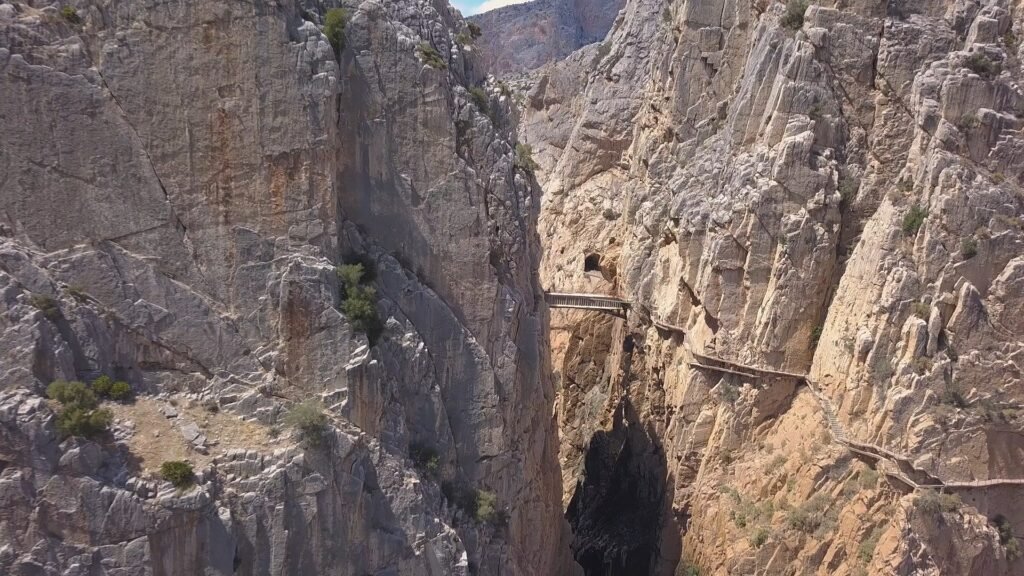
Spain has a path so risky it earned a dark reputation. El Caminito del Rey, or The King’s Little Pathway, hangs on canyon walls high above a rushing river. In the past, crumbling concrete sections made crossing it a major gamble. Many people lost their lives trying to jump across the broken gaps. Today, the path is completely rebuilt with strong fences and secure bridges. Even with the modern updates, the intense heights still cause severe vertigo.

Best Time to Visit: March to May or September to November. The temperatures are comfortable for hiking.

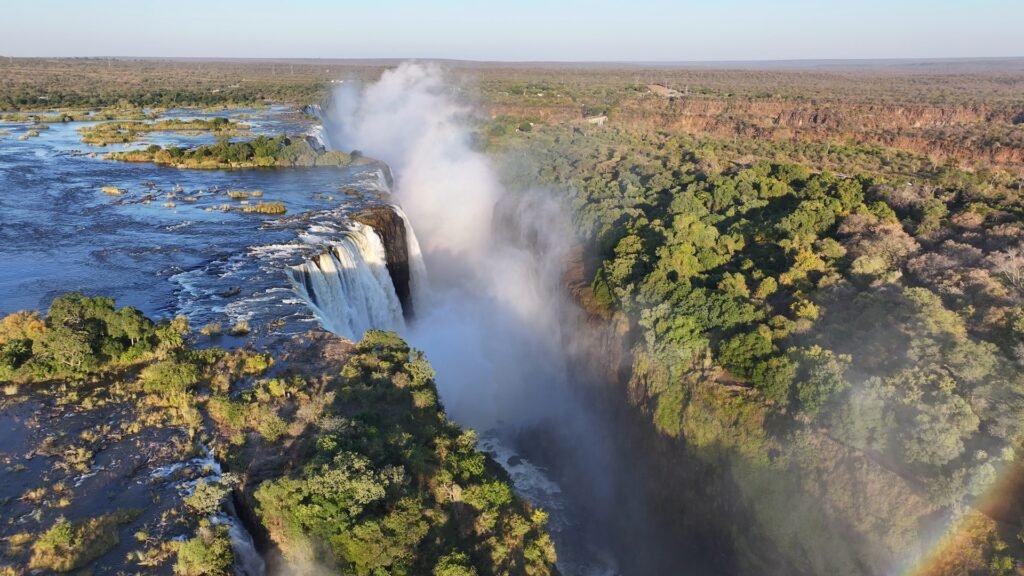
Devil’s Pool, Zambia

Devil’s Pool, Zambia

At Victoria Falls in Zambia, a natural rock pool forms right at the edge of the rushing water. It is called Devil’s Pool, and people actually swim there. A thin rock lip keeps you from falling over the massive drop. It is one of the most amazing infinity pools on the planet, but also one of the riskiest swims you can take. A slip outside the safe zone means a fatal fall.

Best Time to Visit: Mid-August to December. The water levels must be low enough to safely enter the pool.

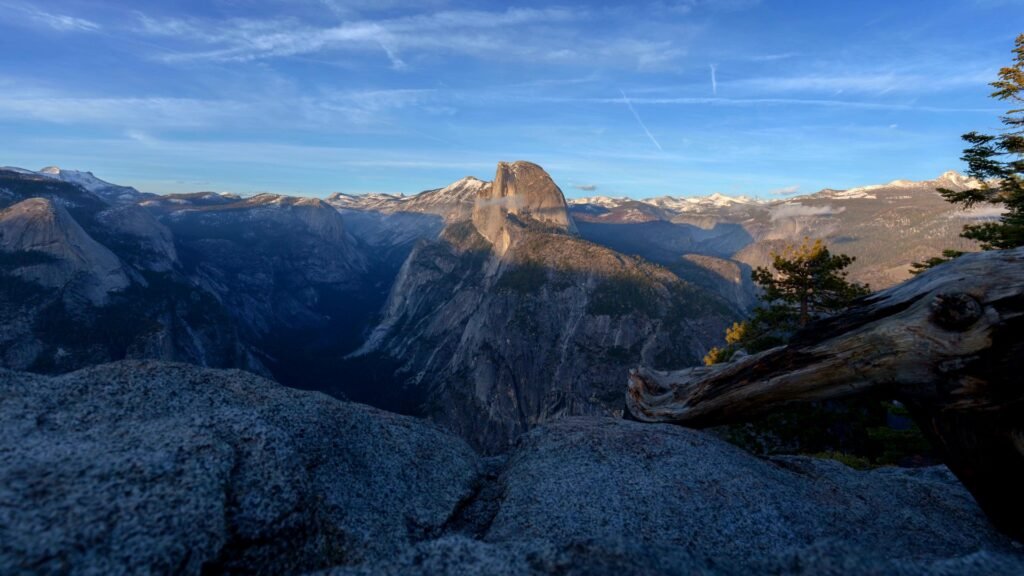
Half Dome, United States

Half Dome, United States

In the United States, Half Dome rises above Yosemite National Park like a huge wave of solid granite. The hike to get there is long and tiring. The final climb is what tests your nerves. Steel cables guide hikers up a very steep, exposed rock face. When rain falls or the rock gets slick, that final stretch becomes deadly. Hikers often drop their water bottles or lose their footing on the smooth stone.

Best Time to Visit: June to September. The park only leaves the support cables up during the warm, dry months.

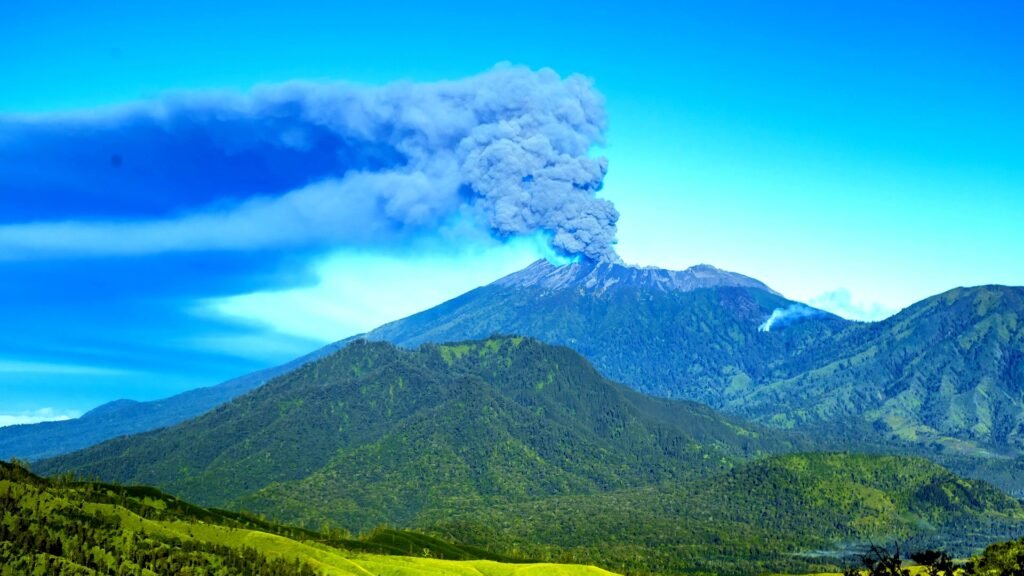
Anak Krakatau, Indonesia

Anak Krakatau, Indonesia

Indonesia reminds us that some islands are still forming through violent eruptions. Anak Krakatau is the child of the famous Krakatoa volcano. It continues to erupt and change its shape. Sudden activity here has caused massive ocean waves and tragic events in modern times. It is a powerful reminder that some travel spots are constantly in motion. The ground can split open without any warning.

Best Time to Visit: May to October. The dry season means calmer seas for the boat ride, but you must always check daily safety alerts before going near the island.

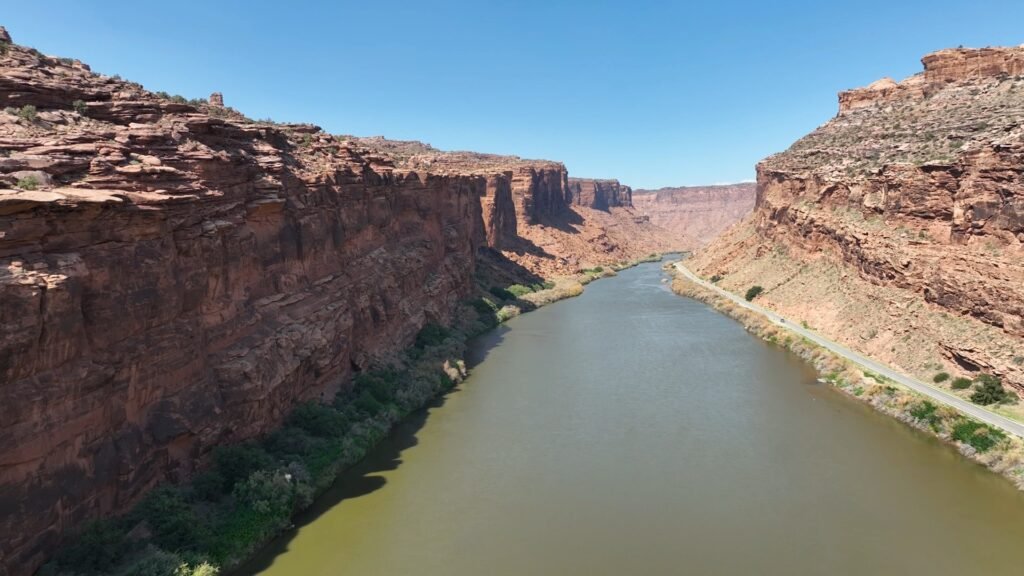
Colorado River, United States

Colorado River, United States

The Colorado River looks inviting. It is wide, scenic, and seems calm on the surface. But hidden currents, cold water shock, and sudden flow changes have claimed many lives. This happens mostly after large storms and when mountain snow melts into the river. Rivers do not always show their true power until you are already in the water.

Best Time to Visit: Late May to September. The water is slightly warmer and commercial rafting companies run daily guided trips.

North Yungas Road, Bolivia

North Yungas Road, Bolivia

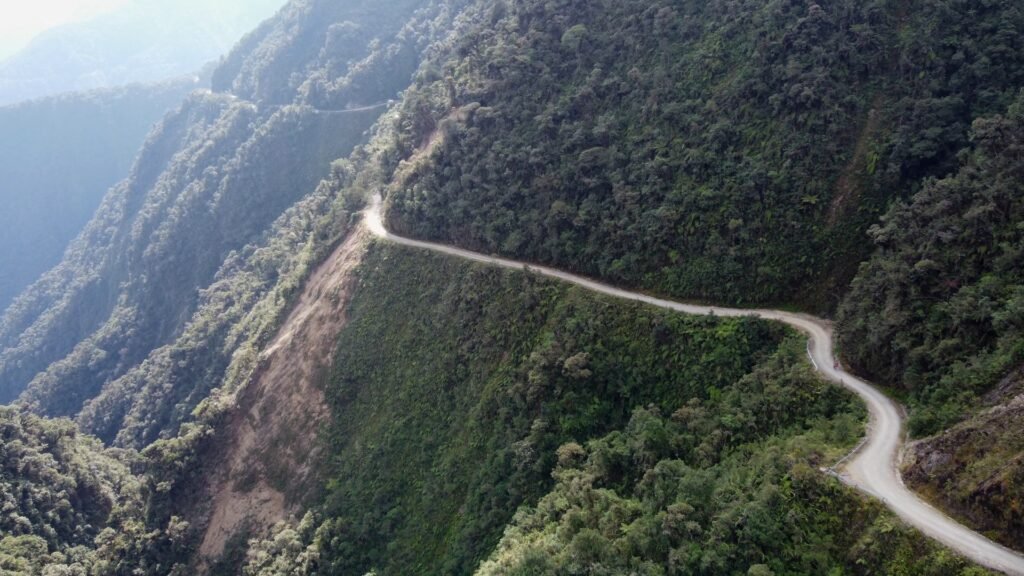
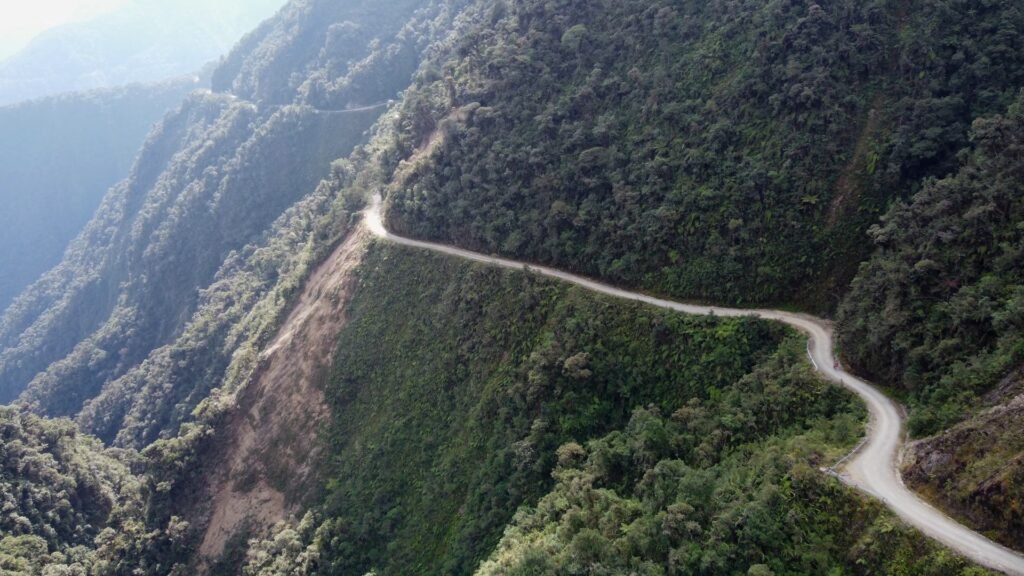
Bolivia’s North Yungas Road twists through steep mountains. People call it the Death Road. It has sheer drops, narrow dirt lanes, and zero guardrails. Cyclists now ride down it for excitement, but its history is full of tragedy. Heavy fog and rain make the dirt extremely slippery. One bad turn here means a fall straight down into the thick jungle below.

Best Time to Visit: May to October. During the dry season, the road is less muddy and offers much better visibility.

Boiling Lake, Dominica

Boiling Lake, Dominica

Dominica’s Boiling Lake bubbles deep in the island jungle. Volcanic heat from deep underground keeps the water near a rolling boil. It looks mysterious, wrapped in thick white steam. Unstable dirt near the edges and sudden bursts of hot vapor make getting close risky. You must hike through a harsh area called the Valley of Desolation just to reach it.

Best Time to Visit: February to May. The trail is extremely muddy and difficult, so the dry season makes the long hike safer.

Blue Hole, Egypt

Blue Hole, Egypt

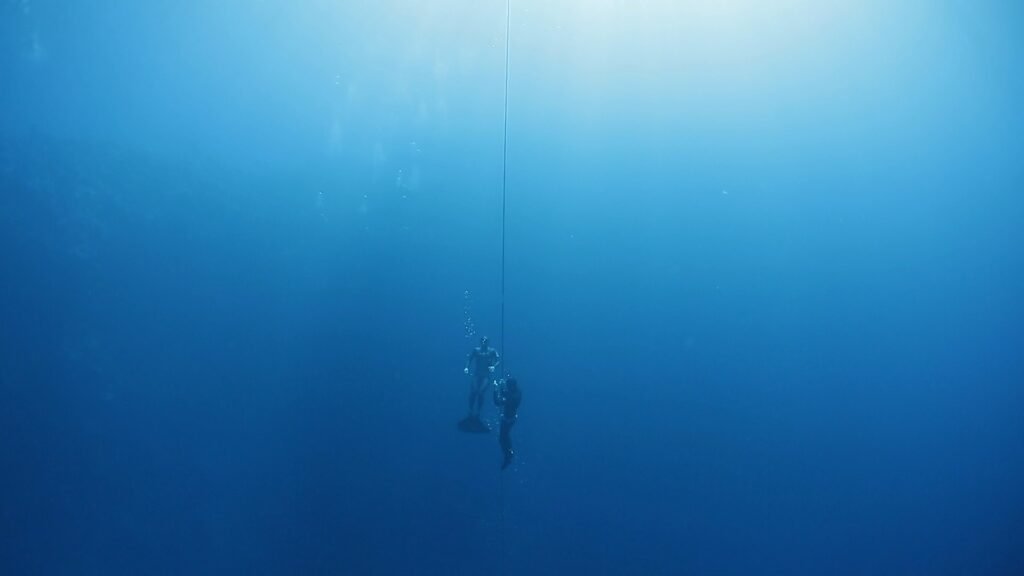
Egypt’s Blue Hole is legendary among deep-sea divers. It is a deep marine sinkhole on the coast of the Red Sea. A submerged tunnel called the Arch tempts many people to push their diving limits. Some divers go too deep and never return. Nitrogen sickness and getting lost in the dark tunnel are the main dangers. The deep blue water is beautiful but totally unforgiving to overconfidence.

Best Time to Visit: July to October. The water is very warm, though experienced diving happens all year round.

Trift Bridge, Switzerland

Trift Bridge, Switzerland

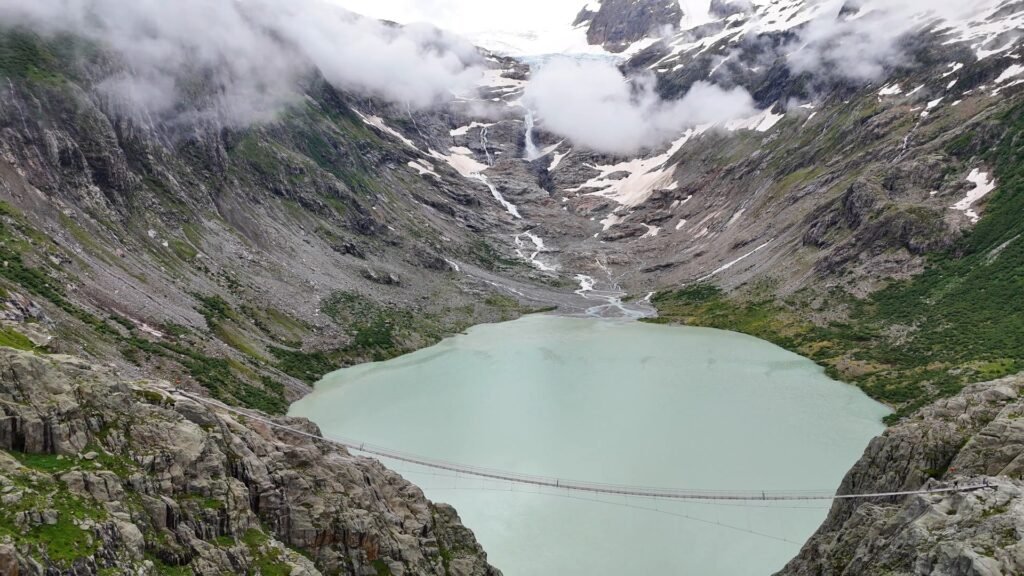
High in the Swiss Alps, Trift Bridge stretches across empty air. It is a long, swaying suspension bridge hanging high above a dramatic valley and a melting glacier. Crossing it feels like walking through the sky. The metal grates give you a clear view of the massive drop below. It is perfectly safe, unless heights make your legs freeze up entirely.

Best Time to Visit: June to October. The cable car needed to reach the hiking trail only operates during the summer months.

Cascade Saddle, New Zealand

Cascade Saddle, New Zealand

In New Zealand, the Cascade Saddle gives hikers incredible alpine views. It also features fast-changing weather and steep, exposed slopes. Golden tussock grass covers the ground. When it rains, that grass becomes as slippery as ice. Several experienced hikers have badly underestimated how fast conditions can turn bad here.

Best Time to Visit: January to March. Late summer clears away the snow and ice, making the steep grass slopes safer to walk on.

Adding one of these extreme spots to your travel bucket list guarantees an unforgettable trip. But keeping yourself safe should always be the top priority. Nature is incredibly powerful, and the easiest way to get into trouble is to ignore warning signs or show up unprepared. Always respect the local guidelines, hire an experienced guide when you can, and keep a close eye on the weather.

March 22, 2026 0 comments
0 FacebookTwitterPinterestEmail
Why Flight Prices Are Skyrocketing Right Now (And What It Means For Your 2026 Travel Plans)
TransportationTravel Tips

Why Flight Prices Are Skyrocketing (What It Means For Your Travel Plans)

by Travel Geek March 12, 2026
written by Travel Geek

If you have tried booking a long-haul flight lately, you probably experienced serious sticker shock. Ticket prices for many popular international routes are reaching record highs right now.

As a travel blogger who watches flight trends every single day, I have been getting tons of messages asking the same question: Why are flights so expensive all of a sudden?

The short answer is the ongoing military conflict in the Middle East. The situation has forced airlines to completely change how they fly across the globe. Let’s break down exactly what is happening with airlines right now, which routes are taking the biggest hit, and how you can still find ways to travel without going broke.

The Big Detour: Why Your Flight Takes Longer (And Costs More)

For a long time, the Middle East acted as the ultimate shortcut. If you were flying from Europe to Asia, or from Australia to Europe, your plane almost certainly flew right over places like Iran, Iraq, and the Arabian Peninsula.

Right now, that airspace is completely closed to passenger planes.

Because airlines can no longer use this shortcut, they have to take massive detours. Flights are being pushed far up north over Central Asia or way down south over Egypt and the Red Sea.

These detours add hundreds of miles and up to four extra hours to your trip. When a massive airplane flies for an extra two hours, it burns tens of thousands of pounds of extra jet fuel. At current prices, that extra gas alone can cost an airline an extra $25,000 per flight. Guess who pays for that? The passengers.

The Double Trouble: Expensive Gas and Sky-High Insurance

Adding miles to the trip is bad enough, but airlines are also dealing with two massive financial headaches behind the scenes:

  1. Jet Fuel is Super Expensive: The conflict has disrupted major oil shipping routes. Jet fuel prices have shot up by more than 60 percent since the start of the year.

  2. War-Risk Insurance: Regular airplane insurance does not cover flying anywhere near a conflict zone. Airlines now have to buy special “war-risk” insurance to operate near these areas. This can cost an airline over $100,000 for a single round trip. When you divide that by the number of seats on the plane, it adds hundreds of dollars to your individual ticket before the plane even takes off.

Which Flight Routes Are Seeing the Biggest Price Hikes?

Not all flights are affected equally. If you are flying domestically within the US or Europe, you might just see a small bump in prices due to gas. But if you are crossing continents, things look very different.

Here are the routes seeing the craziest price jumps:

  • Europe to Asia: This is the absolute worst route for price hikes right now. A one-way economy ticket from London to Mumbai recently jumped from around $800 to over $3,400. Flights from Paris to Bangkok or London to Singapore have more than doubled in price.

  • Australia to Europe (The Kangaroo Route): Travelers flying from Sydney to London used to connect smoothly through Dubai or Doha. With those airports heavily disrupted, direct flight prices have shot up by 80 percent in just a few weeks.

  • Middle East to India: Short trips like Dubai to Delhi have seen ticket prices go from $150 to over $700 as airlines pass on those massive insurance costs.

Which Airlines Will Hike Prices the Most?

Airlines buy their fuel in different ways, which means some are going to raise your ticket prices much faster than others.

  • High Risk of Price Hikes (Asian Low-Cost Carriers & US Airlines): Airlines like AirAsia, Southwest, United, and American usually buy their fuel at current market prices. Because they do not have big reserves of cheap gas locked in, they are feeling the pinch immediately. Expect to see fast, sharp price increases and new “fuel surcharges” added to your checkout screen.

  • Moderate Risk (European Legacy Carriers): Airlines like Lufthansa and Air France-KLM are a bit luckier. They bought a lot of their fuel in advance at cheaper prices. They are still raising ticket prices because demand is high, but they have a bit more financial breathing room.

💡 The Ultimate Travel Hack Right Now: Look East

There is one big loophole in all of this. Since 2022, Western airlines (like British Airways or Lufthansa) have not been allowed to fly over Russia. But Chinese and Indian airlines still have permission to use Russian airspace.

This means airlines like Air India or China Eastern can skip the Middle East completely, fly straight over Russia, and save hours of flight time and fuel. If you are planning a trip between Europe and Asia, check fares on Chinese and Indian carriers. They have lower operating costs right now and are offering much cheaper tickets than their Western competitors.

Advice for Planning Your Next Trip

If you are planning a big international trip this year, here is what you need to keep in mind:

  • Rethink Your Layovers: Huge connection hubs like Dubai (Emirates) and Doha (Qatar Airways) are dealing with massive flight cancellations. Instead, look for flights connecting through Istanbul (Turkey), Addis Ababa (Ethiopia), or airports in Central Asia.

  • Expect Fuel Surcharges: When you click on a cheap flight on Google Flights, pay close attention to the final checkout page. Many airlines are adding hidden $50 to $100 fees at the very end to cover fuel.

  • Pack Light: Because planes have to carry so much extra heavy fuel for these detours, they have strict weight limits. Airlines might be much stricter about baggage weights, and fees for heavy bags will likely go up.

Travel is definitely getting more expensive right now. While we wait for things to settle down, your best bet is to stay flexible with your dates, consider alternative layover cities, and always double-check the fine print for hidden fees before you book.

March 12, 2026 0 comments
0 FacebookTwitterPinterestEmail
Stranded by Middle East Flight Cancellations? How to Force Your Airline to Rebook You
TransportationTravel Tips

Flight Cancelled? How to Force Your Airline to Rebook You

by Travel Geek March 10, 2026
written by Travel Geek

The sudden airspace closures across the Middle East in early 2026 have left tens of thousands of travelers stranded across the globe. Major international transit hubs like Dubai, Doha, and Abu Dhabi have faced massive disruptions. If you are stuck at an airport or watching your upcoming travel plans fall apart, you are probably dealing with stressed customer service agents and confusing automated emails.

Many airlines based outside of Europe are trying to avoid their legal duty to help you. They might tell you that because they are a Middle Eastern carrier, European laws do not apply. They might refuse to book you on a different airline. They might even push you to just take a refund and fend for yourself.

Do not let them. You have strong legal rights. This guide will explain exactly what the airlines must do for you and give you the steps to take control of your travel plans.

The Geography Rule: Where Did Your Flight Start?

The most important thing to know is that your rights depend on where you started your journey, not the airline you are flying.

European law (EU261) and UK law (UK261) are incredibly strong consumer protection rules. They apply to your flight if:

  • You are departing from any airport inside the UK or the European Union.

  • It does not matter if you are flying with Emirates, Qatar Airways, Etihad, or any other non-European airline. If your trip starts in London, Paris, or Frankfurt, the airline must follow strict UK and EU rules.

If your flight starts outside of Europe and the UK, and you are flying on a non-European airline, these rules do not protect you. In that case, you have to rely on the airline’s own policies. But if you started in Europe, you hold the cards.

The “Extraordinary Circumstances” Excuse

When airspace closes due to conflict, airlines will immediately tell you this is an “extraordinary circumstance.” They are right. A war is outside of their control.

Because it is out of their control, the airline does not have to pay you the standard cash compensation for the delay itself (which is usually a lump sum up to £520).

However, many airlines try to trick you here. They imply that because there is an extraordinary circumstance, they owe you nothing at all. This is completely false. An extraordinary circumstance only cancels the delay payout. It does not cancel their legal duty to rebook your flight or their duty to pay for your food and hotel while you wait.

Your Right to Fly on a Competitor Airline

This is where the biggest fights are happening right now.

If your flight is canceled, the airline must offer to reroute you to your final destination at the “earliest opportunity.” Most airlines will try to make you wait days or even weeks until a seat opens up on one of their own planes.

The law says something very different. If the airline cannot get you on their own flight the same day, they must look for seats on completely different airlines. For example, if Emirates cannot fly you to Sydney because Dubai airspace is closed, but Singapore Airlines has a flight leaving today, Emirates must buy you that ticket on Singapore Airlines.

Airlines hate doing this because buying a last-minute ticket from a rival costs them thousands of dollars. They will resist. You must insist. Keep reminding them that the law requires a reroute at the earliest opportunity, even if it is on another carrier. Also, you have the right to stay in the same cabin class. If you paid for Business Class, they must rebook you in Business Class.

Beware the Refund Trap

During a crisis, airlines will text and email you constantly, offering a fast, full cash refund. It looks like great customer service.

It is actually a trap.

Under the law, the exact second you click “accept refund,” the airline’s responsibility to you ends. They no longer have to pay for your expensive hotel. They no longer have to buy you a new flight. You will get your original money back, but you will be left entirely alone to buy a new, heavily overpriced, last-minute ticket out of your own pocket.

If you still need to reach your destination, ignore the automated refund offers. Keep your booking active and demand a new flight.

Were You on a Package Holiday?

Before you start fighting the airline directly, check how you bought your ticket. If you booked your flight and hotel together through a travel agent or tour operator, you have extra protection.

Under the Package Travel Regulations, the company that sold you the trip is fully responsible for fixing this mess. You do not have to fight the airline at all. Call your travel agent. They must find you a new flight home and pay for your extra hotel nights. If they refuse, you can complain to the travel association they belong to, like ABTA in the UK.

Step-by-Step: How to Book Your Own Flight and Get Paid Back

If you are at the airport, the lines are miles long, you did not book a package deal, and the airline flat out refuses to book you on a rival carrier, you can take matters into your own hands. You can buy a new ticket yourself and force the original airline to pay you back later. But you must follow these rules exactly to win your money back:

  1. Get proof of refusal: You must prove the airline refused to help. Take screenshots of online chats where they say no. Save emails showing they only offered a flight a week away.

  2. Do not cancel the original ticket: Leave your original booking alone. Do not click refund.

  3. Buy a sensible replacement: Book a direct or logical route. Keep the same cabin class. If you had an Economy ticket, do not buy a First Class ticket and expect to be repaid.

  4. Save every single receipt: You can claim back the cost of your hotel, transport to the hotel, and meals while you waited. You need itemized receipts showing exactly what you bought. Credit card statements are not enough. (Note: You cannot claim for alcohol or luxury five-star suites).

How to Escalate and Get Your Money Back

Once you are safely home, the fight for your money begins. First, you must complain directly to the airline using their online forms. Include your proof that they refused to rebook you, your receipts, and state that they broke UK261 or EU261 rules.

Airlines will usually reject this first attempt. If they say no, or ignore you for eight weeks, you move up the escalation ladder.

Escalation Tier 1: Use Your Credit Card Protection If you bought your original flight directly from the airline with a credit card (not a debit card), and it cost more than £100, you are protected by Section 75 of the UK Consumer Credit Act. This law means your credit card company is equally responsible if the airline breaks their contract. Call your bank, show them the airline refused to rebook you, and ask the bank to cover the cost of your replacement flight.

Escalation Tier 2: Use an ADR Scheme Many airlines belong to Alternative Dispute Resolution (ADR) schemes like AviationADR or CEDR. These are free, independent judges approved by aviation authorities. You upload your chat screenshots and receipts to their website. If the ADR decides in your favor, the airline is legally forced to pay you.

Escalation Tier 3: Small Claims Court If the airline ignores you, the ADR scheme says no, and your credit card company cannot help, you have one last option. You can take the airline to a small claims court.

This sounds scary, but it is built for regular people. You do not need a lawyer. You just fill out an online form and pay a small fee, which you get back if you win. You will present your receipts, your chat screenshots, and point out that the airline broke the law by refusing to rebook you. Judges in these courts usually favor the passenger if the airline clearly ignored the rules.

Need Backup? Using AirHelp and Compensair

Fighting airlines takes time, energy, and a high tolerance for frustrating emails. If you do not want to deal with the stress, or if the thought of going to a small claims court is too much, you can use a flight compensation company. The two biggest names in this space are AirHelp and Compensair.

These companies act like your legal representatives. You go to their website, plug in your flight details, and upload your documents and receipts. Their teams of legal experts then take over the entire process. They will argue with the airline, quote the exact laws, and even take the airline to court for you.
How they work: Both AirHelp and Compensair operate on a “no-win, no-fee” basis. You pay nothing upfront to use their service. If they fail to get your money from the airline, you owe them nothing. If they win your case, they take a percentage of the payout as their fee (usually around 35%, plus a small administrative cost).

When to use them:

  • You tried claiming yourself and the airline ignored you.
  • Your case is complicated, like a multi-city trip with mixed airlines.
  • You simply do not have the time to spend months arguing with customer service.
While giving up a third of your payout might sting, getting 65% of a large hotel and flight bill back is much better than giving up and getting zero.

Airlines rely on passengers giving up. They know the rules are confusing, and they use that to protect their profits. By knowing where your flight started, refusing the quick refund trap, and demanding a seat on a competitor airline, you can take control of your travel. Keep your receipts, take screenshots of everything, and remember that you have the law on your side.

March 10, 2026 0 comments
0 FacebookTwitterPinterestEmail
Flight Canceled Due to Conflict? Your Ultimate Guide to Refunds and Rebooking
TransportationTravel Tips

Flight Canceled Due to Conflict? Your Guide to Refunds and Rebooking

by Travel Geek March 10, 2026
written by Travel Geek

Having a flight canceled is stressful. When political conflicts or airspace closures cause the disruption, the situation gets confusing fast. You might wonder if you are out of luck or if the airline owes you your money back.

The good news is that depending on where you fly, you have strong rights. Here is exactly what you need to know to handle flight cancellations caused by international conflicts, plus actionable steps to get your money back.

The Big Rule: “Extraordinary Circumstances”

When a conflict suddenly closes airspace, airlines call this an “extraordinary circumstance.” This is a legal term meaning the delay is completely outside the airline’s control.

Because the disruption is not their fault, airlines do not have to pay you the extra cash penalties they usually owe for things like scheduling errors or broken planes. However, this does not cancel your ticket. The airline still owes you a basic duty of care. In most places, this means they must offer you a refund or a new flight. In some regions, they must also pay for your food and a hotel room while you wait.

Know Your Rights: Region-by-Region Breakdown

Your rights change drastically depending on where your flight begins and ends. Here is a breakdown of the major travel hubs.

Europe (EU261) and the UK

If you fly out of Europe or the UK, or fly into them on a local airline, you have the strongest protections available.

The airline must give you a clear choice between a full cash refund or a new flight to your destination. If their own planes are grounded, they are legally required to buy you a ticket on a competing airline. They also have to pay for your meals, phone calls, and a hotel room while you wait for your new flight.

Actionable tip: If the airline is too overwhelmed to book a hotel for you, book a reasonably priced room yourself. Keep every single receipt. The UK Civil Aviation Authority and EU regulators require airlines to pay you back for these emergency costs.

The United States

The US Department of Transportation changed the rules in 2024 to make refunds incredibly easy.

If a conflict cancels your flight or changes your schedule by 3 hours for domestic flights or 6 hours for international ones, you get a full cash refund automatically. You do not have to fight customer service or fill out confusing forms. The money goes straight back to your credit card within seven days.

However, the US rules are very different from Europe regarding delays. US airlines are not required to buy you a ticket on a rival airline, and they do not have to pay for your hotel or food during weather or conflict delays.

Canada

Canada handles things differently based on the size of the airline.

If a large airline like Air Canada or WestJet cancels your flight due to an emergency, they have 48 hours to put you on their next flight or a partner’s flight. If they cannot manage that, they must buy you a ticket on any available airline to get you home. Small airlines only have to rebook you on their own planes or direct partners.

Canadian airlines do not have to pay for your hotel during a conflict delay. But there is one major benefit: if the Canadian government issues an official “avoid travel” warning for your destination, you can cancel your trip yourself and get a full refund.

The Middle East

Transit hubs like Dubai and Abu Dhabi handle massive amounts of international traffic. The United Arab Emirates has a Passenger Welfare Programme that requires airlines to provide food and hotel rooms for major delays.

In major crises, the UAE government has even stepped in to pay for passenger hotel stays to keep the airports clear. Airlines in this region usually drop all change fees during a crisis so you can easily move your flight to a later date without a penalty.

Israel

Israel recently adjusted its aviation laws to handle ongoing, prolonged conflict. To prevent national airlines from going out of business, they no longer have to buy you a replacement ticket on a different airline. If your flight is canceled, you are entitled to your money back or you can wait for a future flight on the exact same airline.

Australia

Australia relies on general consumer laws rather than strict airline rules. If a government closes airspace, airlines are often protected from giving automatic refunds. In these situations, your rights will depend entirely on the fine print of the ticket you bought. Flexible tickets will get a refund, but budget tickets might only get a travel credit.

A Warning About Travel Insurance

You might think your private travel insurance will automatically cover a canceled trip. Read the fine print carefully.

Most standard policies have a “War Exclusion” clause. This means they will not pay anything if the delay is caused by military action, airspace closures, or severe political tension. Even if your policy does cover it, the insurance company will usually make you demand a refund from the airline first before they pay out any claims.

Need Backup? How AirHelp and Compensair Can Assist

Fighting an airline for a refund is exhausting, especially if you are stuck in a foreign country. If you run into a wall and an airline refuses to honor your rights, third-party companies like AirHelp and Compensair can step in.

  • What they do: These companies act as your legal representative. You just enter your flight details and upload your receipts on their website. Their system checks if you have a valid claim based on local laws.

  • How they help: They handle all the paperwork, communicate directly with the airline, and can even take the airline to court if they refuse to pay you back for things like hotel receipts under EU or UK law.

  • The cost: You do not pay anything upfront. They work on a “no win, no fee” basis. If they get your money, they take a percentage (usually around 35%) as their fee. If the airline wins, you pay nothing.

Using these services is a great option if you are tired of waiting on hold or if an airline wrongly denies your refund request.

Actionable Steps for Your Next Trip

  • Do not accept vouchers blindly: If your flight is canceled and you are entitled to cash under EU, UK, or US rules, you do not have to accept a digital travel voucher. Ask for the cash refund.

  • Save every receipt: If you buy a hotel room or meals during an EU or UK delay, take photos of the receipts immediately. You will need them to claim your money back.

  • Check government warnings: Before you cancel a trip out of fear, check your local government travel advisories. In places like Canada, an official warning is the key to getting a full refund.

  • Know your operating carrier: The rules apply based on the airline flying the plane, not the website where you bought the ticket.

March 10, 2026 0 comments
0 FacebookTwitterPinterestEmail
Newer Posts
Older Posts

Follow Us

Facebook Twitter Instagram Pinterest Youtube Tiktok

Recent Posts

  • Asia Fuel Crisis 2026: Should You Cancel Your Travel Plans?

    March 31, 2026
  • Guide to Crossing the Thailand-Laos Border via Friendship Bridge IV

    March 28, 2026
  • How to See the Best of Nizwa, Oman in One Day

    March 27, 2026
  • Is Cancel For Any Reason (CFAR) Travel Insurance Worth It?

    March 26, 2026
  • What to Pack: 7 Travel Items That Actually Matter in 2026

    March 25, 2026

Categories

  • Destinations (77)
    • Africa (7)
      • Egypt (2)
      • Kenya (2)
      • Morocco (3)
      • Namibia (1)
      • Rwanda (1)
      • South Africa (2)
      • Tanzania (1)
      • Zambia (1)
    • Asia (66)
      • Bhutan (1)
      • Cambodia (1)
      • China (2)
      • Indonesia (7)
      • Laos (1)
      • Malaysia (2)
      • Maldives (1)
      • Nepal (2)
      • Thailand (58)
      • Turkmenistan (1)
      • Vietnam (3)
    • Europe (12)
      • Bulgaria (1)
      • Croatia (1)
      • Georgia (3)
      • Greece (2)
      • Iceland (1)
      • Ireland (1)
      • Italy (1)
      • Montenegro (1)
      • Norway (1)
      • Portugal (2)
      • Scotland (1)
      • Spain (1)
      • Switzerland (1)
      • Turkey (5)
    • Middle East (5)
      • Jordan (1)
      • Oman (1)
      • UAE (2)
    • North America (5)
      • Canada (1)
      • Mexico (1)
      • USA (4)
    • Oceania (3)
      • Australia (1)
      • New Zealand (2)
    • South America (7)
      • Argentina (1)
      • Bolivia (2)
      • Chile (4)
      • Costa Rica (3)
      • Dominica (1)
      • Ecuador (1)
      • Peru (2)
  • Travel Gear (64)
    • Clothing (15)
    • Luggage (10)
    • Photography Gear (7)
    • Security Gear (8)
    • Travel Accessories (21)
    • Travel Electronics (10)
  • Travel Tips (217)
    • Budget Travel (42)
    • Family Travel (35)
    • Food and Dining (16)
    • Health and Wellness (48)
    • Luxury Travel (24)
    • Packing (12)
    • Safety (19)
    • Solo Travel (33)
    • Sustainable Travel (12)
    • Transportation (45)
    • Travel Insurance (14)
    • Visa and Immigration (13)

Subscribe to our newsletter and be the first to know about our latest and greatest news, exclusive offers, and funny cat videos (yes, we promise to include those too)..

We don’t spam! Read our privacy policy for more info.

You’ve been successfully subscribed to our newsletter!

  • About Us
  • Destinations
  • Travel Tips
  • Travel Gear
  • Contact Us
  • Terms and Conditions
  • Privacy policy
  • Refund and Cancelation Policy

© Copyright 2026 FitcationHQ

FitcationHQ
FitcationHQ
  • Home
  • Travel Planning
  • Destinations
    • Africa
      • Egypt
      • Kenya
      • Morocco
      • Mozambique
      • Namibia
      • Rwanda
      • South Africa
      • Tanzania
    • Asia
      • Bhutan
      • Cambodia
      • China
      • Indonesia
      • Laos
      • Malaysia
      • Maldives
      • Nepal
      • Thailand
      • Turkmenistan
    • Europe
      • Bulgaria
      • Croatia
      • Georgia
      • Greece
      • Iceland
      • Ireland
      • Italy
      • Montenegro
      • Norway
      • Portugal
      • Scotland
      • Turkey
    • Middle East
      • Jordan
      • UAE
    • North America
      • Canada
      • USA
    • Oceania
      • New Zealand
    • South America
      • Argentina
      • Bolivia
      • Chile
      • Costa Rica
      • Ecuador
      • Peru
  • Travel Tips
    • Budget Travel
    • Family Travel
    • Food and Dining
    • Health and Wellness
    • Luxury Travel
    • Packing
    • Safety
    • Solo Travel
    • Transportation
    • Travel Insurance
    • Sustainable Travel
    • Visa and Immigration
  • Travel Gear
    • Luggage
    • Clothing
    • Photography Gear
    • Security Gear
    • Travel Accessories
    • Travel Electronics

Shopping Cart

Close

No products in the cart.

Close