
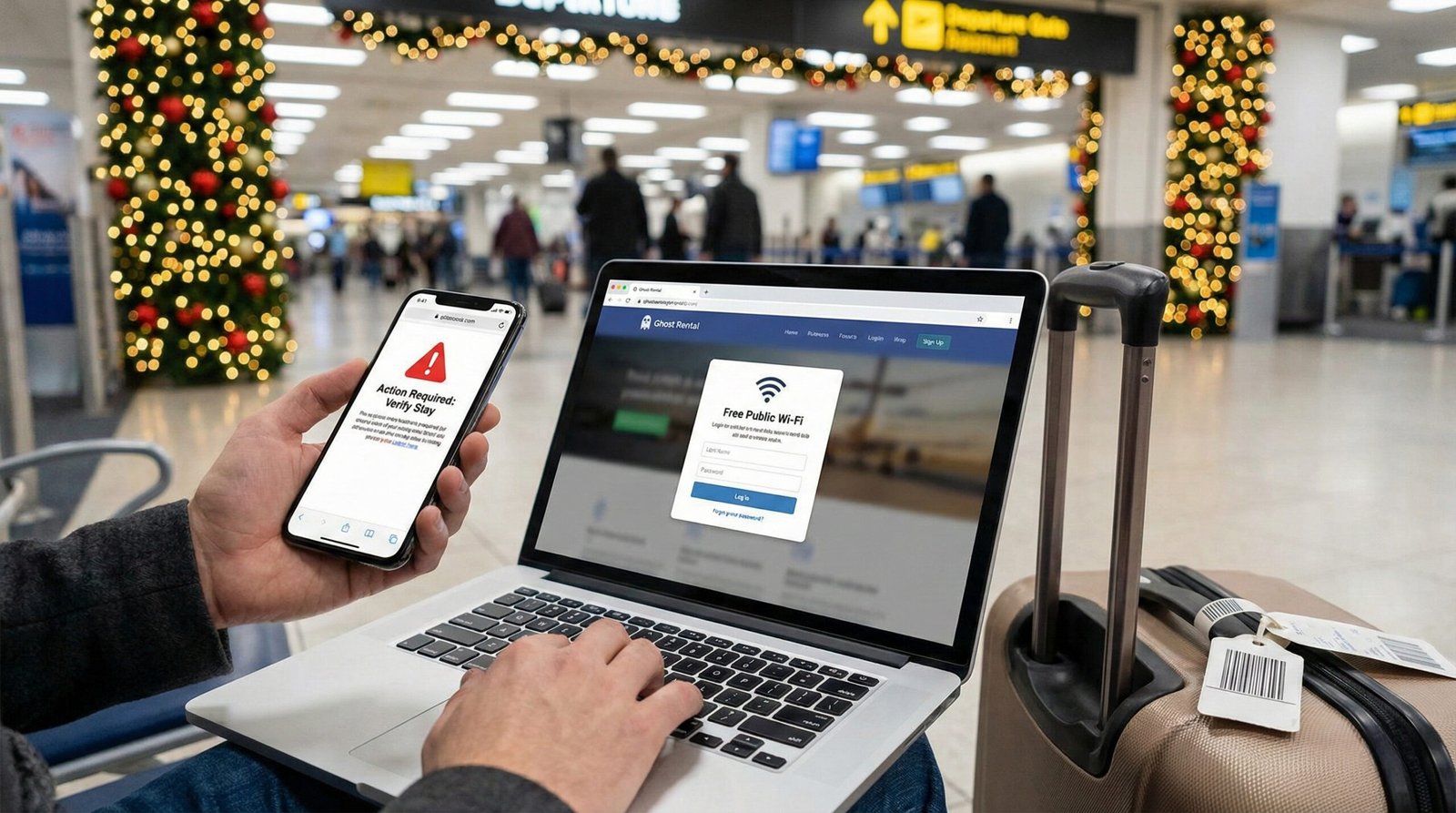
The holiday rush is here. Airports are packed, hotels are fully booked, and everyone is in a hurry. Sadly, this is exactly when scammers like to strike. They know you are stressed, distracted, and likely skimming your emails rather than reading them carefully.
I’ve been on the road for years, and even I almost got tricked recently. Scams are getting smarter, but they usually follow a pattern. If you know what to look for, you can spot them a mile away.
Here are the most common travel scams happening right now in late 2025, and how you can keep your money safe.
1. The “Re-verify Your Booking” Message
The Scam: You get a message on WhatsApp or via the Booking.com app. It looks official. It has your name, your hotel’s name, your dates, and your correct confirmation number.
The message says there was an issue with your card or that you need to “verify your stay” within 12 to 24 hours, or your room will be cancelled. It provides a link to a payment page.
Why it works: It’s scary. Nobody wants to lose their hotel room right before a trip. Plus, because the scammers have your real booking details, it feels legitimate.
The Truth: The hotel’s admin account was hacked. The scammers can see the guest list, so they message everyone hoping someone pays.
How to avoid it:
Never click links in messages. Even if it’s in the official app.
Check the URL. If the link takes you to
stay-approve-hotel.cominstead ofbooking.com, it’s fake.Call the hotel. Find their number on Google Maps (not in the message) and ask the front desk directly.
2. The “Evil Twin” Wi-Fi
The Scam: You are at the airport or a coffee shop. You see a Wi-Fi network called “Airport_Free_WiFi” or “Starbucks_Guest_Free.” It connects instantly without a password.
Why it works: We all want to save data, and we expect free Wi-Fi in public places.
The Truth: A hacker is sitting nearby with a small device broadcasting that signal. Once you connect, they can see everything you do—passwords you type, emails you send, and credit card numbers you enter.
How to avoid it:
Ask staff for the official network name. Don’t guess.
Use a VPN. This scrambles your data so hackers can’t read it.
Stick to mobile data. If you are doing online banking, turn off Wi-Fi and use your phone’s 4G/5G signal. It is much safer.
3. The Fake Airline Help Line
The Scam: Your flight is cancelled or delayed. You panic and Google the airline’s customer service number to get help fast. You click the first number that pops up, call it, and an “agent” asks for your credit card to pay a “rebooking fee.”
Why it works: Scammers buy ads on Google so their fake numbers show up at the top of the search results. They pretend to be Delta, British Airways, or Emirates.
The Truth: Airlines rarely charge a fee to rebook you if they cancelled the flight. You are talking to a call center run by scammers.
How to avoid it:
Use the app. precise customer service chats are usually built into the airline’s official app.
Check your ticket. The real support number is usually printed on your boarding pass or booking email.
4. The “Closed” Tourist Attraction
The Scam: You are walking toward a famous temple, museum, or palace. A friendly local or taxi driver stops you and says, “Oh, it’s closed today for a religious ceremony/lunch/cleaning.”
They then offer to take you to a “better” attraction nearby that is open.
Why it works: They seem helpful and nice. You don’t want to walk all the way there if it’s closed.
The Truth: The attraction is open. They just want to take you to a shop where they get paid a commission if you buy a suit, jewelry, or souvenir.
How to avoid it:
Walk to the gate. Ignore what people on the street say. Go to the ticket counter and see for yourself.
Check online. Most major sites have hours listed on Google Maps.
5. The “Ghost” Rental
The Scam: You find a stunning villa or apartment on Facebook Marketplace or a slick-looking website. The price is amazing. The owner asks you to pay via bank transfer or “Family and Friends” because their card machine is down.
Why it works: Accommodation is expensive. We all want a deal.
The Truth: The property doesn’t exist, or the photos were stolen from a real listing. Once you send the money, the “owner” blocks you.
How to avoid it:
Reverse image search. Save the photo and upload it to Google Images. You might see the same house listed in a different country.
Stay on the platform. Only pay through major sites like Airbnb or VRBO. Never wire cash or pay off-site.
Quick Safety Checklist
Before you head out for your holiday, do these three things:
Download the official apps for your airline and hotel.
Save the bank’s fraud number in your phone so you can freeze cards fast if needed.
Trust your gut. If someone is pressuring you to act now or pay fast, slow down. It’s probably a trap.
Stay safe out there, and enjoy your holiday!

Adrenaline junkie with a passion for exploring off-the-beaten-path destinations and finding unique ways to stay active. Expect stunning scenery, challenging workouts, awesome travel tips and a whole lot of fun. Let’s get sweaty and explore the world together!